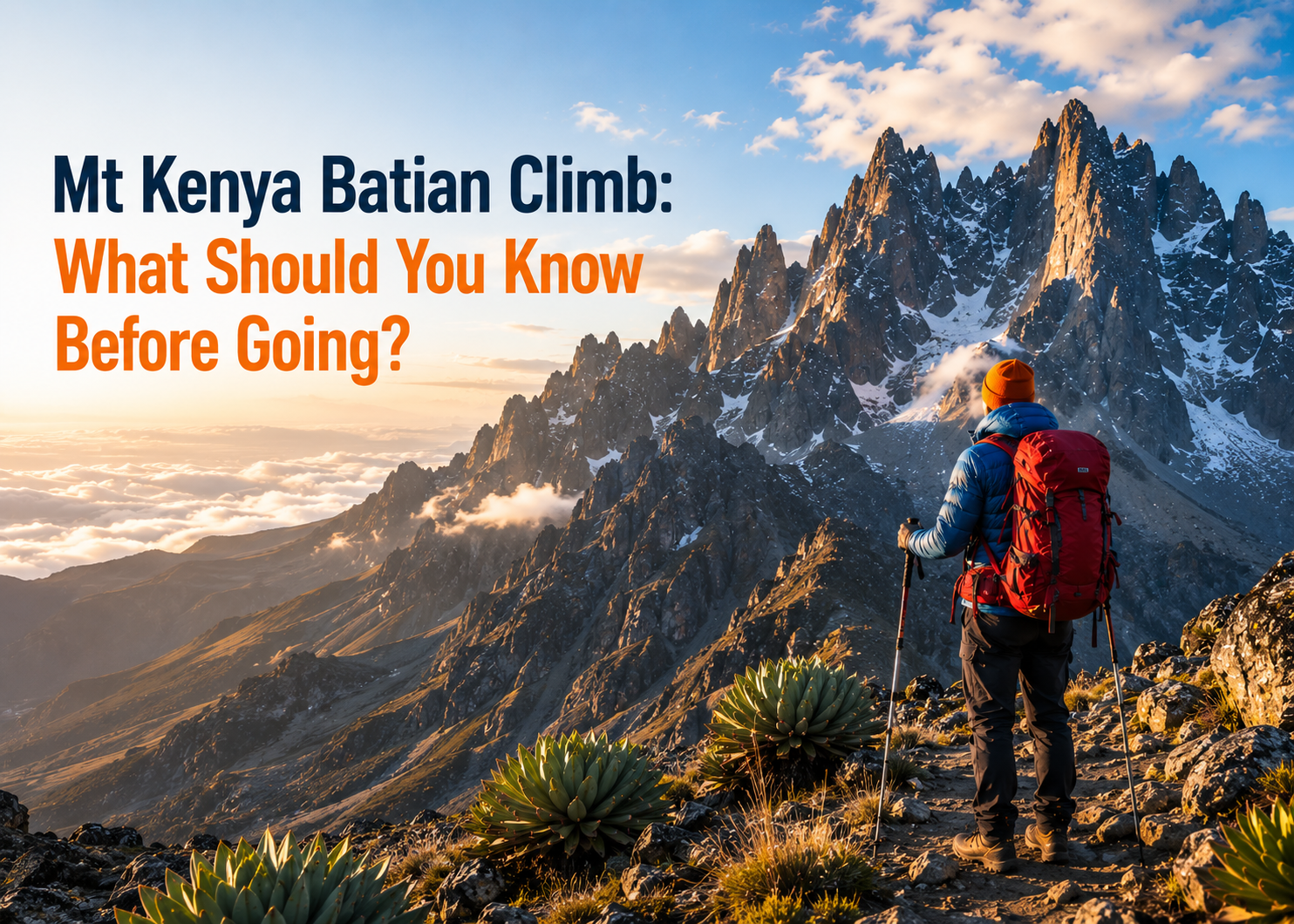
Climbing Mt Kenya

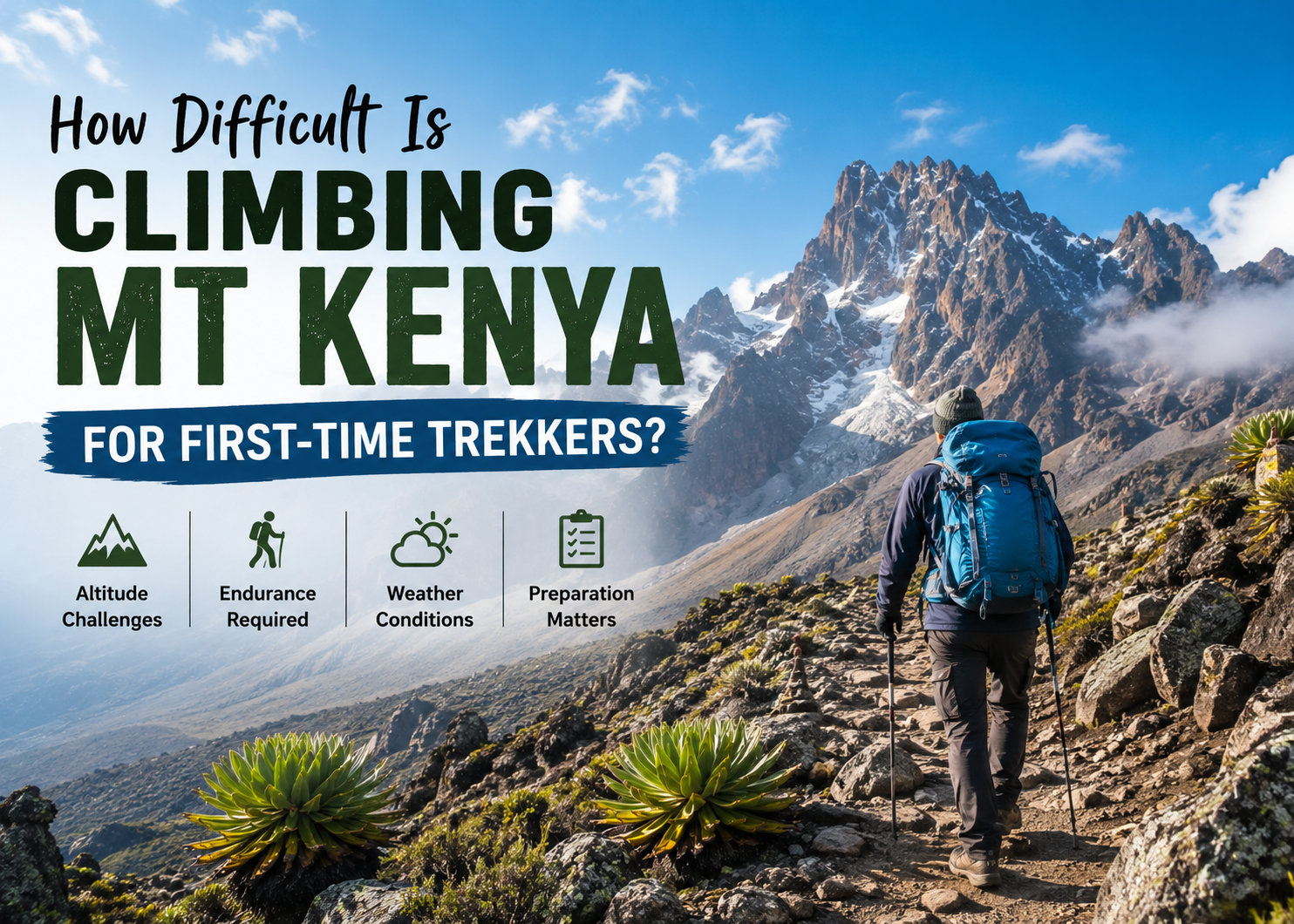
Mount Kenya attracts trekkers with rugged peaks, high-altitude valleys, glacial scenery, alpine lakes, and dramatic changes in vegetation. For someone planning a first major mountain adventure, one question naturally comes first: How difficult is climbing Mt Kenya?

The answer depends on the route, summit objective, fitness level, acclimatization schedule, weather, and number of trekking days. Reaching Point Lenana is achievable for many fit beginners, but the mountain still demands preparation, patience, and respect for altitude. Ice Rock Trekking helps climbers approach the experience with realistic expectations and sensible preparation.

Is Mt Kenya Suitable for First-Time Trekkers?

Yes, Mt Kenya can suit first-time trekkers, particularly when the objective is Point Lenana rather than the technical summits of Batian or Nelion.

Point Lenana stands at approximately 4,985 meters and is the highest trekking summit on the mountain. Reaching it does not normally require technical rock-climbing skills. Trekkers primarily need good cardiovascular fitness, determination, appropriate equipment, and enough time to adjust to increasing elevation.

However, calling the trek non-technical does not mean it is easy. Beginners must walk for several hours across uneven trails while coping with cold conditions and thinner air.

The experience becomes far more manageable when climbers choose an appropriate route and avoid rushing their ascent.

How Physically Difficult Is Climbing Mt Kenya?

Physical difficulty varies throughout the trek. Lower sections may feel comfortable, especially for people who regularly walk, hike, cycle, run, or participate in other endurance activities.

The challenge gradually increases as elevation rises.

Trekkers may experience steep slopes, rocky tracks, long walking days, cold mornings, and demanding summit sections. Carrying a daypack adds another physical element.

A typical trekking day can involve several hours of steady movement. Summit day often begins before sunrise and can feel significantly harder because climbers are moving at high altitude after limited sleep.

Strong legs certainly help, but cardiovascular endurance often matters more. A trekker who can maintain a steady pace for several hours generally has a stronger foundation than someone focused exclusively on strength training.

Altitude Is Often the Biggest Challenge

For many beginners, altitude creates more difficulty than the trail itself.

As trekkers move higher, the amount of available oxygen decreases. The body needs time to adapt. A person can be extremely fit at sea level and still experience altitude-related symptoms.

Common mild effects can include headaches, reduced appetite, fatigue, disturbed sleep, and shortness of breath during physical activity.

This is why rushing is rarely beneficial.

A well-paced itinerary gives the body more opportunity to acclimatize. Slow walking, proper hydration, sufficient food intake, and adequate rest all support the adjustment process.

Trekkers should also communicate openly about symptoms rather than trying to hide discomfort. Mountain safety must take priority over reaching a summit.

Choosing the Right Mt Kenya Route Matters

Route selection can significantly influence how difficult the mountain feels.

Several trekking routes lead toward Point Lenana, with Sirimon, Chogoria, and Naro Moru among the best-known choices. Each offers different scenery, terrain, gradients, and trekking characteristics.

Sirimon Route

The Sirimon Route is popular because of its relatively gradual approach. It passes through forest, moorland, and high-altitude landscapes before reaching the upper mountain.

Its progressive elevation gain can make it appealing to beginners when paired with an appropriate itinerary.

Trekkers still face demanding sections, but the route provides an opportunity to settle into mountain conditions before reaching higher elevations.

Chogoria Route

Chogoria is renowned for dramatic scenery, including valleys, cliffs, lakes, and striking alpine terrain.

It can involve longer sections and varied ground, which may require greater stamina. Many climbers combine Chogoria with Sirimon, ascending one side and descending another.

This combination provides scenic variety while allowing the itinerary to support sensible altitude adjustment.

Naro Moru Route

Naro Moru is known as a relatively direct approach. Certain sections can become challenging, particularly when conditions are wet.

Its famous Vertical Bog can be muddy and physically tiring after rainfall. The more direct elevation profile may also make careful pacing especially important.

Choosing a route should therefore involve more than comparing distances. Trek duration, altitude gain, terrain, personal fitness, and previous hiking experience should all influence the decision.

Point Lenana vs Batian and Nelion

One of the most important distinctions first-time visitors should recognize is the difference between trekking to Point Lenana and climbing Mt Kenya’s technical peaks.

Point Lenana is primarily a trekking objective.

Batian, at approximately 5,199 meters, is Mt Kenya’s highest summit. Nelion, at approximately 5,188 meters, is the second-highest. Both involve technical mountaineering rather than ordinary trekking.

Climbing Batian or Nelion requires rock-climbing ability, specialist equipment, route knowledge, and technical mountain experience.

First-time trekkers without climbing experience should normally focus on Point Lenana. It provides a genuine high-altitude mountain challenge without requiring the technical skills associated with Mt Kenya’s highest peaks.

What Fitness Level Do Beginners Need?

You do not need to be an elite athlete to trek to Point Lenana. You should, however, arrive with a reasonable level of endurance.

Preparation should ideally begin several weeks or months before departure, depending on your starting fitness.

Regular walking provides an excellent foundation. Gradually increase distance and include hills or stairs whenever possible.

Useful preparation activities include:

  • Long-distance walking
  • Hill hiking
  • Stair climbing
  • Cycling
  • Jogging
  • Swimming
  • Squats and lunges
  • Core exercises
  • Walking while carrying a daypack

Consistency matters more than occasional intense workouts.

A person who trains steadily for several weeks will usually be better prepared than someone who attempts a few extremely difficult sessions shortly before departure.

Training should also include back-to-back walking days. Mountain treks require repeated effort, so the body needs experience performing after previous-day activity.

How Difficult Is Summit Day?

Summit day is commonly the hardest part of the trek.

Trekkers often start very early, sometimes during the night, so they can approach Point Lenana around sunrise. Temperatures can be extremely cold, visibility may be limited before daylight, and the terrain becomes steeper and rockier.

Altitude makes every step feel more demanding.

The final climb requires mental patience because progress may seem slow. Walking slowly is not a weakness at high elevation. A controlled pace reduces unnecessary exhaustion and supports better altitude management.

Once trekkers reach Point Lenana, the experience can be extraordinary. On clear mornings, the surrounding peaks, valleys, glaciers, and distant landscapes create memorable views.

The descent still requires concentration. Tired legs and loose terrain can increase the risk of slips, so climbers should continue moving carefully after reaching their summit objective.

Does Trekking Experience Make a Difference?

Previous hiking experience helps, but it is not mandatory for every Point Lenana itinerary.

Someone who has completed multi-day hikes will already know how their body reacts to repeated walking, changing weather, basic mountain accommodation, early starts, and limited comforts.

A complete beginner must adapt to all of these factors at once.

Before attempting Mt Kenya, beginners can benefit from completing several local hikes. Walking on hills, uneven ground, and rocky paths builds confidence while allowing trekkers to test footwear, backpacks, clothing layers, and personal pacing.

The mountain becomes easier when equipment and physical routines already feel familiar.

How Weather Affects Trek Difficulty

Mt Kenya’s weather can change quickly.

Trekkers may experience sunshine, wind, mist, rain, and freezing temperatures during the same journey. Conditions become colder as elevation increases, particularly overnight and during early summit attempts.

Rain can turn sections of trail muddy and slippery. Strong winds can make exposed areas feel considerably colder.

Proper clothing therefore plays a major role in comfort and performance.

A layering system allows trekkers to adjust clothing as temperatures change. Moisture-managing base layers, insulating mid-layers, waterproof outer layers, gloves, warm headwear, and suitable trekking trousers are valuable components of a mountain clothing system.

Being cold or wet consumes energy quickly. Staying dry and appropriately insulated can make a demanding day significantly more manageable.

What Equipment Makes the Trek Easier?

Good equipment cannot replace fitness or acclimatization, but it can prevent avoidable discomfort.

Well-fitted trekking boots are particularly important. New boots should be worn during training rather than used for the first time on Mt Kenya.

A comfortable daypack should provide enough room for water, snacks, spare clothing, rain protection, and personal essentials.

Trekking poles can provide additional stability on steep or uneven terrain. They may also reduce pressure on the knees during long descents.

A warm sleeping bag suitable for mountain temperatures is another important consideration. Rest becomes harder when a trekker remains cold throughout the night.

Headlamps are essential for early summit starts, while sunglasses and sunscreen help protect against strong ultraviolet exposure at elevation.

Mental Difficulty Should Not Be Overlooked

Climbing Mt Kenya trekking is not purely a physical test. Mental resilience becomes increasingly important when climbers feel tired, cold, or uncomfortable.

Beginners sometimes expect continuous excitement because mountain photographs usually highlight dramatic viewpoints and summit celebrations. The actual experience includes repetitive walking, cold mornings, steep sections, changing weather, fatigue, and moments when motivation drops.

Breaking the journey into smaller objectives can help.

Instead of thinking constantly about the summit, focus on reaching the next rest point, maintaining a comfortable breathing rhythm, drinking regularly, and keeping a steady pace.

Patience becomes one of the most valuable mountain skills.

How Many Days Should First-Time Trekkers Choose?

A longer itinerary can make Mt Kenya considerably more approachable.

Attempting to gain elevation too quickly places unnecessary pressure on the body. Extra time allows trekkers to ascend gradually and gives more opportunities for acclimatization.

For beginners, selecting an itinerary should not simply be about reaching Point Lenana as quickly as possible.

A well-designed schedule considers elevation gain, sleeping altitude, walking distance, rest, and individual ability.

An additional day can sometimes make a major difference in how comfortable a climber feels at higher elevations.

Ice Rock Trekking structures Mt Kenya experiences around sensible pacing while helping trekkers select routes and schedules suited to their objectives.

What Should You Eat and Drink on the Mountain?

High-altitude trekking requires consistent energy.

Trekkers should eat regularly even when altitude reduces appetite. Carbohydrate-rich meals and snacks can provide accessible energy for long walking days.

Hydration is equally important.

Cold conditions sometimes reduce the sensation of thirst, causing people to drink less than they normally would. Regular fluid intake should remain part of the daily routine.

Carrying accessible snacks can also help maintain energy between meals. Nuts, dried fruit, energy bars, biscuits, and similar trekking foods are convenient options.

Trekkers should avoid relying solely on appetite signals because high elevation may suppress hunger.

Can Beginners Handle the Cold?

Many first-time trekkers underestimate how cold Mt Kenya can become.

Lower elevations may feel pleasant, while upper camps can become extremely chilly. Summit morning can bring freezing temperatures, especially before sunrise.

Beginners can manage these conditions with suitable clothing and equipment.

Layering is particularly effective because body temperature changes throughout the day. A trekker may feel cold while resting but become warm quickly after walking uphill.

Keeping gloves, a warm hat, and an insulating layer easily accessible prevents unnecessary stops and discomfort.

Dry socks and spare clothing can also improve overnight comfort.

Common Mistakes First-Time Trekkers Make

Many difficulties on Mt Kenya result from preventable decisions rather than the mountain’s terrain alone.

Walking too quickly is a common mistake. Beginners sometimes try to maintain their normal hiking speed even as elevation increases. Slowing down conserves energy and supports acclimatization.

Other mistakes include inadequate training, poor footwear, insufficient warm clothing, ignoring hydration, skipping meals, carrying unnecessary items, and failing to communicate altitude symptoms.

Another major error is treating the summit as the only measure of success.

Mountain conditions, physical responses, and weather can change. Turning around when safety requires it represents responsible decision-making, not failure.

Is Mt Kenya Harder Than Kilimanjaro?

The answer depends on the route and objective.

For trekking objectives such as Point Lenana, Mt Kenya reaches a lower elevation than Kilimanjaro’s Uhuru Peak at 5,895 meters. This difference can influence altitude exposure.

However, route conditions, itinerary length, weather, personal fitness, and acclimatization can make individual experiences very different.

Mt Kenya also has technical summits, Batian and Nelion, that require mountaineering and rock-climbing skills. Comparing those peaks with an ordinary Kilimanjaro trekking route would therefore be inappropriate.

Trekkers should compare specific routes and summit objectives rather than treating both mountains as single standardized climbs.

How Can First-Time Trekkers Make Mt Kenya Easier?

Preparation begins long before arriving at the trailhead.

Build endurance gradually and spend time walking on hills. Test your boots, backpack, clothing, and trekking poles during training. Arrive rested rather than exhausting yourself with last-minute workouts.

On the mountain, maintain a slow and consistent pace. Drink regularly, eat enough, keep warm, and communicate openly about how you feel.

Perhaps most importantly, respect altitude.

Fitness cannot guarantee immunity from altitude-related problems. Sensible ascent rates and responsible decision-making remain essential for everyone.

Who Should Consider Trekking Mt Kenya?

Mt Kenya can appeal to hikers looking for their first high-altitude trek, experienced trekkers seeking varied African mountain scenery, outdoor enthusiasts interested in alpine ecosystems, and climbers preparing for future mountain objectives.

The trek particularly suits people who enjoy a challenge without necessarily wanting technical mountaineering.

However, anyone with concerns about their ability to participate in strenuous high-altitude activity should seek appropriate medical advice before planning the climb.

Why Trek Mt Kenya With Ice Rock Trekking?

A successful mountain experience depends on far more than reaching a destination.

Route planning, pacing, equipment preparation, meals, camp arrangements, local mountain knowledge, and safety awareness all influence the quality of the journey.

Ice Rock Trekking supports climbers from preparation through the mountain experience, helping them select suitable Mt Kenya routes and realistic itineraries based on their goals.

For first-time trekkers, having an organized climbing structure can reduce uncertainty and allow greater focus on pacing, scenery, personal wellbeing, and the experience itself.

Final Thoughts

So, how difficult is climbing Mt Kenya for a beginner? Reaching Point Lenana presents a moderate-to-challenging high-altitude trek, but many well-prepared first-time trekkers can complete it successfully.

The mountain demands endurance, suitable equipment, patience, proper acclimatization, and respect for changing conditions. Choosing the right route and allowing enough trekking days can significantly improve the experience.

With sensible preparation and support from Ice Rock Trekking, Mt Kenya can become an achievable first high-altitude objective and a rewarding introduction to African mountain trekking.
Mt Kenya Trekking via Naro-Moru

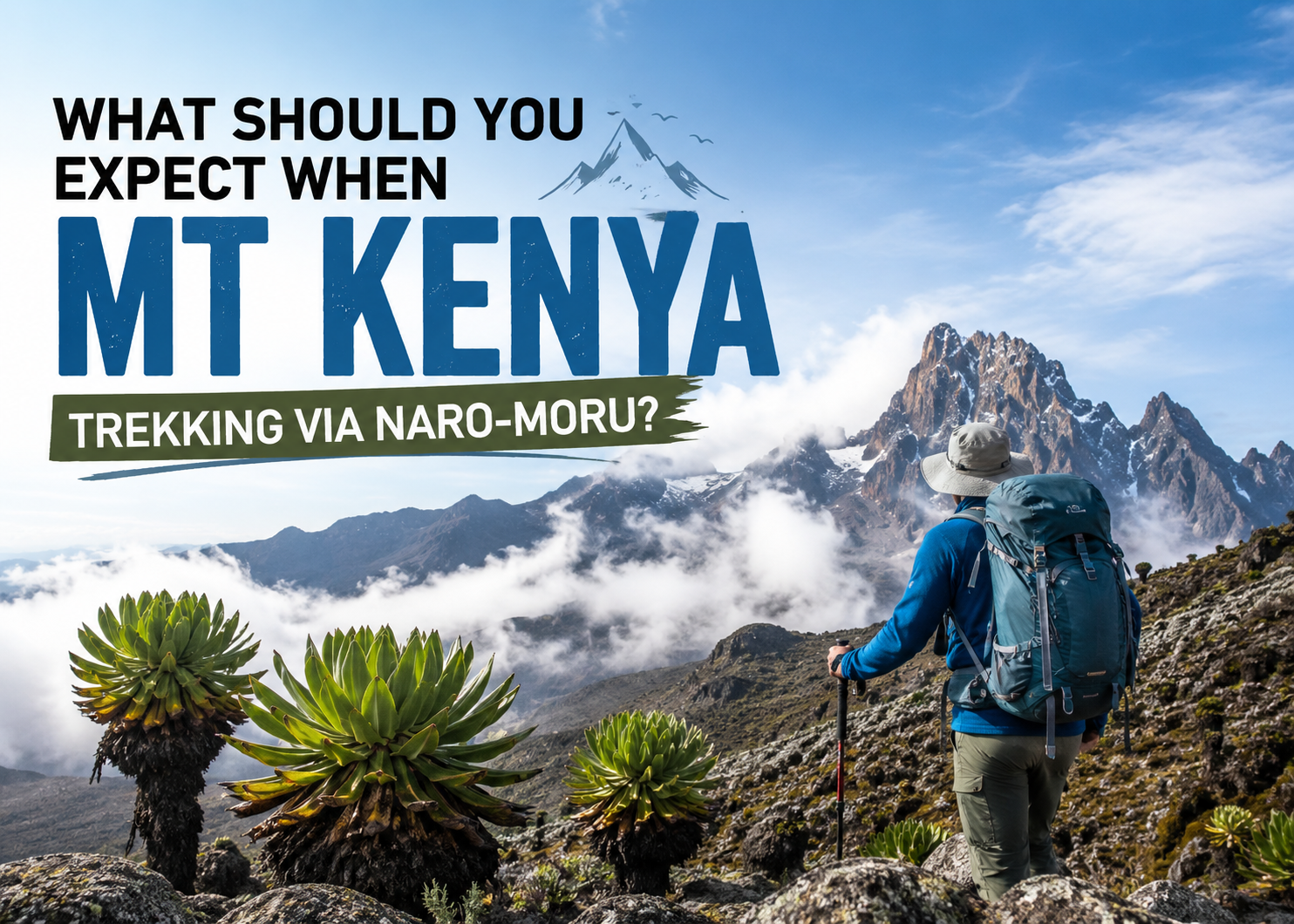
Mount Kenya rises dramatically above the central Kenyan landscape, offering trekkers a remarkable combination of volcanic terrain, alpine scenery, wildlife-rich forests, and challenging high-altitude trails. Among the established approaches to the mountain, the Naro-Moru Route has earned a reputation for being direct, demanding, and rewarding.

For climbers considering mt kenya trekking naro-moru, knowing what lies ahead can make preparation easier and expectations more realistic. From dense forests and the notorious Vertical Bog to alpine valleys and the ascent toward Point Lenana, every section brings a different experience. Ice Rock Trekking helps climbers approach this journey with careful planning, suitable pacing, and respect for the mountain environment.

What Makes the Naro-Moru Route Different?

The Naro-Moru Route approaches Mount Kenya from the western side and provides one of the most direct paths toward the mountain’s high-altitude areas. Its relatively short distance attracts trekkers who want an efficient route to Point Lenana, the mountain’s popular trekking summit.

However, shorter does not necessarily mean easier.

The route gains elevation relatively quickly, which places greater importance on acclimatization and controlled pacing. Climbers encounter forest trails, moorlands, wetlands, rocky alpine terrain, and steep summit sections within a relatively compact journey.

Another distinctive feature is the Vertical Bog. Depending on rainfall and trail conditions, this section can become muddy, slippery, and physically tiring. Trekkers who arrive expecting a straightforward mountain path may find this portion surprisingly challenging.

The variety of terrain makes Naro-Moru particularly interesting for experienced hikers as well as ambitious first-time high-altitude trekkers who prepare properly.

Where Does the Naro-Moru Trek Begin?

The journey generally starts around Naro Moru town before climbers travel toward the Mount Kenya National Park entrance and the trailhead.

The lower elevations feature fertile agricultural landscapes before the environment gradually changes as the route enters protected mountain territory.

Once trekking begins, climbers move through montane forest characterized by tall trees, dense vegetation, and cooler temperatures. This lower section creates a striking contrast with the exposed alpine landscape encountered later.

Wildlife may also be present in the forest zone. Mount Kenya National Park supports numerous animal and bird species, although sightings vary considerably.

The first stages should not be treated as a race. A measured walking speed helps climbers conserve energy while allowing their bodies to begin adapting to increasing altitude.

Expect Dramatic Changes in Vegetation

One of the most memorable aspects of trekking Mount Kenya is watching the environment transform as elevation increases.

The lower slopes feature dense montane forests where moisture supports thick vegetation. As trekkers climb higher, forests gradually give way to bamboo and heathland before transitioning into open moorland.

Higher still, unusual Afro-alpine vegetation begins to dominate the landscape.

Giant lobelias and groundsels are among the characteristic plants associated with Mount Kenya’s upper elevations. These distinctive species have adapted to harsh conditions involving intense daytime sunlight, freezing nighttime temperatures, and considerable daily temperature fluctuations.

Eventually, vegetation becomes sparse as trekkers enter rocky alpine areas.

Experiencing several ecological zones during one mountain journey gives the Naro-Moru Route much of its visual appeal.

The Vertical Bog Can Be Tougher Than Expected

Ask experienced Mount Kenya trekkers about Naro-Moru, and the Vertical Bog will frequently enter the conversation.

This section crosses high-altitude moorland where water collects in soft ground. Conditions vary considerably according to rainfall.

During dry periods, trekkers may encounter relatively manageable trails. After substantial rain, however, sections can become deeply muddy and slippery.

Good waterproof trekking boots become particularly valuable here. Gaiters can also help prevent mud and moisture from entering footwear.

Trekkers should concentrate on stable foot placement rather than trying to move quickly. Trekking poles can provide additional balance, especially when crossing uneven or waterlogged terrain.

The Vertical Bog is not simply an inconvenience. It represents one of the characteristic features that distinguish Naro-Moru from other Mount Kenya approaches.

Altitude Becomes a Major Factor

Point Lenana stands at approximately 4,985 meters above sea level, making altitude one of the most important considerations during the trek.

As elevation increases, atmospheric pressure decreases and less oxygen becomes available with each breath. Climbers may notice that normal physical activities suddenly require more effort.

Walking uphill can feel significantly harder. Breathing becomes faster, and recovery after steep sections may take longer.

Some trekkers experience headaches, reduced appetite, tiredness, disturbed sleep, or mild nausea while acclimatizing.

These symptoms should never be dismissed simply because reaching the summit is an important personal goal.

A slower itinerary can provide more time for acclimatization. Drinking sufficient fluids, eating regularly, maintaining a controlled pace, and communicating openly about symptoms are essential practices at altitude.

Professional trekking teams should continually observe participants and make safety-based decisions when necessary.

Mountain Weather Changes Quickly

Mount Kenya’s equatorial position does not mean consistently warm conditions.

Temperature varies dramatically with altitude and time of day. Lower forest sections can feel relatively mild, while upper elevations may become extremely cold, especially overnight and before sunrise.

Trekkers should expect possible combinations of sunshine, wind, rain, mist, and freezing temperatures.

Layering works better than relying on one heavy garment.

A practical clothing system normally includes moisture-managing base layers, insulating mid-layers, warm outer layers, and waterproof protection. Gloves, warm headwear, suitable trekking socks, and a weather-resistant shell become particularly important at higher elevations.

Climbers should also protect themselves from strong ultraviolet exposure. High altitude can intensify sun exposure even when temperatures feel cool.

Sunglasses, suitable sunscreen, and protective clothing can reduce unnecessary discomfort.

What Are Overnight Stops Like?

Accommodation arrangements depend on the itinerary, route conditions, and trekking program.

Mountain huts are associated with parts of the Naro-Moru approach, providing climbers with relatively basic accommodation in a rugged environment. Trekkers should expect practical facilities rather than hotel-style comfort.

Sleeping conditions can become cold, especially at higher elevations.

A suitable sleeping bag rated for low temperatures can make an enormous difference to comfort and recovery. Climbers may also benefit from keeping dry nighttime clothing separate from trekking clothes.

Mountain evenings usually become quiet fairly early because teams need sufficient rest before the next day’s climb.

The summit attempt often requires waking during the night or very early in the morning, making quality rest beforehand particularly valuable.

What Is Summit Night Like?

The ascent toward Point Lenana is often the most demanding and emotionally rewarding part of the trek.

Climbers generally begin while it is still dark so they can progress toward the summit around sunrise. Headlamps illuminate rocky paths while temperatures remain very low.

Movement should remain slow and consistent.

At this elevation, even physically fit trekkers can find themselves breathing heavily after relatively short sections. The combination of darkness, cold temperatures, altitude, and steep terrain creates a significant physical challenge.

Mental patience becomes almost as important as fitness.

Instead of concentrating constantly on the remaining distance, many climbers find it easier to focus on maintaining rhythm—step, breathe, repeat.

As daylight begins to appear, Mount Kenya’s rugged peaks and surrounding highlands gradually emerge from the darkness.

Reaching Point Lenana can provide remarkable views when weather conditions cooperate.

Is Naro-Moru Suitable for Beginners?

The route can be suitable for physically prepared beginners, but it should not be underestimated.

Previous high-altitude experience is helpful but not always essential for reaching Point Lenana. More important factors include cardiovascular fitness, leg endurance, appropriate equipment, realistic expectations, and enough time for acclimatization.

Beginners should train before arriving.

Regular hill walking is particularly valuable because it prepares the legs for sustained climbs and descents. Stair climbing, hiking, cycling, jogging, and other cardiovascular activities can complement trekking-specific preparation.

Training with a loaded daypack also helps climbers become accustomed to carrying water, clothing, snacks, and personal equipment.

Someone who exercises regularly but rarely hikes should still spend time walking on uneven terrain before attempting the mountain.

How Difficult Is the Trek?

Difficulty depends on several interacting factors rather than one specific trail feature.

Distance matters, but altitude, elevation gain, weather, terrain, acclimatization, fitness, and individual recovery all influence how challenging the trek feels.

Naro-Moru’s relatively direct approach means climbers may gain altitude quickly compared with longer alternatives.

The Vertical Bog can require significant effort, particularly in wet conditions. Upper mountain sections involve rocky and uneven terrain, while summit morning adds cold temperatures and thin air.

Descending also deserves attention.

Trekkers sometimes assume the hardest work ends at the summit. In reality, long downhill sections place considerable strain on knees, ankles, and leg muscles.

Trekking poles and controlled movement can make descents more manageable.

What Should You Pack?

Packing appropriately contributes directly to comfort and safety.

Climbers generally need sturdy waterproof hiking boots that have already been broken in, rather than brand-new footwear worn for the first time on the mountain.

Layered clothing should cover both mild lower-altitude conditions and freezing upper-mountain temperatures.

Other useful items include waterproof outerwear, warm gloves, a hat, quality hiking socks, sunglasses, sunscreen, a headlamp with spare batteries, reusable water containers, trekking poles, gaiters, and a suitable sleeping bag.

A small daypack should comfortably carry essential equipment required during each trekking stage.

Avoid excessive packing. Carrying unnecessary weight makes altitude trekking harder and can create additional fatigue.

Ice Rock Trekking can help participants determine which personal items are appropriate for their chosen itinerary and expected mountain conditions.

Food and Hydration Matter More at Altitude

Trekkers burn substantial energy while climbing, making regular meals important even when altitude affects appetite.

Carbohydrate-rich foods can provide accessible energy during sustained trekking. Protein and balanced meals also support recovery after long days.

Hydration deserves equal attention.

Cold conditions sometimes reduce the sensation of thirst, causing trekkers to drink less than they should. Regular fluid intake throughout the day is generally more practical than consuming large amounts occasionally.

Climbers should monitor how they feel and communicate concerns to the trekking team rather than trying to conceal fatigue or discomfort.

Maintaining nutrition and hydration will not eliminate altitude problems, but both support the body’s overall ability to perform.

How Does Naro-Moru Compare With Other Mount Kenya Routes?

Mount Kenya has several established trekking approaches, including Sirimon and Chogoria.

Naro-Moru stands out primarily because of its direct nature and distinctive terrain.

Sirimon is often appreciated for relatively gradual terrain and scenic high-altitude landscapes. Chogoria is famous for dramatic valleys, lakes, cliffs, and varied scenery.

Naro-Moru offers something different: a direct western approach with rapid environmental transitions and the challenging Vertical Bog.

Some itineraries combine routes, ascending from one side and descending another. This approach can provide greater landscape variety and prevent trekkers from retracing exactly the same trail.

Route selection should depend on available time, fitness, acclimatization needs, scenery preferences, and trekking objectives.

When Is a Good Time to Trek?

Mount Kenya can experience highly variable mountain weather, but some periods generally offer more favorable trekking conditions than others.

Drier periods are often preferred because trails can be easier to manage and mountain views may be clearer.

However, conditions at high altitude remain unpredictable regardless of season.

Rain can make the Vertical Bog substantially more difficult, while cold temperatures, cloud, and strong winds may occur higher on the mountain at different times of year.

Trekkers should therefore prepare for changing conditions rather than relying entirely on seasonal expectations.

Flexible expectations are particularly useful on mountains because weather can affect visibility, trail conditions, pace, and summit plans.

Why Pacing Matters

Fast walking does not necessarily produce better results at high altitude.

The body requires time to adjust as elevation increases. Maintaining a slow, steady pace can conserve energy and support acclimatization.

Experienced mountain teams often encourage deliberate walking even when trekkers initially feel capable of moving faster.

This can seem unnecessarily slow during the lower sections. Higher on the mountain, however, the value becomes clearer.

Climbers who spend too much energy early may struggle when altitude and steep terrain become more demanding.

Consistency matters more than speed.

Regular short breaks, controlled breathing, adequate hydration, and steady movement can help trekkers maintain energy across several days.

Environmental Responsibility on Mount Kenya

Mount Kenya is not merely a climbing destination. It is an ecologically important protected landscape with fragile high-altitude ecosystems.

Trekkers should minimize their environmental footprint throughout the journey.

Waste should be carried out or disposed of through approved systems. Staying on established trails helps reduce damage to vegetation and soil.

Climbers should avoid disturbing wildlife, picking plants, or leaving food waste behind.

Reusable water containers can also reduce dependence on disposable plastics.

Responsible trekking practices become increasingly important as mountain tourism grows. Tour operators, trekking professionals, porters, and visitors all share responsibility for protecting the landscape.

Ice Rock Trekking promotes respectful mountain travel that allows climbers to enjoy Mount Kenya while helping preserve its natural character.

What Can Make the Experience More Enjoyable?

Preparation influences enjoyment almost as much as physical ability.

Trekkers who arrive with realistic expectations usually adapt more easily to cold mornings, basic mountain facilities, changing weather, mud, fatigue, and slow progress at altitude.

Quality equipment also removes avoidable distractions.

Comfortable boots reduce foot problems. Effective rainwear keeps clothing dry. Warm layers improve rest, and trekking poles support stability on challenging ground.

A positive group atmosphere can also make difficult sections feel more manageable.

Mountain trekking involves shared meals, early starts, changing conditions, physical challenges, and moments of extraordinary scenery. Patience and cooperation often become important parts of the overall experience.

Why Trek Mount Kenya With Ice Rock Trekking?

A successful Mount Kenya trek involves far more than reaching a particular elevation.

Route planning, acclimatization, logistics, equipment preparation, pacing, meals, weather awareness, and mountain safety all contribute to the experience.

Ice Rock Trekking works with climbers to create well-planned Mount Kenya adventures suited to their objectives and trekking abilities.

For enthusiasts, the Naro-Moru Route offers an opportunity to experience Mount Kenya’s ecological diversity within a demanding mountain environment. For trekking professionals, it demonstrates how route selection, pacing, environmental conditions, and acclimatization must work together.

The mountain deserves preparation and respect at every stage.

Final Thoughts

Trekking Mount Kenya via Naro-Moru combines forest trails, muddy moorlands, unusual alpine vegetation, cold high-altitude conditions, and an exciting ascent toward Point Lenana. The route may be relatively direct, but altitude and changing terrain ensure that it remains a serious mountain undertaking.

With suitable fitness, dependable equipment, careful pacing, realistic expectations, and professional support from Ice Rock Trekking, climbers can experience one of Kenya’s most distinctive high-altitude adventures while appreciating the remarkable landscape that makes Mount Kenya special.

Kilimanjaro Shira Camp

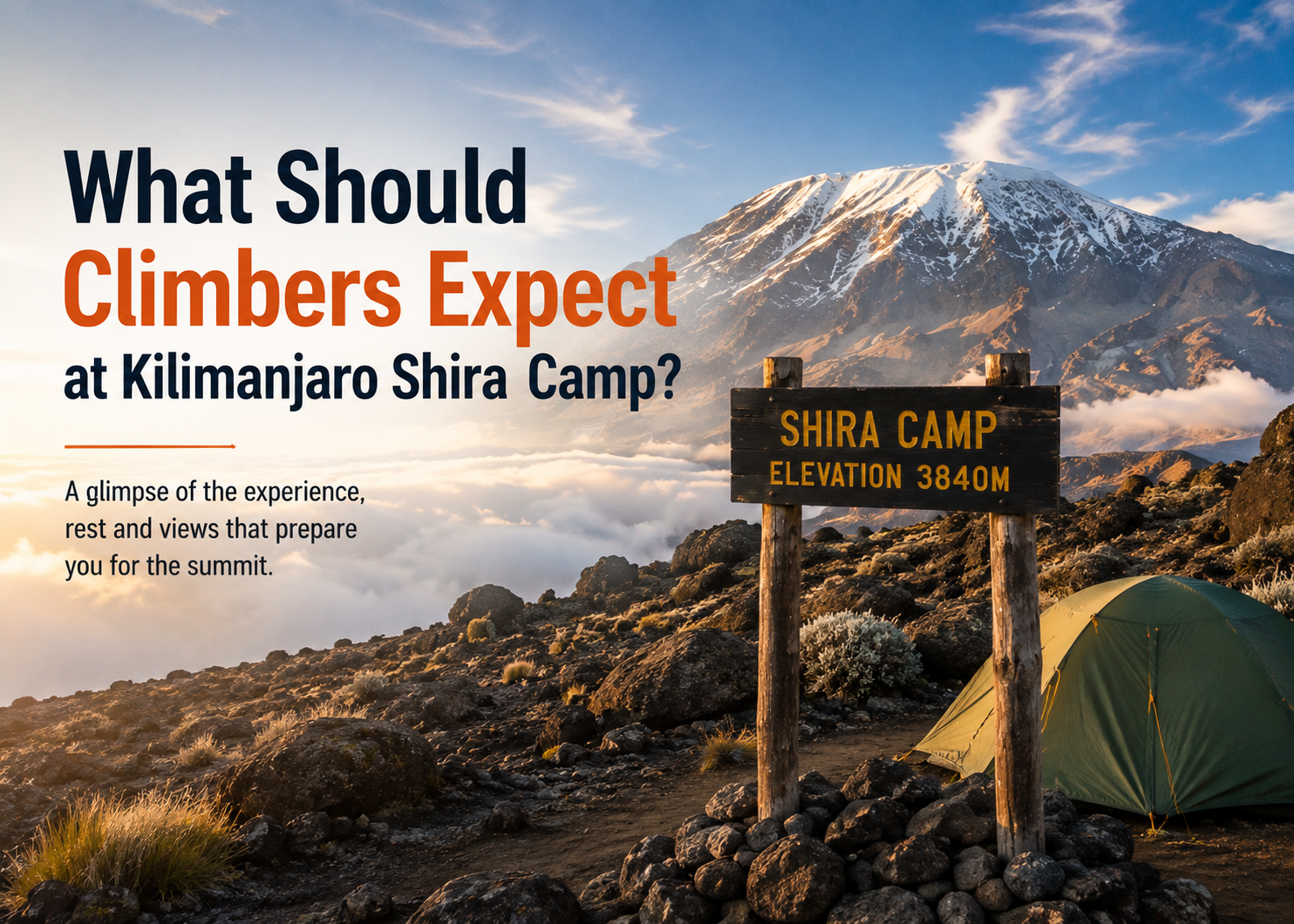
Reaching Shira Camp is one of the memorable stages of a Mount Kilimanjaro climb. After leaving the greener lower slopes behind, trekkers arrive in a high-altitude landscape shaped by open moorland, volcanic terrain, dramatic skies, and expansive mountain views. The camp also marks an important point where climbers begin feeling the effects of increasing elevation.

For anyone preparing for a Kilimanjaro trek, knowing what awaits at Shira Camp can make the experience more comfortable and help set realistic expectations. Ice Rock Trekking helps climbers approach this stage with suitable preparation, steady pacing, and respect for the mountain environment.

Where Is Shira Camp on Mount Kilimanjaro?

Shira Camp sits on the western side of Mount Kilimanjaro within the broad Shira Plateau area. The plateau forms part of an ancient volcanic caldera and provides one of the mountain’s most distinctive landscapes.

Depending on the trekking route and campsite being used, climbers may encounter locations commonly referred to as Shira Camp, Shira 1 Camp, or Shira 2 Camp. Elevations therefore vary, with camps generally situated at roughly 3,500 to 3,900 meters above sea level.

The Shira Plateau is especially important for climbers following western approaches such as the Machame, Lemosho, and Shira routes. Trekking schedules differ, so the exact point at which a group reaches the Shira area depends on the selected itinerary.

As elevation increases, vegetation becomes shorter and the landscape opens dramatically. The transition reminds climbers that they have entered a more demanding section of the mountain.

What Does Kilimanjaro Shira Camp Look Like?

The first thing many trekkers notice is space. Dense vegetation gives way to open terrain, allowing views to stretch across the plateau and surrounding highlands.

Kilimanjaro shira camp typically has a rugged mountain atmosphere rather than the comforts associated with permanent accommodation. Climbers stay in tents, while trekking crews organize cooking, meals, water arrangements, and other camp operations.

The surrounding landscape may feature low shrubs, grasses, volcanic rocks, giant groundsels, and other plants adapted to harsh high-altitude conditions. Weather can change the camp’s appearance quickly. Bright sunshine may produce sweeping views, while clouds and mist can transform the plateau into a much more dramatic setting.

When conditions are clear, climbers can often see Kilimanjaro’s higher slopes rising prominently above the plateau.

Why Is the Shira Plateau So Special?

Shira represents one of Kilimanjaro’s three major volcanic centers, alongside Mawenzi and Kibo. The original Shira volcano underwent extensive erosion and collapse, leaving behind the broad plateau that trekkers cross.

This geological history gives the area a character different from the rainforest below or the alpine desert higher up.

For trekking enthusiasts, Shira offers much more than an overnight stop. It provides an opportunity to observe how Kilimanjaro’s ecology and geology change with elevation. Open moorlands, volcanic formations, distant ridges, and changing vegetation create a landscape that feels increasingly remote.

Photographers may also appreciate the plateau because its openness creates strong compositions featuring Kibo, clouds, trekking trails, tents, and vast skies.

How Cold Is Shira Camp?

Temperature is one of the biggest changes climbers notice after reaching higher elevations.

Days can feel pleasantly warm when sunlight is strong, particularly while walking. Once the sun disappears, temperatures may fall quickly. Nights at Shira Camp can become cold, and conditions vary depending on season, wind, cloud cover, and elevation.

Climbers should avoid assuming that warm daytime conditions will continue after sunset.

Layering becomes essential. A moisture-managing base layer, insulating mid-layer, warm jacket, waterproof outer layer, gloves, hat, and suitable trekking trousers can help climbers adapt to changing conditions.

A warm sleeping bag designed for mountain temperatures is equally important. Climbers often feel colder while resting than while trekking because physical activity no longer generates as much body heat.

What Facilities Can Climbers Expect?

Shira Camp is a mountain campsite, so facilities remain basic.

Trekkers generally sleep in tents rather than permanent huts. Depending on the operator and trekking arrangement, groups may have separate dining tents and other organized camping equipment. Toilet arrangements vary by itinerary and operator.

Water is usually collected, treated, or prepared by trekking teams according to camp logistics and local requirements. Because water availability and treatment procedures can vary, climbers should follow their trekking team’s instructions.

There are no hotel-style conveniences, and that simplicity forms part of the Kilimanjaro experience. Good organization can still make camp surprisingly comfortable.

Ice Rock Trekking focuses on practical camp management so climbers can prioritize rest, nutrition, hydration, and preparation for the following trekking day.

How Does the Altitude Feel at Shira Camp?

For many climbers, the Shira area is where altitude becomes more noticeable.

At approximately 3,500 meters or higher, oxygen availability is lower than at sea level. The body needs time to adjust, even when a climber is physically fit.

Some trekkers may notice mild symptoms such as headache, reduced appetite, tiredness, disturbed sleep, or shortness of breath during physical activity. These symptoms should never simply be ignored.

Fitness does not provide immunity from altitude-related problems. Experienced runners, hikers, and athletes can still experience altitude sickness.

The most useful approach involves gradual ascent, sensible pacing, proper hydration, sufficient food, and open communication with the trekking team. Climbers should report unusual or worsening symptoms promptly rather than hiding discomfort to avoid slowing the group.

Why Is Acclimatization Important at Shira?

Acclimatization is one of the central factors influencing comfort and safety on Kilimanjaro.

The body requires time to respond to lower oxygen levels. Trekking itineraries that provide a gradual ascent can support this adjustment.

By the time climbers reach Shira Camp, they have usually gained considerable elevation. Walking slowly can help reduce unnecessary physical strain. Many trekking teams use the Swahili phrase “pole pole,” meaning “slowly, slowly,” to encourage a sustainable mountain pace.

Some itineraries may include additional walking after reaching camp or use elevation changes strategically to support acclimatization. The exact approach depends on the route, schedule, weather, group condition, and decisions made by the mountain team.

Climbers should avoid competing over speed. Kilimanjaro rewards consistency far more than fast hiking.

What Is the Trek to Shira Camp Like?

The experience depends significantly on the chosen route.

Climbers approaching from the Lemosho side typically move through rainforest before entering heath and moorland zones. Vegetation gradually becomes shorter as altitude increases, opening wider views across the mountain.

Those using the Machame Route generally reach the Shira area after ascending from Machame Camp. The trail can involve steeper terrain as trekkers move above the forest and toward the plateau.

The Shira Route starts at a relatively high elevation, making altitude management especially important.

Regardless of the approach, the transition toward Shira demonstrates Kilimanjaro’s ecological diversity. Within a relatively short distance, climbers can move from humid forest environments into exposed highland terrain.

What Views Can Climbers Expect?

Clear weather can make Shira Camp exceptionally scenic.

Kibo often dominates the skyline, giving trekkers a striking perspective on Kilimanjaro’s highest volcanic cone. Looking away from the summit, climbers may see the plateau stretching toward distant lowlands.

Cloud formations frequently add another dimension. At certain elevations, trekkers may find themselves looking across or above layers of cloud covering the lower slopes.

Sunrise and sunset can be particularly impressive because open terrain allows unobstructed views. Light changes rapidly at altitude, illuminating mountain ridges and volcanic formations in different ways.

Night skies may also appear remarkably clear when cloud cover is limited and atmospheric conditions cooperate.

What Should Climbers Wear at Camp?

Once trekking stops for the day, warm clothing should become a priority.

Sweaty hiking layers can quickly become uncomfortable as temperatures fall. Changing into dry clothing helps preserve warmth and makes resting easier.

Useful camp clothing includes:

  • Thermal base layers
  • Fleece or insulated mid-layers
  • Down or synthetic insulated jackets
  • Waterproof and wind-resistant outer shells
  • Warm trekking trousers
  • Thermal leggings
  • Thick hiking socks
  • Warm gloves
  • A beanie or insulated hat
  • Comfortable camp footwear where appropriate

Climbers should also keep rain protection accessible because mountain weather can change quickly.

Layering provides greater flexibility than relying on one heavy garment. Clothing can be added or removed as temperature, wind, and activity levels change.

What Should Be Inside a Shira Camp Daypack?

Porters usually transport the main trekking luggage on supported Kilimanjaro climbs, but trekkers carry essential items in their daypacks.

Important items can include drinking water, snacks, rain gear, sunscreen, sunglasses, spare warm layers, personal medication, a headlamp, and basic personal necessities.

A waterproof pack cover or dry bags can help protect valuable equipment.

Sun protection deserves particular attention. Higher elevations expose climbers to strong ultraviolet radiation, and cool air can disguise how intense sunlight actually is. Sunscreen, UV-protective sunglasses, and suitable headwear can reduce exposure.

Climbers should keep frequently needed equipment easy to reach rather than buried at the bottom of the pack.

What Is Mealtime Like at Shira Camp?

Nutrition becomes increasingly important as the trek progresses.

A well-organized trekking team generally provides meals designed to give climbers carbohydrates, protein, fluids, and enough energy for sustained walking. Menu details vary between operators and itineraries.

Appetite can decrease at altitude, which makes eating difficult for some trekkers. Even so, the body requires fuel.

Warm meals can be especially welcome after temperatures drop. Soups, rice, pasta, potatoes, vegetables, porridge, eggs, and similar trekking foods may feature depending on the operator’s menu.

Climbers with allergies, dietary restrictions, or specific requirements should communicate them before the trek begins so arrangements can be planned properly.

How Important Is Hydration?

Hydration is essential throughout a Kilimanjaro climb.

Physical exertion, dry mountain air, increased breathing, and altitude can contribute to fluid loss. Climbers may not always feel thirsty enough to recognize how much water they need.

Regular drinking throughout the trekking day is usually easier than attempting to consume large quantities at once.

Urine color can provide a simple indication of hydration, although it should not be treated as a medical diagnostic tool. Climbers should follow instructions from their trekking team regarding water consumption and treatment.

Electrolytes may also be useful for some trekkers, particularly after long periods of physical activity, but they should complement rather than replace suitable food and water intake.

How Well Do People Sleep at Shira Camp?

Sleeping at altitude can feel different from sleeping at lower elevations.

Some climbers fall asleep quickly after a demanding trekking day. Others experience lighter sleep, frequent waking, vivid dreams, or difficulty becoming comfortable.

Cold temperatures can also disturb rest.

Preparing sleeping equipment before darkness helps reduce inconvenience later. Climbers should organize warm clothing, headlamps, water, and overnight essentials before entering their sleeping bags.

A quality sleeping mat provides insulation from the cold ground as well as cushioning. Combined with an appropriate sleeping bag, it can significantly improve overnight comfort.

Climbers should not become overly concerned after one imperfect night. Sleep patterns can fluctuate as the body adjusts to altitude.

What Weather Conditions Can Occur?

Kilimanjaro weather is highly variable.

Shira Camp may experience sunshine, cloud, fog, wind, rain, and cold temperatures within relatively short periods. Conditions on the mountain do not always match weather patterns in nearby towns.

Wind can make temperatures feel considerably colder, especially during the evening.

Because weather changes rapidly, waterproof layers should remain accessible rather than packed with porter-carried luggage. Protecting sleeping clothes and electronics inside waterproof bags also adds valuable security.

Climbers should prepare for conditions rather than relying entirely on forecasts.

What Happens After Shira Camp?

The next stage depends on the selected route.

On common Machame and Lemosho itineraries, trekkers often continue toward Lava Tower before descending toward Barranco Camp. This section can play an important role in acclimatization because climbers reach a higher elevation during the day before sleeping lower.

The terrain becomes increasingly alpine as vegetation decreases.

For many climbers, leaving Shira marks a psychological transition. The mountain feels larger, the air becomes thinner, and summit preparation begins to feel more immediate.

Maintaining a steady pace remains important. Conserving energy during these middle stages can help climbers manage demanding trekking days later in the itinerary.

Common Mistakes Climbers Should Avoid at Shira Camp

One frequent mistake is treating camp as a place to stop thinking about hydration. Drinking should continue after trekking finishes.

Another mistake involves remaining in damp trekking clothes. Changing into dry layers can prevent unnecessary heat loss.

Climbers should also avoid pushing themselves unnecessarily around camp. Extra activity consumes energy and may make recovery harder.

Ignoring headaches, nausea, dizziness, or unusual fatigue is particularly risky. Mountain staff need accurate information to assess a climber’s condition.

Poor equipment organization can create additional problems. When darkness arrives and temperatures fall, searching through an unpacked duffel bag for gloves or a headlamp becomes frustrating.

Simple routines make camp life considerably easier.

How Can Climbers Prepare for the Shira Stage?

Physical preparation should begin well before arriving in Tanzania.

Regular hiking helps strengthen the legs and prepares the body for spending several hours on trails. Training on hills or stairs can improve climbing endurance, while cardiovascular conditioning supports sustained effort.

Strength exercises targeting the legs, core, and supporting muscles can improve stability under trekking conditions.

However, training cannot eliminate altitude risk. Even highly conditioned climbers need appropriate acclimatization.

Equipment preparation matters just as much. Trekking boots should be broken in before departure. Clothing should be tested in layered combinations, and climbers should know how to use their headlamps, hydration systems, trekking poles, and rain protection.

Why Does Route Selection Matter?

Not every Kilimanjaro itinerary reaches Shira in the same way.

Routes vary in starting elevation, distance, daily altitude gain, landscape, number of trekking days, and acclimatization opportunities.

Longer itineraries often allow more time for gradual adaptation than highly compressed schedules. However, no route can guarantee summit success.

Climbers should evaluate more than price or total trekking days. The daily elevation profile, rest opportunities, trekking distances, campsite sequence, and operator’s mountain procedures all deserve consideration.

Ice Rock Trekking can help climbers select an itinerary based on fitness, trekking background, available time, expectations, and preferred mountain experience.

Is Shira Camp Suitable for First-Time High-Altitude Trekkers?

Many first-time high-altitude trekkers successfully pass through the Shira area as part of a carefully planned Kilimanjaro itinerary.

Previous technical climbing experience is generally not required for standard trekking routes to Kilimanjaro’s summit. However, climbers need realistic expectations about altitude, cold, long trekking days, basic camps, and physical fatigue.

Preparation should focus on endurance, equipment familiarity, pacing, hydration, and mental resilience.

First-time climbers often benefit from approaching each day independently rather than constantly thinking about summit night. Reaching camp comfortably, eating well, staying hydrated, and resting properly are useful immediate goals.

How Does Ice Rock Trekking Support Climbers at Shira Camp?

A well-managed trekking operation can make a substantial difference at altitude.

Ice Rock Trekking emphasizes organized mountain logistics, appropriate pacing, campsite preparation, meals, hydration routines, and communication between climbers and the trekking team.

Mountain staff also observe how participants are responding to altitude and encourage climbers to communicate symptoms openly.

Porters, cooks, and mountain crew members perform demanding work behind the scenes. Their efforts allow trekkers to concentrate on walking, acclimatization, recovery, and enjoying the landscape.

Respectful cooperation between climbers and crew creates a stronger mountain experience for everyone involved.

Why Shira Camp Becomes a Memorable Part of Kilimanjaro

Shira Camp represents much more than another overnight stop. It is a place where Kilimanjaro begins to reveal its high-altitude character.

The forest feels distant, Kibo appears increasingly imposing, temperatures become colder, and the physical effects of elevation become more noticeable. At the same time, the open plateau offers scenery that many climbers remember long after leaving Tanzania.

The combination of volcanic history, expansive landscapes, changing weather, mountain teamwork, and anticipation of the higher slopes gives Shira its distinctive atmosphere.

Final Thoughts

Climbers arriving at Shira Camp can expect beautiful high-altitude scenery, basic camping conditions, colder temperatures, thinner air, and an increasingly serious mountain environment. Proper layering, hydration, nutrition, pacing, and honest communication about altitude symptoms all contribute to a safer and more comfortable experience.

With careful preparation and experienced trekking support, Shira becomes an exciting milestone rather than simply a campsite. Ice Rock Trekking helps climbers approach Kilimanjaro with practical preparation, responsible mountain practices, and the support needed to appreciate every stage of the ascent.

Mt Kenya Climbing Routes

Mount Kenya offers an extraordinary high-altitude trekking experience filled with forests, moorlands, alpine valleys, rocky ridges, glacial scenery, and dramatic mountain peaks. For beginners, however, choosing the right route can make a major difference in comfort, acclimatization, enjoyment, and summit prospects.

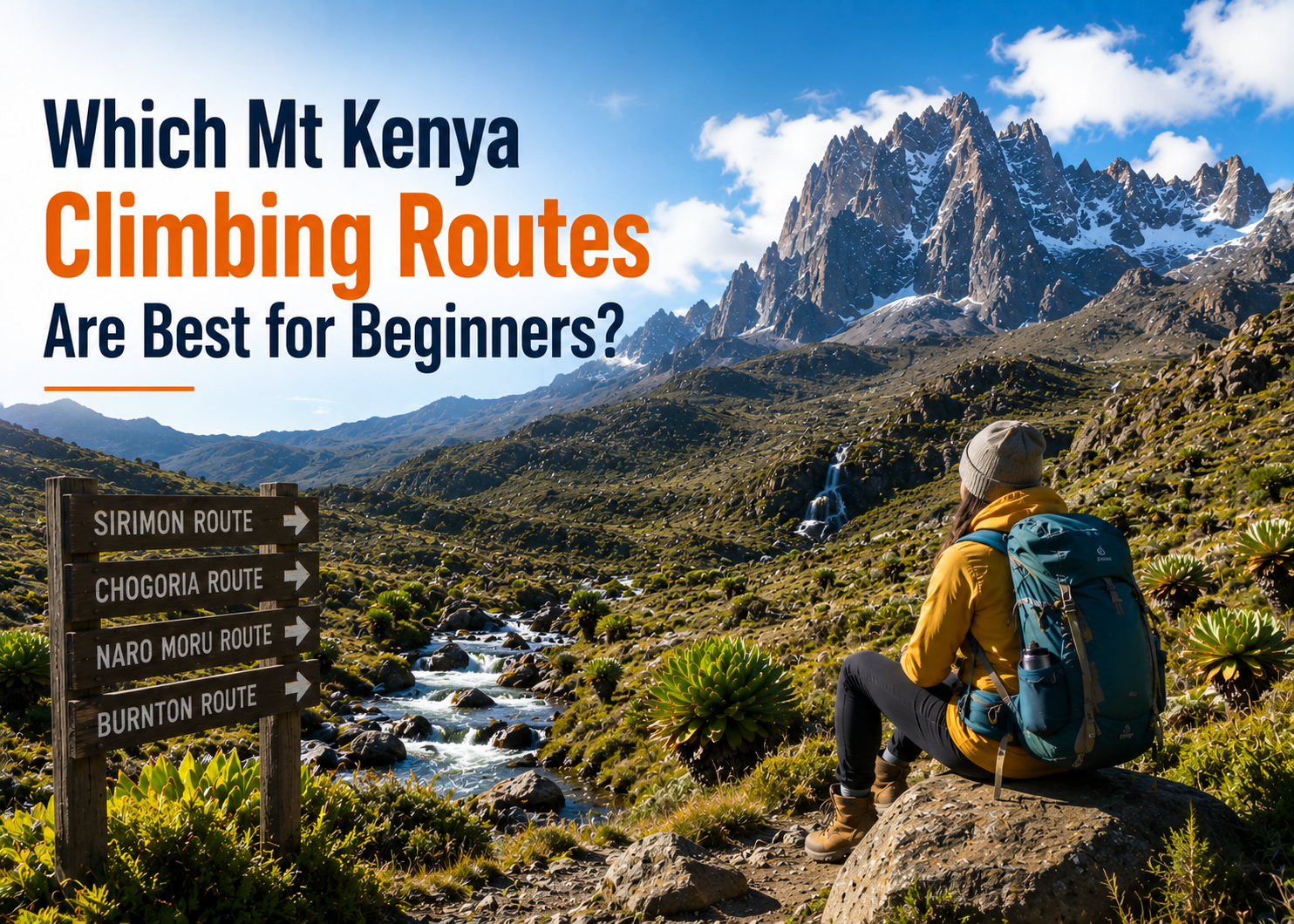
Several mt kenya climbing routes lead trekkers toward Point Lenana, the mountain’s popular trekking summit at 4,985 meters. Each route has its own character. Some provide gradual altitude gain and straightforward trails, while others involve steeper terrain, longer trekking days, or more remote conditions.

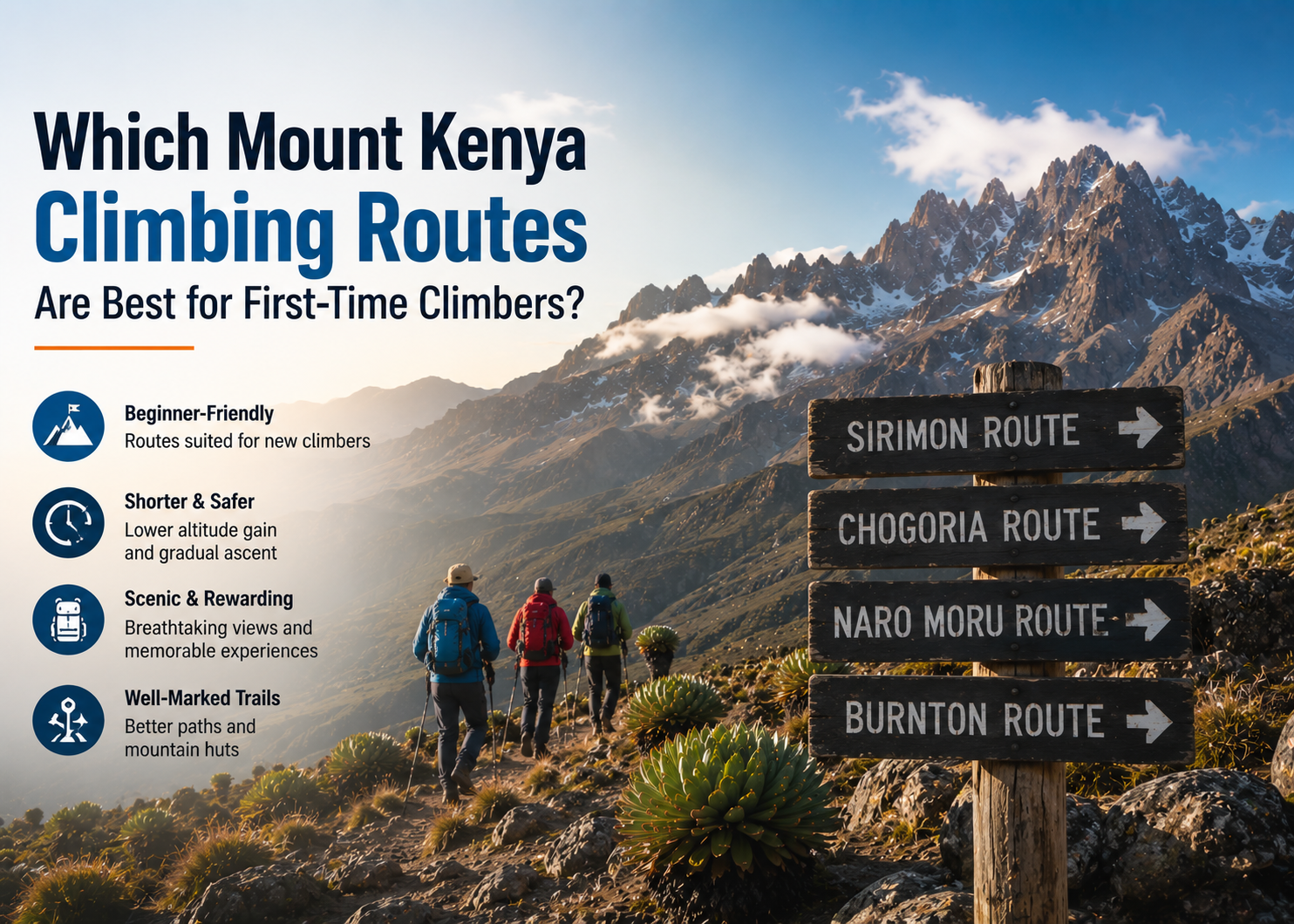
Ice Rock Trekking helps climbers select routes that match their fitness, trekking background, available time, and preferred scenery. For first-time high-altitude trekkers, Sirimon and Naro Moru are usually among the most practical options, while Chogoria offers an exceptionally scenic alternative for those comfortable with longer trekking days.

Why Route Selection Matters for First-Time Climbers

A beginner may assume that every trail ultimately provides a similar mountain experience. In reality, route choice influences daily walking distances, altitude gain, terrain, accommodation, acclimatization, scenery, and physical demands.

Mount Kenya rises rapidly from fertile lower slopes to an alpine environment. As trekkers move higher, oxygen levels decrease and temperatures become colder. A route that provides a steady ascent can give the body more time to adjust.

Beginners should therefore look beyond the shortest itinerary. An additional acclimatization day can make the experience more comfortable and may improve the chances of reaching Point Lenana.

A suitable beginner route should ideally offer:

  • Manageable daily trekking distances
  • Gradual altitude progression
  • Clearly established trails
  • Suitable overnight stops
  • Enough time for acclimatization
  • Practical access and exit points
  • A manageable level of technical difficulty
  • Opportunities to rest before the summit attempt

The easiest route on paper is not automatically the best option for every climber. Fitness, weather, itinerary length, previous altitude exposure, and personal expectations all matter.

Sirimon Route: A Strong Choice for Beginners

The Sirimon Route is one of the most popular approaches to Mount Kenya and is particularly suitable for first-time high-altitude trekkers. It approaches the mountain from the northwest and provides a relatively gradual ascent.

The route begins around Sirimon Gate and passes through montane forest before reaching open moorland and higher alpine terrain. Climbers typically stay around Old Moses Camp before continuing toward Shipton’s Camp.

One major advantage of Sirimon is its steady elevation profile. Rather than introducing extremely demanding terrain early in the trek, it allows climbers to settle into a sustainable walking rhythm.

What Makes Sirimon Beginner-Friendly?

Sirimon has several qualities that make it attractive to newcomers.

The trail is generally well established, and much of the approach involves gradual walking rather than highly technical climbing. Trekkers can concentrate on pacing, hydration, altitude adjustment, and conserving energy.

The scenery also changes noticeably as elevation increases. Lower forests gradually open into moorland before the rocky mountain landscape becomes dominant.

Shipton’s Camp provides striking views of Mount Kenya’s higher peaks. It also creates a practical staging point for climbers preparing for an early ascent toward Point Lenana.

For beginners seeking a balance between accessibility, scenery, and acclimatization potential, Sirimon deserves serious consideration.

Naro Moru Route: Direct and Accessible

Naro Moru is another established route used by trekkers heading toward Point Lenana. Its accessibility and relatively direct approach make it attractive to climbers working with limited schedules.

The route approaches from the western side of Mount Kenya and passes through forest, moorland, and alpine terrain before reaching higher camps.

Its direct nature can be both an advantage and a challenge.

Climbers may cover altitude more quickly than on a longer itinerary, meaning careful pacing becomes particularly important. One of the route’s well-known sections is the Vertical Bog, which can become wet, muddy, and physically demanding depending on conditions.

Is Naro Moru Suitable for Beginners?

Yes, provided the itinerary allows suitable acclimatization and the climber has prepared physically.

The trail does not require technical mountaineering skills for a standard Point Lenana trek. However, beginners should avoid treating its shorter distance as a reason to rush.

A slower itinerary can make Naro Moru considerably more manageable. Proper footwear is also important because muddy trail conditions can make certain sections tiring.

Naro Moru can work particularly well for fit beginners who prefer a relatively direct trekking experience.

Chogoria Route: Best for Beginners Who Prioritize Scenery

Chogoria is widely admired for its dramatic scenery. The route approaches Mount Kenya from the eastern side and passes through forests, open highlands, valleys, lakes, cliffs, and distinctive geological formations.

Trekkers may encounter landscapes around Lake Ellis, Lake Michaelson, the Gorges Valley, Hall Tarns, and other memorable areas depending on the itinerary.

The route is not necessarily the simplest beginner option, but it can be highly rewarding for trekkers who have reasonable fitness and enough time.

Why Beginners Choose Chogoria

Chogoria provides variety. Instead of concentrating primarily on reaching the summit, trekkers experience a broad range of Mount Kenya’s natural features.

The route can involve longer days and more demanding terrain than some alternatives, making preparation important. Beginners who regularly hike, walk long distances, or participate in endurance activities may find it manageable when using a properly paced itinerary.

The biggest mistake would be attempting to compress the route into too few days.

A longer itinerary provides more time to adjust to altitude while allowing trekkers to appreciate the scenery without constantly racing toward the next camp.

Sirimon Up and Chogoria Down: An Excellent Combination

For many beginners, climbing through Sirimon and descending through Chogoria offers an attractive combination.

The Sirimon side provides a steady approach toward the higher mountain, while Chogoria offers dramatic scenery during the descent. Instead of repeating the same trail, trekkers experience two contrasting sides of Mount Kenya.

A typical journey may progress through Sirimon Gate, Old Moses Camp, Shipton’s Camp, Point Lenana, and then descend toward the Chogoria side.

This combination works particularly well for people who want variety without adding technical climbing.

The ascent must still be paced carefully. Point Lenana sits at 4,985 meters, where altitude can affect even physically fit people. Fitness does not guarantee protection from altitude-related problems.

Chogoria Up and Sirimon Down

The reverse combination is also possible.

Climbing through Chogoria provides spectacular scenery from the beginning, while descending through Sirimon offers a relatively straightforward finish.

This direction can appeal to trekkers who want to spend more time experiencing Chogoria’s landscapes during the ascent rather than seeing them primarily while descending.

However, route direction should not be selected solely according to photographs or scenery. Daily elevation gain, camp locations, trek duration, weather, fitness, and acclimatization plans should influence the final decision.

Which Route Is the Easiest?

For many first-time trekkers, Sirimon provides one of the most balanced options.

Its relatively gradual ascent and established trekking infrastructure make it suitable for climbers entering a high-altitude environment for the first time.

Naro Moru is more direct but may involve faster altitude gain depending on the itinerary. Chogoria offers exceptional scenery but can involve longer distances and more varied terrain.

Therefore, beginners could broadly consider the routes this way:

Sirimon: Best balance of gradual ascent, established trails, and beginner suitability.

Naro Moru: Suitable for fit beginners seeking a direct route.

Chogoria: Excellent for scenery-focused beginners with sufficient fitness and trekking time.

Sirimon-Chogoria combination: Strong option for trekkers wanting gradual ascent and scenic variety.

The itinerary matters just as much as the route itself. A carefully paced five-day trek may be more comfortable than a rushed three-day schedule on supposedly easier terrain.

What About Batian and Nelion?

Mount Kenya has three prominent summit points: Batian, Nelion, and Point Lenana.

Point Lenana, at approximately 4,985 meters, is considered the trekking summit and can be reached without advanced rock-climbing skills under normal trekking conditions.

Batian, at approximately 5,199 meters, is Mount Kenya’s highest summit. Nelion, at approximately 5,188 meters, is the second-highest.

Batian and Nelion are very different objectives from Point Lenana.

Reaching them involves technical rock climbing, exposed terrain, specialist equipment, route-finding skills, and advanced mountaineering experience. They should not be treated as beginner trekking objectives.

First-time climbers generally focus on Point Lenana unless they already possess suitable technical climbing experience.

How Many Days Should Beginners Spend on Mount Kenya?

The ideal duration depends on the chosen route and the climber’s previous altitude experience.

Trying to reach high altitude too quickly can reduce enjoyment and increase the likelihood of altitude-related problems. A longer schedule allows more gradual elevation gain and gives the body additional time to adjust.

Many beginners benefit from itineraries lasting around four to six days for a Point Lenana trek, depending on the route.

A longer schedule also provides more opportunities for rest, steady pacing, photography, and appreciation of the mountain environment.

Adding time should not be viewed as weakness. On a high mountain, patience is often more valuable than speed.

How Difficult Is Mount Kenya for Beginners?

A Point Lenana trek requires physical effort but does not usually require technical climbing experience.

Trekkers need enough endurance to walk for several hours on consecutive days while carrying a daypack. Trails may include rocky sections, muddy ground, steep inclines, uneven surfaces, and cold summit terrain.

The summit attempt can be particularly demanding because climbers often begin before sunrise. Temperatures can be low, visibility may vary, and the effects of altitude become more noticeable.

Mental preparation also matters. Walking slowly for several hours in cold, thin air can test patience and determination.

Beginners who train consistently before departure are likely to feel more comfortable than those who depend entirely on general fitness.

Physical Preparation Before the Trek

Training should focus on endurance rather than speed alone.

Regular walking and hiking can help condition the legs for long trekking days. Where possible, beginners should practice on hills, stairs, or inclined terrain.

Cardiovascular activities such as jogging, cycling, swimming, and brisk walking can strengthen endurance. Leg exercises, including squats, lunges, and step-ups, can help prepare muscles for climbing and descending.

Training with a light backpack is also useful because it more closely reflects actual trekking conditions.

Consistency matters more than a few extremely intense sessions immediately before departure.

Acclimatization Can Influence the Entire Experience

Altitude is one of the most important considerations on Mount Kenya.

As climbers gain elevation, atmospheric pressure decreases and less oxygen becomes available with each breath. The body needs time to adapt.

Possible symptoms of poor altitude adjustment can include headaches, nausea, fatigue, dizziness, reduced appetite, and difficulty sleeping.

Trekkers should communicate symptoms rather than hiding them in an attempt to continue climbing.

A gradual itinerary, steady pace, adequate hydration, suitable nutrition, and professional supervision can support safer altitude management.

Reaching the summit should never take priority over personal safety.

What Should Beginners Pack?

Mountain weather can change quickly, making layered clothing essential.

Trekkers generally need moisture-managing base layers, insulating mid-layers, a warm jacket, waterproof outerwear, trekking trousers, gloves, warm headwear, and dependable hiking boots.

A suitable sleeping bag is equally important because nights at higher camps can become extremely cold.

Other useful items include trekking poles, sunglasses, sunscreen, a headlamp, water containers, personal medication, spare socks, and a small daypack.

Beginners should avoid carrying unnecessary weight. Every additional item becomes more noticeable after several hours of uphill walking.

Best Seasons for a Beginner Trek

Mount Kenya can experience changing weather patterns throughout the year, but drier periods are generally preferred for trekking.

January through February and roughly June through October are commonly associated with more favorable climbing conditions, although mountain weather can change unexpectedly during any season.

Rain can make trails muddy and slippery, while higher elevations can experience cold temperatures, wind, fog, or precipitation regardless of conditions at the base.

Beginners should therefore prepare for several weather conditions rather than packing only for the forecast expected before departure.

Why Professional Trek Support Matters

First-time climbers often benefit from experienced mountain support because Mount Kenya presents challenges that are difficult to judge from maps or photographs.

Route knowledge, pacing, altitude observation, weather awareness, camp organization, food preparation, and logistical coordination all contribute to the quality of a trek.

Ice Rock Trekking works with climbers to match route selection and itinerary length with their experience, fitness, schedule, and trekking goals.

A well-organized climb also allows participants to concentrate on walking, conserving energy, adapting to altitude, and enjoying the landscape rather than managing every logistical detail independently.

Choosing Between Sirimon, Chogoria, and Naro Moru

Beginners can narrow their choice by considering what matters most.

Choose Sirimon if you want a gradual approach and balanced first Mount Kenya experience.

Choose Chogoria if scenery and landscape variety are major priorities and you have sufficient time and fitness.

Choose Naro Moru if you prefer a direct established route and are comfortable with potentially steeper or muddier sections.

Choose a Sirimon-Chogoria combination if you want to experience contrasting sides of Mount Kenya without repeating your ascent route.

There is no single route that suits every beginner. The strongest choice is the route that fits the climber rather than the one with the shortest advertised itinerary.

Common Mistakes First-Time Climbers Should Avoid

Beginners sometimes focus heavily on reaching Point Lenana while overlooking the importance of the journey itself.

Walking too quickly is a common mistake. High-altitude trekking rewards patience. A slow, consistent pace can conserve energy and support acclimatization.

Other mistakes include insufficient physical preparation, inadequate cold-weather clothing, poorly fitted boots, ignoring altitude symptoms, carrying excessive weight, and choosing an itinerary simply because it is shorter.

Another mistake is comparing performance with other trekkers. People acclimatize differently. A strong runner may struggle with altitude while a slower walker may adapt comfortably.

Each climber should maintain a sustainable pace and communicate openly with the trekking team.

What Makes Mount Kenya Suitable for a First High-Altitude Trek?

Mount Kenya provides beginners with a chance to experience a genuine alpine environment without requiring technical climbing skills for Point Lenana.

The mountain offers varied ecosystems within a relatively compact trekking area. Climbers can move from forest to moorland, alpine vegetation, rocky valleys, and high-altitude terrain over several days.

The availability of multiple approaches also makes itinerary planning flexible.

A beginner can select a relatively gradual route, extend the schedule for acclimatization, or combine two routes for greater landscape variety.

That flexibility makes Mount Kenya an attractive stepping stone for trekkers considering other high-altitude adventures later.

Final Thoughts

For beginners, Sirimon is often one of the strongest choices because of its gradual profile and established trail, while Naro Moru provides a more direct alternative. Chogoria suits trekkers who value dramatic scenery and can manage longer walking days. A Sirimon ascent combined with a Chogoria descent offers an especially rewarding balance.

Ice Rock Trekking can help match the route, duration, and trekking structure to a climber’s fitness and goals. With sensible preparation, steady acclimatization, appropriate equipment, and realistic expectations, a first Mount Kenya trek can become a memorable introduction to high-altitude adventure. 

5 Days Sirimon Down Chogoria

Mount Kenya rewards trekkers with far more than a summit moment. Its changing vegetation, broad valleys, unusual alpine plants, rugged peaks, glacial landscapes, lakes, waterfalls, and high-altitude camps create an experience that feels different at every stage.

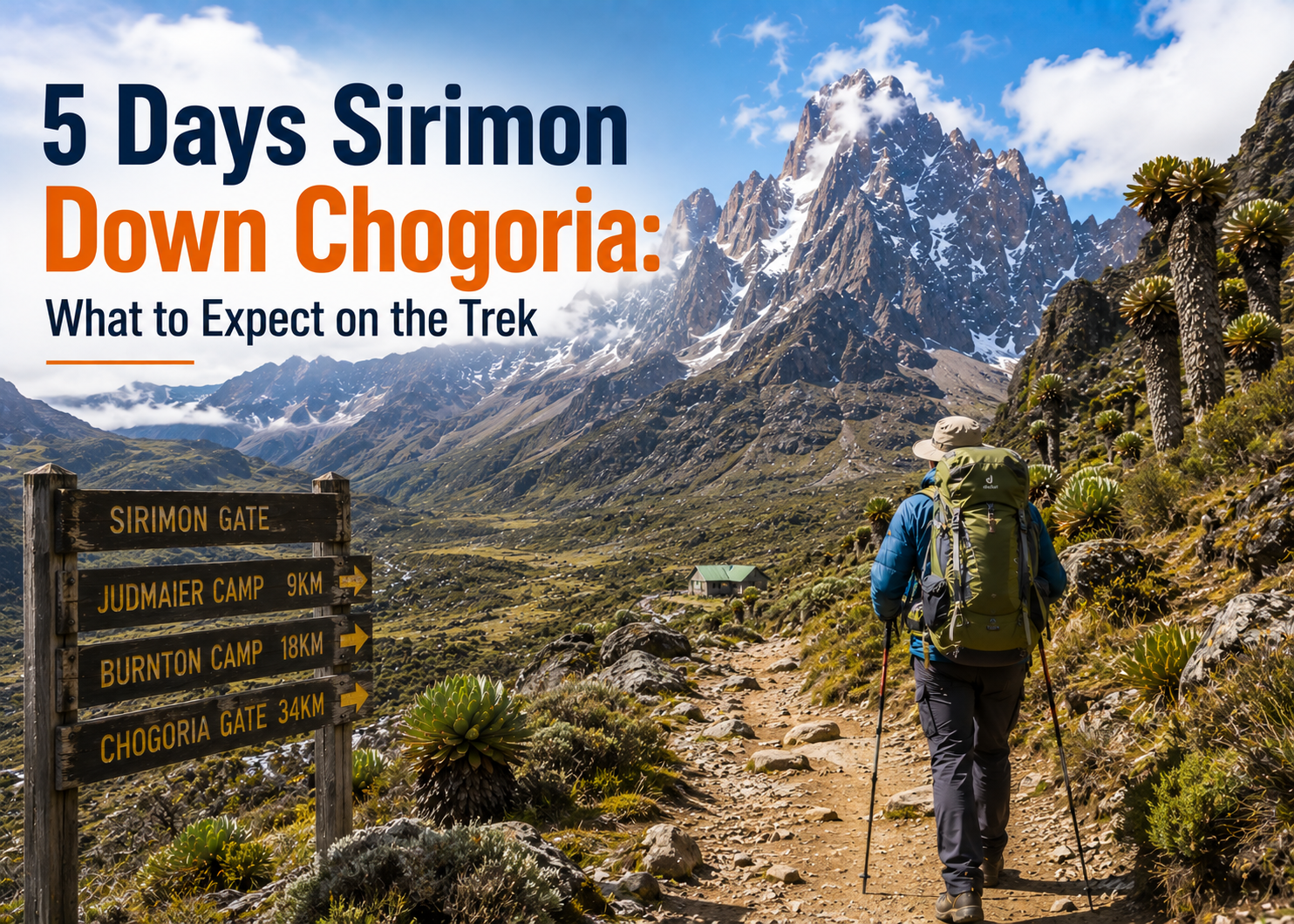
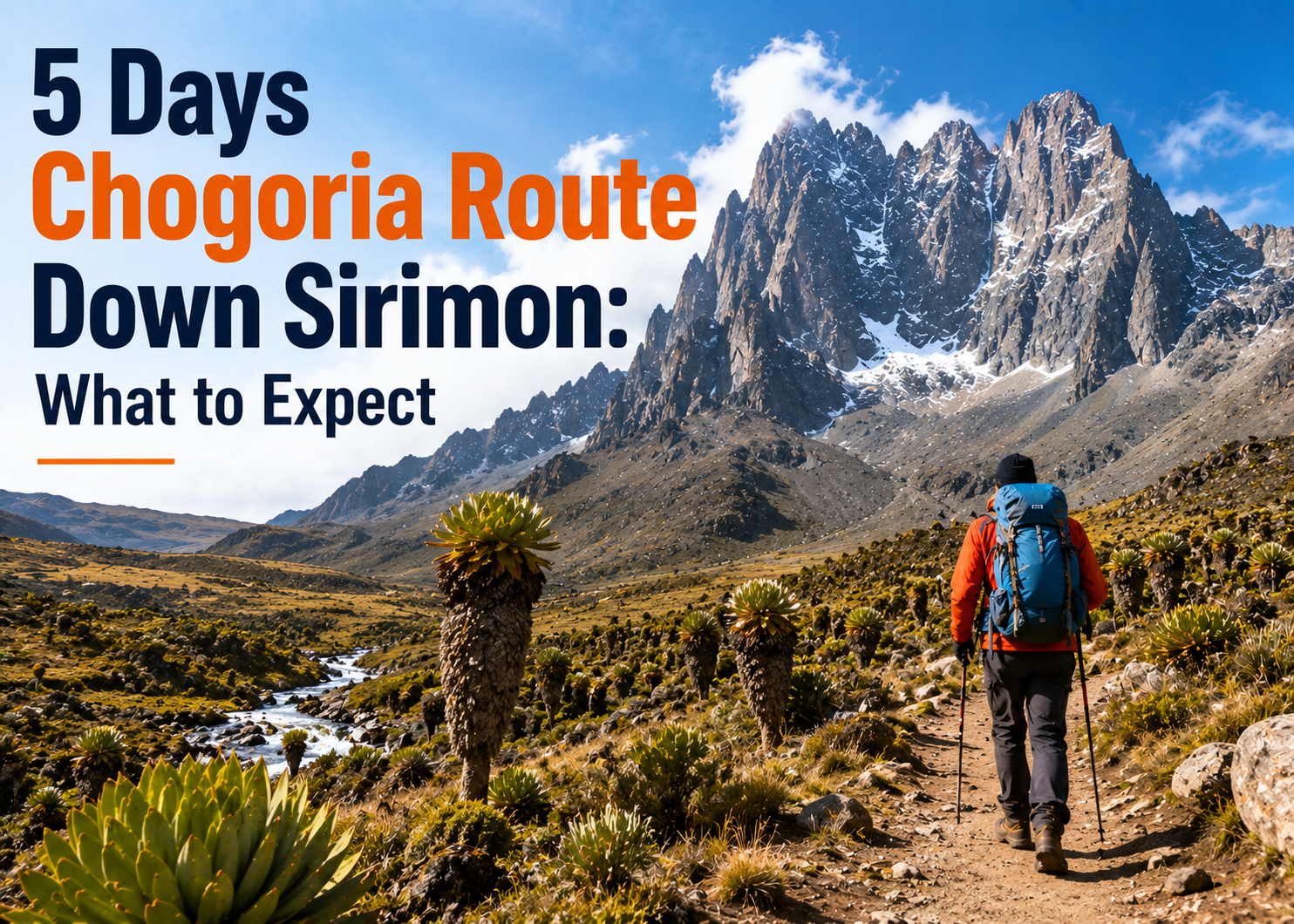
The 5 Days sirimon down chogoria trek combines two contrasting sides of Mount Kenya. Trekkers climb through the more gradual Sirimon side, approach Point Lenana at 4,985 meters, and descend through the dramatic scenery of Chogoria. For trekkers seeking variety without retracing the same trail, this traverse offers a particularly rewarding way to experience the mountain.

Why Choose Sirimon Up and Chogoria Down?

Route selection can strongly influence the character of a Mount Kenya trek. Sirimon and Chogoria have different terrain, scenery, vegetation, and trekking conditions, which makes combining them an attractive choice.

The Sirimon Route provides a relatively gradual approach toward the higher elevations. The trek moves from forest into moorland before reaching the impressive Mackinder Valley and Shipton Camp. This progression allows trekkers to experience increasing altitude without beginning with an excessively aggressive climb.

Chogoria creates a striking contrast on the descent. Its lakes, cliffs, valleys, waterfalls, and greener mountain landscapes give trekkers something new to look forward to after reaching the summit area.

Instead of walking back through terrain already covered, trekkers cross Mount Kenya from one side to another. This makes the journey feel like a genuine mountain traverse rather than a simple climb and return.

What Makes the Five-Day Format Appealing?

Five days creates a practical balance between trekking time, altitude adjustment, summit ambitions, and sightseeing.

Mount Kenya should never be treated as an ordinary long-distance hike. Point Lenana reaches 4,985 meters, and the effects of altitude become increasingly important as trekkers move above 3,000 and 4,000 meters.

A five-day schedule provides more opportunity for the body to adapt than highly compressed itineraries. Some five-day variations include a dedicated acclimatization period around Shipton Camp, while others divide the journey differently after the summit.

Exact camp arrangements can therefore vary according to the operator, conditions, group ability, and chosen itinerary.

With Ice Rock Trekking, route planning considers the natural progression of the mountain and the need to maintain a manageable trekking rhythm.

Day 1: Sirimon Gate to Old Moses Camp

The first trekking day introduces climbers to Mount Kenya without immediately exposing them to its hardest terrain.

After reaching Sirimon Gate, the walking section begins through the lower mountain environment. The route gradually climbs through forest before moving toward heath and moorland vegetation.

Old Moses Camp sits at approximately 3,300 meters. Depending on the exact starting point and conditions, trekkers can expect roughly three to four hours of walking from the gate.

This first day is important because it establishes the pace for everything that follows. Strong trekkers may feel tempted to walk quickly, but maintaining a controlled pace is usually more sensible at altitude.

The landscape also begins changing noticeably. Dense vegetation gives way to more open terrain, and the scale of Mount Kenya becomes increasingly apparent.

For many visitors, the first evening at Old Moses is when the trek starts to feel like a true high-altitude expedition.

Temperatures can drop considerably after sunset, so warm layers become important even if daytime walking conditions feel comfortable.

Day 2: Old Moses Camp to Shipton Camp

The second day represents a significant increase in both distance and elevation.

Trekkers leave Old Moses and continue through increasingly open moorland. The route crosses mountain streams and passes through valleys before eventually entering the impressive Mackinder Valley.

This section is one of the defining parts of the Sirimon ascent.

Giant lobelias and other unusual high-altitude vegetation appear across the landscape. As elevation increases, trees largely disappear and the terrain becomes increasingly rugged.

The main peaks begin dominating the skyline.

Batian and Nelion create an imposing backdrop, while Point Lenana represents the trekking objective for most non-technical visitors. Batian and Nelion require technical mountaineering skills, whereas Point Lenana is the mountain’s principal trekking summit.

The journey from Old Moses to Shipton Camp generally takes around six to seven hours, although individual pace and weather can change walking times. Ice Rock Trekking lists Shipton Camp at approximately 4,250 meters on its Sirimon itinerary.

Reaching Shipton is a major milestone. At this elevation, trekkers often become much more aware of thinner air.

Simple activities may suddenly require greater effort. Walking to the dining area, organizing equipment, or climbing a small slope around camp can leave someone breathing noticeably harder.

That reaction reinforces an important mountain principle: fitness helps, but altitude affects everyone differently.

Day 3: Acclimatization Around Shipton Camp

Depending on the exact five-day itinerary selected, the third day may serve as an acclimatization period around Shipton Camp.

This should not be viewed as wasted time.

A well-planned acclimatization day can include a controlled hike to a higher elevation followed by a return to Shipton for another night. Some itineraries use areas around Hausberg Tarn, Nanyuki Tarn, Kami Hut, or nearby high points for acclimatization walks.

The purpose is straightforward: expose the body to a greater elevation while allowing recovery at a lower sleeping altitude.

Trekkers should continue drinking regularly, eating properly, resting, and monitoring how they feel.

This is also an excellent opportunity to enjoy the high mountain surroundings without concentrating entirely on covering distance.

Shipton Camp sits beneath Mount Kenya’s dramatic upper peaks. Rock formations, alpine vegetation, tarns, cliffs, and glacial features create a landscape that feels remarkably remote.

Trekkers can also use the afternoon to prepare summit equipment.

Headlamps should be checked, batteries organized, warm layers placed within easy reach, water prepared, and daypacks packed before sleeping.

The summit departure comes very early.

Day 4: Shipton Camp to Point Lenana and Down Chogoria

For most trekkers, this is the hardest and most memorable stage.

The summit attempt generally begins in darkness, often around 3:00 a.m. The reason for such an early departure is to reach Point Lenana around sunrise.

Walking before dawn introduces a completely different atmosphere.

The temperature is low, visibility is limited to the beam of a headlamp, and the rocky terrain requires concentration. At nearly 5,000 meters, even a controlled walking pace can feel demanding.

The final approach involves steep and rocky high-altitude terrain.

Rather than focusing constantly on the summit, trekkers often find it easier to concentrate on maintaining a slow rhythm: step, breathe, step, breathe.

Eventually, the horizon begins changing color.

Reaching Point Lenana at 4,985 meters provides expansive views across Mount Kenya’s upper landscape when conditions are clear. Batian and Nelion rise nearby, while ridges, valleys and distant plains spread out below.

After photographs and a short summit stop, the trek is far from finished.

The descent toward Chogoria begins.

Entering the Chogoria Side

One of the biggest advantages of descending through Chogoria is the dramatic change in scenery after the summit.

Instead of returning through Mackinder Valley, trekkers enter a landscape shaped by steep cliffs, deep valleys, lakes, rock formations, and waterfalls.

Depending on the selected trail variation, the descent can pass near features such as Hall Tarns, Mintos, Lake Michaelson, Gorges Valley, and other scenic areas associated with the Chogoria side.

Ice Rock Trekking’s itinerary, for example, describes a descent from Mintos toward Meru Mount Kenya Bandas through Gorges Valley via Lake Michaelson and Vivian Falls.

The visual contrast is striking.

Sirimon feels broad, open, and progressively alpine. Chogoria can feel more dramatic, with deeper valleys and water features creating strong contrasts against the mountain rock.

This is also why photographers frequently appreciate the traverse. New scenery continues appearing even after the main summit objective has been achieved.

Day 5: Descending Toward Chogoria

The final day takes trekkers farther away from the alpine environment and toward the lower slopes.

After several days surrounded by exposed high-altitude terrain, vegetation gradually becomes richer again.

The air also feels noticeably denser as elevation decreases.

For tired legs, downhill walking can still present a challenge. Long descents repeatedly load the knees, ankles, and quadriceps. Trekking poles can be particularly useful for controlling movement on uneven sections.

Depending on the itinerary, trekkers may pass Meru Mount Kenya Bandas before continuing toward the vehicle collection point or Chogoria side exit.

The final stage provides an opportunity to look back at how dramatically the environment has changed over five days.

Trekkers have moved from forest to moorland, into an alpine environment, close to the mountain’s highest peaks, and back through greener landscapes on another side of Mount Kenya.

That variety is one of the strongest qualities of the route.

How Difficult Is the Trek?

The Sirimon-Chogoria traverse does not require technical climbing skills when the objective is Point Lenana, but that does not make it easy.

Several factors create the challenge.

Altitude is the most important. Point Lenana stands at 4,985 meters, where oxygen availability is considerably lower than at sea level.

Trekkers also face long walking days, cold conditions, rocky surfaces, steep sections, and an early-morning summit attempt.

The descent can become physically tiring as well.

A reasonable fitness base therefore makes the experience considerably more manageable.

Trekkers should ideally prepare with regular walking, hiking, stair climbing, cardiovascular training, and lower-body strengthening before departure.

Training with a loaded daypack can also help prepare the shoulders and legs for consecutive trekking days.

What Weather Should Trekkers Expect?

Mount Kenya weather can change rapidly.

A morning may begin with clear skies and develop cloud, wind, mist, or precipitation later. Higher elevations can become extremely cold, especially during the night and before sunrise.

Trekkers should therefore prepare for multiple conditions rather than relying on a single forecast.

Layering works particularly well.

A moisture-managing base layer, insulating mid-layer, warm jacket, and waterproof outer shell allow trekkers to adjust clothing as temperatures change.

Gloves, warm headwear, suitable trekking socks, and reliable footwear become especially valuable during the summit attempt.

Sun protection is equally important.

Strong ultraviolet exposure at altitude means sunscreen, sunglasses, and protective headwear should remain accessible throughout the trek.

What Should You Pack?

Packing should focus on warmth, weather protection, comfort, and practicality.

Essential equipment generally includes sturdy trekking boots, trekking poles, waterproof clothing, thermal layers, warm gloves, a hat, sunglasses, headlamp, sleeping equipment suitable for low temperatures, reusable water containers, and a comfortable daypack.

Personal medication, basic toiletries, blister treatment, and high-energy snacks can also be useful.

Avoid packing unnecessary items simply because they might be convenient. Every additional item adds weight somewhere in the expedition system.

Ice Rock Trekking can help trekkers identify which equipment is essential and which items can be left behind.

Food and Hydration on the Mountain

Energy requirements increase during multi-day trekking.

Regular meals containing carbohydrates, protein, vegetables, and other energy-rich foods support recovery between walking stages. Appetite can sometimes decrease at higher elevations, but eating remains important.

Hydration deserves equal attention.

Cold conditions can make trekkers feel less thirsty even while they continue losing fluids through breathing and physical activity.

Carrying accessible drinking water encourages regular hydration rather than waiting until long rest stops.

Trekkers should also avoid relying exclusively on sugary snacks. Quick-energy foods have their place, particularly during demanding sections, but balanced meals provide more sustained support.

Altitude Awareness Matters

No responsible Mount Kenya itinerary should treat altitude casually.

Headache, unusual fatigue, nausea, poor appetite, dizziness, and disturbed sleep can occur after gaining elevation. Symptoms should always be communicated to the trek leader rather than hidden.

Walking slowly helps reduce unnecessary physical stress.

A trek is not a race.

The person walking fastest at Sirimon Gate is not necessarily the person who will feel strongest near Point Lenana.

Experienced mountain teams pay close attention to group condition, weather, pace, and individual responses as elevation increases.

Why Professional Trek Support Makes a Difference

A multi-day Mount Kenya trek involves much more than following a visible trail.

Route management, meals, camp logistics, porter coordination, water planning, weather decisions, pacing, and altitude observation all influence the quality of the experience.

Professional support becomes particularly valuable when conditions change.

Ice Rock Trekking focuses on organized Mount Kenya trekking experiences built around practical route planning and on-mountain support. The aim is not simply to move trekkers between camps but to create a structured progression across the mountain.

For first-time high-altitude trekkers, having an experienced team nearby can also make unfamiliar situations easier to manage.

Who Is This Trek Best Suited For?

This itinerary suits trekkers who want more than a quick summit attempt.

It works particularly well for active travelers who appreciate landscape variety, photographers seeking contrasting mountain environments, hiking enthusiasts progressing into high-altitude trekking, and experienced trekkers who want to see different sides of Mount Kenya.

The five-day format can also appeal to first-time Mount Kenya trekkers because Sirimon provides a relatively gradual approach before the traverse continues down the scenic Chogoria side.

However, anyone joining should arrive physically prepared.

Being comfortable walking for several hours on consecutive days is more important than having exceptional athletic ability.

What Makes the Route Memorable?

Some mountain trips become defined entirely by whether the summit was reached.

Mount Kenya offers much more.

The gradual climb through Sirimon, open Mackinder Valley, unusual giant vegetation, towering technical peaks above Shipton Camp, darkness of the summit push, sunrise from Point Lenana, and dramatic Chogoria descent all contribute separate memories.

The changing terrain also prevents the journey from feeling repetitive.

By the time trekkers reach the Chogoria side, the landscape can feel completely different from the environment where the trek began.

That sense of crossing the mountain rather than simply climbing it gives the route much of its character.

Responsible Trekking on Mount Kenya

Protecting the mountain should remain part of every trekking experience.

Trekkers should stay on established paths where required, avoid leaving waste, respect wildlife, minimize damage to vegetation, and follow park regulations.

Mount Kenya’s alpine ecosystems are particularly sensitive. Plants growing at high elevations may take many years to recover after being damaged.

Trekkers should also avoid disturbing animals for photographs or feeding wildlife around camps.

Responsible practices help preserve the environment for local communities and future visitors.

Preparing Mentally for Five Days on Mount Kenya

Physical preparation receives plenty of attention, but mindset matters as well.

Mountain conditions are rarely completely predictable.

Weather can alter views. Walking times can change. Cold mornings may make leaving a sleeping bag difficult. Altitude may force a slower pace than expected.

Trekkers who remain flexible generally adapt better.

Rather than expecting every hour to follow a rigid schedule, approach each day according to conditions and the recommendations of the mountain team.

Patience becomes especially important during the summit attempt.

Small, controlled steps often achieve more than bursts of speed followed by exhaustion.

Final Thoughts

The 5 Days sirimon down chogoria experience brings together many of Mount Kenya’s strongest trekking features within one continuous traverse. Sirimon provides the gradual ascent and impressive Mackinder Valley approach, Point Lenana delivers the high-altitude objective, and Chogoria rewards trekkers with lakes, valleys, cliffs, waterfalls, and changing vegetation on the descent.

For travelers who want a Mount Kenya trek built around scenery, physical challenge, altitude progression, and route variety, Ice Rock Trekking offers an itinerary that turns five demanding days into a memorable journey across one of East Africa’s great mountain landscapes. 

Mount Kenya Climbing Routes

Mount Kenya offers an extraordinary combination of high-altitude trekking, rugged volcanic scenery, alpine lakes, dramatic valleys, and diverse vegetation. For someone preparing for a first climb, choosing the right route can make a major difference to comfort, acclimatization, scenery, and summit success.

Several mount kenya climbing routes reach the mountain’s trekking areas, but they offer very different experiences. Sirimon, Chogoria, and Naro Moru remain the main choices for trekkers heading toward Point Lenana. Ice Rock Trekking helps climbers select routes based on fitness, available time, preferred scenery, and previous altitude experience.

Why Route Selection Matters for First-Time Climbers

A first Mount Kenya climb involves much more than choosing a trail that reaches a high point. Climbers need to consider daily walking distances, elevation gain, sleeping altitude, trail conditions, weather exposure, accommodation, and opportunities for acclimatization.

A route that appears shorter may seem attractive, but rapid altitude gain can make the journey physically demanding. A slightly longer itinerary can provide more time for the body to adjust to reduced oxygen levels.

First-time climbers should consider:

  • Number of trekking days
  • Daily elevation gain
  • Trail gradient
  • Accommodation preferences
  • Acclimatization opportunities
  • Fitness requirements
  • Landscape variety
  • Seasonal trail conditions
  • Summit-day difficulty
  • Descent route

A well-planned route allows climbers to enjoy the mountain instead of focusing entirely on reaching the summit as quickly as possible.

What Are the Main Mount Kenya Climbing Routes?

Mount Kenya has several access trails, but three routes attract most recreational trekkers: Sirimon, Chogoria, and Naro Moru.

Each route has its own personality.

Sirimon provides relatively gradual terrain and excellent acclimatization opportunities. Chogoria delivers spectacular scenery, including lakes, valleys, cliffs, and dramatic highland landscapes. Naro Moru offers a direct approach and is commonly associated with shorter itineraries.

Some climbers combine two routes rather than ascending and descending the same way. For instance, ascending through Sirimon and descending through Chogoria creates a varied mountain experience.

For trekkers aiming for Point Lenana rather than the technical peaks of Batian or Nelion, these routes provide practical options with different levels of physical challenge.

Sirimon Route: A Strong Choice for First-Time Climbers

The Sirimon Route is one of the most suitable options for people making their first high-altitude trek on Mount Kenya.

The trail approaches from the northwest and generally offers a steady progression toward the upper mountain. Its relatively gradual profile makes it attractive for climbers concerned about acclimatization.

The lower section passes through forest before reaching heathland and open moorland. As elevation increases, vegetation becomes sparse and the landscape increasingly rugged.

One of Sirimon’s strongest advantages is its relatively manageable gradient. Climbers can maintain a comfortable walking rhythm instead of repeatedly dealing with extremely steep sections.

Why First-Time Climbers Like Sirimon

Sirimon offers several characteristics that suit beginners.

The route allows itineraries to be structured around sensible elevation gains. Its terrain also tends to feel less aggressive than some steeper alternatives. This gives trekkers more opportunity to concentrate on pacing, hydration, breathing, and acclimatization.

The scenery remains impressive throughout the climb, with wide valleys, rocky formations, alpine vegetation, and expansive mountain views.

For people who want a balanced combination of scenery, manageable terrain, and acclimatization potential, Sirimon deserves serious consideration.

What Can Climbers Expect on the Sirimon Route?

A typical Sirimon trek begins at Sirimon Gate. From there, climbers gradually move through different ecological zones.

Early stages may include forest and bamboo areas before the landscape opens into moorland. Higher sections feature unusual alpine vegetation, rocky valleys, and increasingly dramatic views.

Common overnight areas include Old Moses Camp and Shipton’s Camp, depending on the itinerary.

Shipton’s Camp sits beneath impressive high peaks and serves as an important staging area for trekkers heading toward Point Lenana.

Summit attempts usually begin before sunrise. Climbers move through cold, dark alpine terrain before reaching Point Lenana, where clear conditions can provide remarkable views across the surrounding mountain landscape.

Chogoria Route: Best for Spectacular Scenery

For climbers who place scenery high on their priorities, Chogoria is difficult to overlook.

The route approaches Mount Kenya from the eastern side and passes through some of the mountain’s most visually impressive terrain. Trekkers may encounter dramatic valleys, waterfalls, lakes, cliffs, moorlands, and volcanic formations.

Lake Ellis, Lake Michaelson, the Gorges Valley, and surrounding high-altitude landscapes contribute to Chogoria’s reputation.

The route can work well for first-time climbers when enough days are allocated for acclimatization.

Is Chogoria Suitable for Beginners?

Yes, provided the itinerary matches the climber’s fitness and altitude experience.

Chogoria includes sections that can feel physically demanding, particularly at higher elevations. However, a carefully paced itinerary gives climbers enough time to adjust.

Rather than rushing through the route, beginners can benefit from an itinerary that distributes elevation gain over several days.

Trekkers who regularly hike, walk long distances, or maintain reasonable cardiovascular fitness should find the route achievable with suitable preparation.

Chogoria can be especially rewarding for first-time visitors who want the climb itself to be as memorable as reaching Point Lenana.

Why Combine Chogoria and Sirimon?

A combined itinerary is often one of the most appealing ways to experience Mount Kenya.

Instead of walking up and down the same trail, climbers enter the mountain from one side and leave through another. This creates more landscape variety and reduces repetition.

One popular option involves ascending through Chogoria and descending through Sirimon. Another approach reverses the direction.

Ascending Chogoria can provide a scenic progression through lakes and valleys before reaching the higher mountain. Descending Sirimon then offers a relatively straightforward exit.

Alternatively, ascending Sirimon can provide a measured approach to altitude before descending through Chogoria’s spectacular scenery.

Ice Rock Trekking can structure the itinerary according to climbing experience, fitness level, available days, and preferred direction.

Naro Moru Route: The More Direct Option

Naro Moru is another established Mount Kenya trekking route. It approaches from the western side and is widely known for providing a relatively direct path toward Point Lenana.

Its shorter distance can appeal to trekkers with limited time, but shorter does not automatically mean easier.

A direct route can involve faster altitude gain, which may place greater demands on the body. Climbers also encounter the famous Vertical Bog, where wet conditions can make progress slower and more tiring.

During dry periods, trail conditions may be easier, while heavy rainfall can significantly change the trekking experience.

Is Naro Moru Good for a First Mount Kenya Climb?

It can be, particularly for fit trekkers who have previous hiking experience and follow a properly structured itinerary.

However, beginners should avoid choosing Naro Moru purely because it appears to provide a faster summit option.

Altitude responds to time and elevation rather than enthusiasm. Moving upward too quickly can increase the likelihood of headaches, fatigue, nausea, poor sleep, and other altitude-related symptoms.

A longer itinerary can therefore be a wiser choice, even for physically strong climbers.

For someone prioritizing acclimatization and a relaxed pace, Sirimon may have an advantage. For someone prioritizing scenery, Chogoria may offer more visual variety.

Sirimon vs Chogoria vs Naro Moru

Choosing between the three routes becomes easier when climbers identify what matters most to them.

Sirimon

Best suited for: First-time climbers seeking a balanced trek.

Main strengths: Gradual approach, good acclimatization potential, varied landscapes, and manageable trekking sections.

Considerations: Climbers wanting the most dramatic lake and valley scenery may prefer adding Chogoria as the descent.

Chogoria

Best suited for: Trekkers who value scenery and route diversity.

Main strengths: Alpine lakes, deep valleys, cliffs, waterfalls, moorlands, and dramatic landscapes.

Considerations: Some sections require strong walking fitness and careful pacing.

Naro Moru

Best suited for: Fit trekkers seeking a more direct route.

Main strengths: Established trail, straightforward access, and shorter approach.

Considerations: Faster altitude gain and potentially muddy sections can make the climb demanding.

For many beginners, combining Sirimon and Chogoria provides an excellent balance.

What Is the Best Mount Kenya Route for Beginners?

There is no single route that suits every beginner because first-time climbers arrive with different fitness levels, trekking backgrounds, schedules, and expectations.

However, Sirimon frequently stands out as a practical starting point.

Its gradual character makes pacing easier, while longer itineraries can provide valuable acclimatization time. Combining it with Chogoria creates additional scenery without requiring climbers to repeat the same trail.

A first-time climber with strong fitness who loves photography and dramatic landscapes may prefer Chogoria. Someone with limited trekking experience may feel more comfortable beginning with Sirimon.

The itinerary length matters just as much as the route itself.

How Many Days Should First-Time Climbers Allow?

Trying to complete Mount Kenya too quickly can reduce enjoyment and increase altitude-related challenges.

A five- or six-day trekking schedule can be more comfortable than a rushed itinerary, depending on the chosen route.

Extra time gives the body more opportunity to adapt while allowing climbers to maintain a sustainable pace.

Longer schedules may also provide time to enjoy viewpoints, lakes, unusual vegetation, and mountain landscapes rather than treating every day as a race toward the next camp.

For many recreational trekkers, Mount Kenya is not simply a summit objective. The changing environments along the route form a major part of the experience.

How Difficult Is Climbing Mount Kenya?

For trekkers heading to Point Lenana, Mount Kenya requires good physical fitness but does not normally demand technical climbing skills.

The challenge comes from several factors working together:

  • High altitude
  • Long trekking days
  • Cold temperatures
  • Uneven terrain
  • Early summit departure
  • Reduced oxygen
  • Changing weather
  • Mental fatigue

Someone comfortable walking on flat ground may still find mountain terrain difficult.

Training should therefore include uphill walking, longer hikes, stair climbing, cardiovascular exercise, and leg-strengthening activities.

Consistency matters more than occasional intense workouts.

Point Lenana vs Batian and Nelion

First-time visitors need to distinguish between trekking Point Lenana and climbing Mount Kenya’s technical summits.

Point Lenana stands at approximately 4,985 meters and is the primary trekking summit. It can be reached without technical rock-climbing skills under normal trekking conditions.

Batian, at 5,199 meters, is Mount Kenya’s highest summit. Nelion, at 5,188 meters, is another major technical peak.

Batian and Nelion require rock-climbing ability, specialist equipment, technical route knowledge, and considerably more mountaineering experience.

Beginners seeking their first Mount Kenya adventure generally aim for Point Lenana.

Why Acclimatization Matters More Than Speed

Altitude can affect anyone regardless of age or fitness.

As climbers move higher, atmospheric pressure decreases, meaning less oxygen is available with each breath. The body requires time to adapt.

Good acclimatization practices include walking at a steady pace, drinking sufficient fluids, eating properly, resting well, and avoiding unnecessarily rapid elevation gain.

Climbers should also communicate symptoms rather than hiding them.

Headaches, dizziness, unusual fatigue, nausea, or difficulty sleeping may indicate altitude-related problems. Symptoms should always be assessed seriously because conditions can worsen at higher elevations.

A sensible climbing schedule places health ahead of speed.

When Is the Best Time to Climb Mount Kenya?

Mount Kenya can experience changing weather throughout the year, but climbers often favor the drier periods.

January through February and roughly June through October can offer favorable trekking conditions, although mountain weather is never completely predictable.

Rain can make trails muddy and slippery, particularly on routes containing boggy sections. Higher elevations can experience freezing temperatures, wind, mist, rain, hail, or snow.

Even during a generally dry period, climbers should pack for changing conditions.

What Should First-Time Climbers Pack?

Good equipment improves safety and comfort throughout the trek.

Climbers normally need layered clothing that can adapt to different temperatures. Lower elevations may feel relatively warm, while summit conditions can be extremely cold.

Important items include sturdy hiking boots, moisture-managing base layers, warm mid-layers, an insulated jacket, waterproof outerwear, gloves, warm headwear, trekking trousers, sunglasses, sunscreen, a headlamp, water containers, and a suitable sleeping bag.

Trekking poles can be particularly useful during steep or uneven descents.

Avoid packing excessive unnecessary equipment. Every item should serve a practical purpose.

How Should You Train for Mount Kenya?

Preparation should begin several weeks before departure.

Walking remains one of the most useful forms of training because trekking requires sustained movement rather than short bursts of effort.

Gradually increase walking distance and include hills whenever possible. Carrying a light backpack during training can help your shoulders, legs, and core adapt to trekking conditions.

Cardiovascular activities such as cycling, jogging, swimming, or stair climbing can support endurance. Strength exercises targeting the legs and core can improve stability on uneven terrain.

Rest and recovery should remain part of the training schedule.

Why Local Trekking Support Matters

Mount Kenya is a high-altitude environment where route familiarity, weather awareness, pacing, camp organization, and logistical planning matter.

Working with an experienced trekking team allows climbers to concentrate on walking, acclimatizing, eating, resting, and enjoying the landscape.

Ice Rock Trekking supports climbers with route planning, trekking logistics, experienced mountain personnel, accommodation arrangements, meals, and practical preparation information.

For first-time climbers, professional support can also make unfamiliar mountain routines easier to manage.

Common Mistakes First-Time Climbers Should Avoid

One frequent mistake is selecting the shortest possible itinerary. Saving a day may sound attractive, but rapid altitude gain can make the trek considerably harder.

Another mistake involves starting too quickly. The opening stages may feel easy, encouraging trekkers to walk faster than necessary. A steady pace conserves energy for higher elevations.

Poor hydration, insufficient clothing, new hiking boots, inadequate training, and excessive luggage can also create avoidable problems.

First-time climbers should resist comparing their pace with other trekkers. People acclimatize differently, and reaching camp first offers little advantage.

Should You Ascend and Descend Different Routes?

For many trekkers, yes.

Using separate ascent and descent routes increases landscape variety and provides a broader impression of Mount Kenya.

A Sirimon-Chogoria combination is particularly attractive because the two sides offer contrasting terrain.

Sirimon provides open valleys and a measured high-altitude approach, while Chogoria features dramatic lakes, cliffs, gorges, and expansive landscapes.

The combination also makes the journey feel like a genuine mountain crossing rather than an out-and-back trek.

Choosing Your Route With Ice Rock Trekking

The right route should reflect your physical condition, trekking experience, available time, preferred scenery, and comfort with altitude.

Ice Rock Trekking can help evaluate these factors before selecting an itinerary.

For many first-time climbers, Sirimon offers an accessible introduction to Mount Kenya trekking. Chogoria is particularly attractive for scenery, while Naro Moru suits trekkers who prefer a more direct approach and can manage its physical demands.

Combining routes can provide the strongest overall experience, especially when enough days are included for acclimatization.

Final Thoughts

Choosing a Mount Kenya route should focus on more than reaching Point Lenana. The quality of the trek depends on acclimatization, pacing, scenery, preparation, weather readiness, and the structure of the itinerary.

Sirimon is often a strong option for beginners, while Chogoria adds exceptional landscape variety. Combining the two gives first-time climbers a rewarding way to experience different sides of the mountain. With suitable preparation and support from Ice Rock Trekking, the climb can become a memorable high-altitude adventure built around safety, scenery, and steady progress. 

5 Days Chogoria Route Down Sirimon

Mount Kenya rewards trekkers with rugged peaks, glacial valleys, high-altitude lakes, open moorlands, dense forests, and constantly changing mountain scenery. Among its most rewarding trekking combinations, the 5 Days Chogoria Route down Sirimon brings together two distinctly different sides of the mountain.

Starting from the scenic Chogoria side and descending through Sirimon creates a varied journey rather than retracing the same trail. For trekkers seeking dramatic landscapes, a challenging summit attempt, gradual acclimatization, and contrasting terrain, this five-day itinerary offers an exciting way to experience Mount Kenya.

Why Choose Chogoria Up and Sirimon Down?

Mount Kenya has several established trekking routes, but Chogoria is widely appreciated for its dramatic scenery. The trail passes through forests, moorlands, valleys, cliffs, waterfalls, lakes, and high-altitude terrain before reaching the upper mountain.

Sirimon offers a different experience. Its relatively open landscapes, broad valleys, and gradual descent make it an attractive route for leaving the mountain after the summit attempt.

Combining these routes allows trekkers to experience more scenery within one trip. Instead of climbing and descending through identical surroundings, the landscape continues changing from the first day until the final walk toward Sirimon Gate.

The route also provides excellent photographic opportunities. Lake Ellis, Lake Michaelson, the Gorges Valley, the high alpine zone, Point Lenana, and the Sirimon landscapes create a varied visual experience.

Quick Overview of the 5-Day Trek

A typical five-day Chogoria-to-Sirimon itinerary follows this general pattern:

Day 1: Chogoria area to Mount Meru Bandas
Day 2: Mount Meru Bandas to Lake Ellis
Day 3: Lake Ellis to Mintos Camp
Day 4: Mintos Camp to Point Lenana, then descend toward Shipton’s Camp
Day 5: Shipton’s Camp to Sirimon Gate

Exact camps, walking distances, departure times, and trail sections can vary according to weather, trekking conditions, group fitness, logistics, and the itinerary arranged by the trekking operator.

Ice Rock Trekking plans Mount Kenya trips with careful attention to pacing, mountain conditions, acclimatization, equipment, meals, and trekker safety.

Day 1: Chogoria to Mount Meru Bandas

The first day introduces trekkers to the greener lower slopes of Mount Kenya.

Depending on the trip arrangement, transportation may cover part of the approach toward the Chogoria side before trekking begins. The surroundings feature thick vegetation, forest scenery, and opportunities to observe the mountain’s lower ecological zones.

Mount Meru Bandas provides a comfortable starting point for the higher sections ahead.

This first stage gives trekkers time to settle into the rhythm of mountain travel. Rather than pushing aggressively toward higher elevations, a measured start allows the body to begin adapting while trekkers organize equipment and prepare mentally for longer trekking days.

Temperatures can become noticeably cooler as elevation increases. Keeping an insulating layer and waterproof jacket easily accessible helps trekkers respond quickly to changing conditions.

The first evening is also a good time to check boots, backpacks, hydration systems, trekking poles, and clothing arrangements before moving deeper into the mountain.

Day 2: Mount Meru Bandas to Lake Ellis

The second trekking day introduces one of the attractive features of the Chogoria side: Lake Ellis.

As trekkers leave the lower vegetation behind, the surroundings gradually open into moorland. Views become broader, and the character of the mountain changes considerably.

Lake Ellis sits in a beautiful highland setting and makes an impressive campsite for trekkers progressing toward Mount Kenya’s upper elevations.

The journey requires steady walking rather than unnecessary speed. Trekkers may already notice that breathing becomes different as altitude increases. A controlled pace, regular hydration, sufficient food intake, and proper rest become increasingly important.

Weather can change rapidly around the lake. Clear skies may give way to mist, rain, wind, or cold temperatures. Trekkers should therefore carry rain protection even when conditions appear favorable at the beginning of the day.

The evening at Lake Ellis provides a valuable opportunity for recovery before the more demanding climb toward Mintos Camp.

Day 3: Lake Ellis to Mintos Camp

Day three is usually one of the most memorable stages of the 5 Days Chogoria Route down Sirimon.

The landscape becomes increasingly rugged as trekkers move deeper into the high-altitude environment. Depending on the chosen trail, trekkers can experience impressive perspectives across the Gorges Valley and surrounding mountain formations.

Lake Michaelson is another striking feature associated with the Chogoria landscape. Its position beneath steep cliffs makes this section particularly appealing to photographers and mountain enthusiasts.

As the route approaches Mintos Camp, vegetation becomes sparse and the terrain feels increasingly alpine.

Altitude is now a major factor.

Trekkers should resist the temptation to move quickly simply because they feel strong. A slow, consistent pace conserves energy and supports adaptation to the thinner air.

Mintos Camp sits at a significant elevation and can become extremely cold after sunset. Wind may make temperatures feel even lower. Warm base layers, an insulated jacket, gloves, thermal clothing, and a suitable sleeping bag become essential equipment rather than optional comforts.

Dinner, hydration, and early rest are particularly important because the summit attempt normally begins during the night.

Day 4: Mintos Camp to Point Lenana

For many trekkers, summit morning becomes the emotional highlight of the journey.

The climb generally begins well before sunrise. Headlamps illuminate the trail while trekkers move carefully through cold, dark, high-altitude terrain.

Point Lenana stands at approximately 4,985 metres and is the primary trekking summit on Mount Kenya. Batian and Nelion rise higher, but reaching them requires technical mountaineering skills and specialist climbing equipment.

The final approach to Point Lenana can feel demanding because of the altitude, cold temperatures, darkness, and accumulated fatigue from previous days.

This is where controlled pacing becomes especially important.

Trekkers should focus on consistent movement rather than speed. Short, deliberate steps can help conserve energy during steeper sections.

Reaching Point Lenana around sunrise can reveal spectacular views across Mount Kenya’s rugged peaks, valleys, ridges, and surrounding highlands when weather conditions cooperate.

After spending a suitable amount of time at the summit, the group begins descending.

The descent toward Shipton’s Camp introduces trekkers to the Sirimon side of Mount Kenya. The change in scenery becomes immediately noticeable, adding another dimension to the trip.

After the intensity of summit morning, reaching camp gives trekkers an opportunity to eat, hydrate, rest, and reflect on the climb.

Day 5: Shipton’s Camp to Sirimon Gate

The final day involves a significant descent through the Sirimon landscape.

Trekkers leave the high alpine environment and gradually return toward moorland and lower elevations. As oxygen levels increase, many people find breathing easier and walking more comfortable.

The route commonly passes through the Old Moses area before continuing toward Sirimon Gate.

Although descending may appear easier than climbing, it still requires attention. Long downhill sections can place considerable stress on the knees, ankles, and quadriceps.

Trekking poles can be particularly useful during this stage.

As vegetation becomes thicker, the surroundings signal the approaching end of the mountain journey. Reaching Sirimon Gate marks the completion of a route that has crossed Mount Kenya from one side to another.

How Difficult Is the Trek?

This five-day itinerary requires good physical fitness.

It does not normally require technical climbing skills for Point Lenana, but trekkers should not confuse non-technical trekking with an easy mountain trip.

Several factors increase the difficulty.

Altitude represents the biggest challenge for many participants. Point Lenana reaches almost 5,000 metres, where reduced oxygen levels can noticeably affect physical performance.

Trekkers must also handle consecutive days of walking, uneven terrain, cold temperatures, early departures, and changing weather.

Summit morning adds another challenge because trekkers usually start in darkness after limited sleep.

Previous trekking experience can be helpful, although strong preparation, sensible pacing, suitable equipment, and proper acclimatization can make the route accessible to fit first-time high-altitude trekkers.

Acclimatization on the Route

Altitude deserves serious consideration on any Mount Kenya trek.

As elevation increases, atmospheric pressure falls and the body receives less oxygen with each breath. The body needs time to adjust.

Five days provides a structured progression through several elevation zones, but individual responses to altitude vary considerably.

Walking slowly can help reduce unnecessary physical stress. Trekkers should also drink sufficient fluids, eat regularly, and communicate openly with the trekking team about unusual symptoms.

Common altitude-related discomfort may include headache, tiredness, reduced appetite, disturbed sleep, or nausea.

Symptoms should never be hidden simply because someone wants to reach the summit.

Experienced mountain teams monitor trekkers and make decisions according to physical condition, weather, altitude response, and safety.

No summit is more important than a trekker’s wellbeing.

What Weather Should Trekkers Expect?

Mount Kenya’s weather can change quickly.

A morning may begin with clear skies before clouds, rain, mist, or strong winds develop later. Temperatures also vary dramatically according to altitude and time of day.

Lower sections can feel relatively mild, while camps at higher elevations may become extremely cold overnight.

Near Point Lenana, trekkers should prepare for freezing conditions, particularly during the pre-dawn summit climb.

Layering offers the most practical approach.

A moisture-managing base layer can sit beneath an insulating mid-layer and protective outer shell. Trekkers can then add or remove clothing as conditions and activity levels change.

Waterproof protection should remain accessible rather than buried at the bottom of a backpack.

Essential Clothing and Equipment

Suitable equipment can significantly affect comfort and performance during five days on Mount Kenya.

Trekkers should consider carrying:

  • Waterproof trekking boots with good ankle support
  • Moisture-wicking base layers
  • Warm fleece or insulating mid-layers
  • Insulated jacket for camps and summit morning
  • Waterproof jacket and trousers
  • Warm trekking trousers
  • Thermal layers
  • Warm hat and sun hat
  • Insulated gloves
  • Comfortable trekking socks
  • Trekking poles
  • Headlamp with spare batteries
  • Sunglasses with strong UV protection
  • Sunscreen and lip protection
  • Reusable water bottles or hydration system
  • Personal toiletries
  • Suitable sleeping bag
  • Small personal first-aid supplies
  • Waterproof bags for clothing and electronics

Equipment should be tested before departure. A new pair of boots worn for the first time on Mount Kenya can quickly create blisters and unnecessary discomfort.

Physical Preparation Before the Trek

Training should focus on endurance rather than short bursts of intense activity.

Long walks, hiking, stair climbing, cycling, running, and cardiovascular training can help build stamina. Strength exercises for the legs and core can also improve stability across uneven terrain.

Trekkers should gradually increase training duration rather than making sudden changes shortly before departure.

Walking with a backpack during preparation can make training more relevant to actual trail conditions.

Hill training is especially useful because it prepares the legs for both sustained climbing and long descents.

Fitness cannot completely prevent altitude problems, but better conditioning allows trekkers to handle the physical workload more efficiently.

Food and Hydration on Mount Kenya

Trekking at altitude requires considerable energy.

Meals should provide sufficient carbohydrates, protein, and calories to support consecutive days of physical activity. Warm meals can also provide welcome comfort when temperatures fall at camp.

Appetite sometimes decreases at higher elevations, but trekkers should still try to maintain adequate food intake.

Hydration is equally important.

Cold weather can reduce the sensation of thirst even though the body continues losing fluids through breathing and physical activity. Carrying accessible drinking water encourages regular hydration throughout the day.

Ice Rock Trekking organizes trekking meals with the demands of mountain travel in mind, helping participants maintain energy across the itinerary.

Why Trekking Support Matters

A successful Mount Kenya trek involves far more than simply following a trail.

Route planning, permits, food, camping arrangements, equipment management, weather decisions, pacing, altitude awareness, porter coordination, and emergency procedures all contribute to the overall experience.

Professional trekking support allows participants to concentrate on walking, acclimatizing, resting, and enjoying the surroundings.

Local mountain teams also bring valuable familiarity with trail conditions and the practical challenges associated with changing weather and elevation.

Ice Rock Trekking works to create organized trekking experiences that balance adventure with responsible mountain practices.

Scenic Highlights Along the Journey

One major advantage of climbing through Chogoria and descending through Sirimon is the diversity of scenery.

The Chogoria side features dramatic valleys, lakes, cliffs, moorlands, and rugged geological formations.

Lake Ellis provides a peaceful high-altitude setting, while the Gorges Valley creates some of the route’s most impressive views. Higher sections reveal Mount Kenya’s sharp rocky formations and increasingly barren alpine terrain.

Point Lenana provides the summit experience before the route transitions toward Shipton’s Camp.

Sirimon then introduces broad valleys, open landscapes, moorland, and gradually returning vegetation.

The trek feels like a genuine crossing of the mountain rather than a simple ascent and return.

Responsible Trekking Practices

Mount Kenya’s ecosystems deserve careful protection.

Trekkers should avoid leaving litter, disturbing wildlife, damaging vegetation, or contaminating natural water sources.

Reusable bottles and properly managed waste can reduce environmental impact.

Staying on established trails also protects fragile vegetation, particularly in high-altitude environments where plant growth can be extremely slow.

Responsible trekking extends to local communities and mountain staff as well. Respectful interactions, fair treatment, and appreciation for the work of guides, cooks, and porters contribute to a more positive trekking culture.

Who Is This Route Best Suited For?

The route works particularly well for trekkers who want substantial scenic variety within a relatively compact itinerary.

It can suit physically active travelers, hiking enthusiasts, photographers, adventure groups, and trekkers seeking to reach Point Lenana.

Mountain professionals may also appreciate the route because it showcases several ecological zones and contrasting trail environments within one crossing.

People with limited hiking preparation should invest sufficient time in fitness before attempting the trek.

Those seeking a slower altitude progression may also consider a longer itinerary that provides additional acclimatization time.

What Makes the Five-Day Crossing Memorable?

The appeal of this itinerary comes from progression.

Trekkers begin among green forests before moving toward open moorlands, mountain lakes, dramatic valleys, rocky alpine terrain, and finally the summit zone.

After reaching Point Lenana, the landscape changes again during the Sirimon descent.

Each day therefore feels distinct.

There is also a strong sense of achievement in crossing from one side of Mount Kenya to another. The journey is not solely about standing at Point Lenana. Camps, changing landscapes, cold mornings, challenging climbs, shared meals, mountain silence, and long stretches of trail all become part of the experience.

Planning Your Trek With Ice Rock Trekking

Careful preparation can turn a demanding mountain itinerary into a rewarding adventure.

Ice Rock Trekking supports trekkers with route planning, mountain logistics, experienced personnel, accommodation arrangements, meals, and practical preparation information for Mount Kenya.

Before departure, participants should discuss their trekking background, fitness, equipment, itinerary expectations, and any concerns about high-altitude travel.

Packing early also gives trekkers enough time to replace unsuitable equipment rather than making last-minute compromises.

The mountain rewards patience. Walking steadily, respecting altitude, listening to the trekking team, eating properly, staying hydrated, and protecting yourself from changing weather can contribute significantly to a safer and more enjoyable experience.

Conclusion

The 5 Days Chogoria Route down Sirimon combines some of Mount Kenya’s most dramatic scenery with the challenge of reaching Point Lenana and completing a cross-mountain journey. From Lake Ellis and the rugged Chogoria landscape to summit sunrise and the broad Sirimon valleys, every stage offers something different.

With appropriate fitness, reliable equipment, careful acclimatization, and experienced trekking support from Ice Rock Trekking, this five-day route can deliver a demanding yet deeply rewarding Mount Kenya experience.

Mt Kenya Batian Climb

Mount Kenya offers a very different mountaineering experience from a standard high-altitude trek. Batian, the mountain’s highest summit at 5,199 meters, demands technical rock-climbing ability, strong physical conditioning, careful acclimatization, and confidence in exposed alpine terrain. Climbers considering a mt kenya Batian climb should treat it as a serious mountaineering objective rather than a trekking extension.

With the right preparation, climbing team, equipment, and route strategy, Batian offers a rewarding challenge amid some of East Africa’s most dramatic mountain scenery. Ice Rock Trekking helps climbers prepare for the demands of Mount Kenya while keeping safety, acclimatization, and realistic expectations at the center of the experience.

What Makes Batian Special?

Mount Kenya has several prominent peaks, but Batian stands above them all. At 5,199 meters, it is the highest point on Mount Kenya and the second-highest summit in Africa after Kilimanjaro.

Unlike Point Lenana, which trekkers can reach without technical rock-climbing skills, Batian requires ropes, climbing equipment, route-finding ability, and technical competence. Its steep rock faces, exposed sections, changing weather, and altitude create a serious alpine challenge.

The combination of trekking and technical climbing makes Batian especially attractive to experienced climbers. Reaching the summit requires more than stamina. Climbers need to move efficiently on rock, manage exposure, communicate with their climbing partner, and remain composed when conditions become demanding.

Batian vs Point Lenana: What Is the Difference?

One of the most important distinctions prospective visitors should know is the difference between Batian and Point Lenana.

Point Lenana stands at approximately 4,985 meters and is generally considered a trekking summit. It requires fitness, acclimatization, and determination, but normal routes do not involve sustained technical rock climbing.

Batian is entirely different. Reaching its 5,199-meter summit requires technical climbing across exposed rock terrain.

This distinction matters when choosing a Mount Kenya trip. A person who has completed Kilimanjaro, Everest Base Camp, or another demanding trek may possess excellent endurance but may not automatically have the technical experience required for Batian.

Strong trekking experience provides a valuable fitness base, but climbers should evaluate their rock-climbing skills separately.

How Difficult Is Climbing Batian?

Batian is a serious technical mountaineering objective. Difficulty comes from several factors working together rather than altitude alone.

Climbers must deal with sustained rock climbing, exposure, long summit days, cold temperatures, route-finding challenges, rapidly changing mountain weather, and physical fatigue.

Altitude makes every movement more demanding. A climbing sequence that feels manageable at lower elevation can require considerably more effort above 4,500 meters. Cold hands can also affect grip, rope handling, and equipment management.

Mental endurance matters just as much. Climbers need to remain focused for long periods while navigating exposed sections and managing fatigue.

Anyone planning Batian should arrive with realistic expectations. It is not a peak where enthusiasm can substitute for climbing preparation.

What Technical Skills Do You Need?

Previous rock-climbing experience is highly valuable for Batian. Climbers should feel comfortable using a harness, helmet, climbing rope, carabiners, belay devices, and other standard technical equipment.

Useful skills include:

  • Belaying confidently and efficiently
  • Moving securely over exposed rock
  • Following multi-pitch climbing routes
  • Rappelling or abseiling safely
  • Using climbing commands clearly
  • Managing ropes at belay stations
  • Climbing while carrying essential equipment
  • Maintaining balance on uneven rock
  • Staying calm around significant exposure

Climbers who lack sufficient technical experience should consider training before traveling. Practice at a climbing center or outdoor crag can improve movement, rope handling, belaying, and confidence.

Technical preparation also makes the actual climb more enjoyable because climbers can focus on the mountain rather than trying to master basic techniques at altitude.

Which Route Is Used to Climb Batian?

Batian has established technical climbing routes, with route choice strongly influenced by season and prevailing conditions.

The North Face Standard Route is one of the best-known options. Climbers commonly consider it during periods when conditions favor the northern side of the mountain. The route involves multiple pitches of technical rock climbing and substantial exposure.

The Normal Route on the south side provides another approach during seasons when conditions are more suitable there.

Choosing between routes should never depend solely on personal preference. Weather, rock conditions, seasonal patterns, climber experience, and professional assessment all influence the safest and most practical option.

Ice Rock Trekking can help structure the approach and acclimatization schedule around the climbing objective and prevailing mountain conditions.

Why Is Acclimatization So Important?

Batian rises above 5,000 meters, making altitude a major consideration.

Even highly fit climbers can experience altitude-related symptoms. Cardiovascular fitness does not guarantee immunity from headaches, nausea, poor sleep, loss of appetite, or reduced performance.

A gradual approach allows the body more time to adapt to decreasing oxygen availability.

Mount Kenya offers an advantage because climbers can spend several days trekking through different ecological and altitude zones before reaching the technical climbing area. A carefully planned schedule can incorporate gradual elevation gain and appropriate rest.

Rushing the approach may save time on paper but can reduce summit chances and increase risk.

Climbers should report unusual or worsening symptoms rather than hiding them because of summit ambitions. Good decisions at altitude depend on honest communication.

What Fitness Level Is Required?

Batian requires a combination of cardiovascular endurance, muscular strength, climbing efficiency, and recovery capacity.

Long-distance running, cycling, stair climbing, hiking, and hill walking can build cardiovascular endurance. However, general fitness should be combined with climbing-specific preparation.

Upper-body strength helps, but efficient rock climbing depends heavily on footwork, balance, core stability, and controlled movement. Climbers who rely too heavily on their arms may tire quickly.

Training can include loaded hikes, stair sessions, squats, lunges, step-ups, core exercises, grip work, and regular climbing sessions.

Consistency matters more than occasional extreme workouts. A structured preparation period over several months allows the body to develop endurance gradually while reducing injury risk.

How Long Does a Batian Expedition Take?

The total duration varies according to the approach route, acclimatization schedule, climbing route, weather conditions, and individual performance.

Climbers should avoid creating an itinerary that leaves no flexibility. Mountain weather can disrupt even carefully planned schedules.

A practical expedition normally includes an approach phase, acclimatization days, positioning near the technical route, the main climbing attempt, descent, and return trek.

Including contingency time can be valuable. An additional day may provide an alternative opportunity if poor weather prevents climbing on the intended summit day.

Short itineraries can look attractive, but Batian rewards patience.

What Is the Best Time to Climb Batian?

Mount Kenya’s climbing seasons are closely connected to weather patterns and the orientation of technical routes.

Different sides of the mountain can experience different conditions during the year. For this reason, the preferred route may change according to season.

Climbers should consider precipitation, temperature, wind, visibility, and rock conditions when planning. Wet rock can dramatically increase technical difficulty, while freezing temperatures can make rope and equipment handling harder.

Mountain weather can still change unexpectedly during favorable periods. Climbers therefore need appropriate clothing and contingency planning regardless of the month selected.

What Equipment Should You Carry?

Equipment requirements for Batian extend well beyond normal trekking gear.

A typical technical climbing setup may include a helmet, harness, climbing shoes or suitable mountain footwear, ropes, carabiners, slings, belay equipment, protection systems, and rappelling equipment. The precise technical rack depends on the selected route and climbing arrangement.

Personal mountain equipment should include insulating layers, waterproof outerwear, gloves, warm headwear, trekking footwear, headlamp, sunglasses, water containers, and a suitable backpack.

A sleeping system appropriate for cold mountain conditions is also essential.

Climbers should discuss technical equipment responsibilities before departure. Knowing what is supplied and what must be brought personally prevents unnecessary duplication or missing essential items.

Every important item should be tested before the expedition.

What Weather Conditions Should You Expect?

Mount Kenya creates its own demanding high-altitude environment. Conditions can shift from sunshine to cloud, rain, wind, or freezing temperatures surprisingly quickly.

Lower sections may feel warm and humid, while higher elevations can become extremely cold, particularly before sunrise and after sunset.

Layering provides flexibility. Climbers can add or remove clothing as temperature and activity levels change.

Waterproof protection remains important even during relatively dry periods. Wet clothing at altitude can quickly become uncomfortable and potentially dangerous.

Climbers should also protect themselves from strong ultraviolet exposure. Sunglasses, sunscreen, suitable clothing, and lip protection can make a substantial difference during long days above the tree line.

How Important Is Mental Preparation?

Technical mountains test decision-making as much as physical ability.

Exposure can affect climbers differently. Someone who performs confidently at an indoor climbing wall may react differently when standing on a high mountain face with hundreds of meters of open space below.

Mental preparation involves developing familiarity with exposure, trusting climbing systems, maintaining controlled breathing, and concentrating on immediate movements.

Fatigue can also influence judgment. Climbers should practice making calm decisions while physically tired during training.

The strongest mindset is not simply determination to reach the summit. It is the ability to make sensible decisions when conditions suggest continuing may no longer be appropriate.

Why Does Summit Day Require Special Preparation?

A Batian summit attempt can involve many hours of sustained activity.

An early start may be necessary to take advantage of favorable conditions and provide sufficient time for both ascent and descent. Climbers must therefore organize equipment, clothing, food, and hydration before starting.

Efficiency becomes extremely important on multi-pitch terrain. Small delays at each pitch can accumulate into substantial lost time.

Climbers should know where essential items are stored and avoid repeatedly unpacking their bags.

Food should be easy to consume in cold conditions. Energy bars, dried fruit, nuts, sandwiches, gels, or other familiar high-energy foods can help maintain performance.

Hydration is equally important, although drinking regularly in cold weather often requires conscious effort.

What Safety Factors Matter Most?

Safety on Batian depends on preparation, communication, technical competence, weather assessment, and disciplined decision-making.

Professional climbing support becomes particularly important because local mountain knowledge can help with route selection, timing, changing conditions, and logistical planning.

Climbers should communicate immediately if they feel unwell, unusually weak, extremely cold, or uncomfortable with a technical section.

Equipment checks should take place before the climb rather than after a problem develops.

Turnaround decisions also deserve respect. Summit ambitions should never override deteriorating weather, insufficient time, altitude problems, or technical concerns.

A successful mountain expedition is one where everyone returns safely, regardless of whether the highest point is reached.

What Should You Eat and Drink During the Climb?

High-altitude activity increases energy demands, while altitude can simultaneously reduce appetite.

Meals containing carbohydrates, proteins, and fats can support sustained performance during the approach. Climbers should also carry familiar snacks that remain appealing when appetite drops.

Hydration requires regular attention. Cold temperatures can reduce the sensation of thirst even while the body continues losing fluids through breathing and physical exertion.

Drinking consistently throughout the approach helps climbers arrive at the technical section in better condition.

Introducing unfamiliar supplements or foods during the expedition is rarely ideal. Training sessions provide an opportunity to test snacks and hydration strategies beforehand.

How Can You Prepare Before Traveling to Kenya?

Preparation should begin months before departure.

Start by assessing current trekking fitness and technical climbing ability. Identify weaknesses early enough to improve them gradually.

A climber with excellent technical skills but limited endurance should prioritize cardiovascular conditioning and long hiking days. A strong endurance athlete with limited rock experience should spend more time climbing.

Practice wearing the footwear, harness, backpack, and clothing intended for the mountain whenever possible.

Training on consecutive days can also help simulate expedition fatigue. For example, a long hike followed by climbing practice the next day can reveal how well the body performs before full recovery.

Rest should remain part of the training schedule. Constant high-intensity exercise without recovery increases injury risk.

Why Climb Mount Kenya With Ice Rock Trekking?

A technical Mount Kenya expedition requires careful coordination between trekking logistics and climbing objectives.

Ice Rock Trekking supports climbers with locally informed itinerary planning, acclimatization scheduling, mountain logistics, route preparation, and professional support suited to the demands of Mount Kenya.

Local knowledge becomes especially valuable when dealing with access routes, camps, changing weather, altitude progression, and technical climbing schedules.

Rather than treating Batian as a simple summit target, the focus should remain on building a realistic expedition around the climber’s experience and the mountain’s conditions.

Common Mistakes Climbers Should Avoid

One common mistake is assuming that strong trekking experience automatically prepares someone for technical climbing. Endurance and rock-climbing competence are related but separate abilities.

Another mistake is rushing acclimatization. Extra time spent adjusting to altitude can improve both safety and climbing performance.

Poor equipment preparation can also create unnecessary problems. New boots, unfamiliar gloves, poorly fitted harnesses, or untested backpacks can become frustrating during long mountain days.

Some climbers also underestimate hydration and nutrition because cold weather suppresses thirst and appetite.

Finally, rigid summit expectations can lead to poor decisions. Batian demands flexibility. Weather, health, climbing speed, and route conditions must determine whether continuing remains sensible.

Is Batian Right for You?

Batian is best suited to climbers who want a genuine technical alpine objective rather than a trekking-only summit.

Ask yourself several questions before committing. Are you comfortable with multi-pitch rock climbing? Can you handle exposure? Have you spent long days hiking or climbing? Are you prepared to train consistently? Can you accept turning around if conditions become unsafe?

If the answer to several of these questions is no, gaining more experience first may create a safer and more rewarding future attempt.

Climbers who want to experience Mount Kenya without technical rock climbing can consider Point Lenana before progressing toward Batian.

Final Thoughts

Climbing Batian combines altitude, technical rock, dramatic scenery, physical endurance, and serious decision-making. Proper training, acclimatization, suitable equipment, realistic scheduling, and professional mountain support can significantly improve the quality and safety of the expedition.

Ice Rock Trekking approaches Batian as a technical climbing objective where preparation matters at every stage. For climbers with the necessary skills and commitment, Mount Kenya’s highest summit offers a demanding experience shaped by rugged terrain, changing conditions, and the satisfaction of taking on one of Africa’s most distinctive alpine challenges.