Chogoria Route Mount Kenya


Mount Kenya stands proudly as Africa’s second-highest mountain and one of the continent’s most rewarding trekking destinations. With several routes leading to its breathtaking peaks, each trail offers a distinct experience. Among them, the Chogoria Route Mount Kenya consistently earns praise from trekkers, climbers, photographers, and outdoor enthusiasts seeking a more dramatic and immersive adventure.

At Ice Rock Trekking, we have guided countless travelers across Mount Kenya’s diverse landscapes. Time and again, the Chogoria Route stands out for its unmatched scenery, varied terrain, rich biodiversity, and authentic wilderness experience. For those looking beyond a standard mountain trek, this route delivers an extraordinary journey through some of Kenya’s most spectacular natural environments.

What Makes the Chogoria Route Mount Kenya Special?

The Chogoria Route approaches Mount Kenya from the eastern side of the mountain. Unlike some routes that focus primarily on reaching the summit, Chogoria combines summit ambitions with breathtaking landscapes that transform every stage of the trek into an unforgettable experience.

Trekkers encounter crystal-clear lakes, dramatic cliffs, dense forests, alpine meadows, giant lobelias, and panoramic mountain vistas. The route offers a perfect balance of challenge and beauty, making it highly attractive to adventure seekers who want more than just a summit photo.

Many experienced hikers consider the chogoria route mount kenya the most scenic path on the mountain, and it is easy to understand why once the journey begins.

Stunning Landscapes at Every Turn

One of the biggest reasons adventure enthusiasts choose the Chogoria Route is the incredible diversity of landscapes.

Dense Mountain Forests

The trek begins through lush montane forests filled with towering trees, colorful birds, and occasional wildlife sightings. The peaceful atmosphere creates an exciting introduction to the mountain environment.

Spectacular Waterfalls

The route features several beautiful waterfalls that add a refreshing element to the journey. The sound of cascading water echoes through the valleys and enhances the wilderness experience.

Lake Ellis

Lake Ellis is among the route’s most iconic attractions. Surrounded by rolling hills and mountain scenery, this tranquil lake provides one of the most photogenic locations on Mount Kenya.

Trekkers often spend time here capturing photographs, observing wildlife, and appreciating the serenity of the alpine landscape.

The Gorges Valley

The Gorges Valley represents one of the route’s greatest highlights. Vast valleys, rugged ridges, and dramatic geological formations create a landscape unlike any other on Mount Kenya.

The sheer scale of the terrain leaves a lasting impression on visitors.

Lake Michaelson

Lake Michaelson is often described as one of the most beautiful alpine lakes in Africa. Nestled deep within a spectacular glacial valley, it offers breathtaking views rarely experienced elsewhere.

For many trekkers, this hidden gem becomes the highlight of the entire expedition.

The Temple Cliffs

Towering above the landscape, the Temple Cliffs create one of Mount Kenya’s most dramatic viewpoints. These massive rock formations provide stunning photographic opportunities and a true sense of mountain adventure.

Ideal for Adventure Seekers

Adventure travelers often search for routes that offer both physical challenge and emotional reward. The Chogoria Route excels in both areas.

Unlike more crowded trails, this route creates a feeling of exploration and discovery. Each day introduces new landscapes and unique experiences that keep trekkers engaged from start to finish.

The trail involves:

  • Mountain hiking
  • High-altitude trekking
  • River crossings
  • Rocky terrain
  • Steep ascents
  • Wilderness camping
  • Remote landscapes

This variety appeals strongly to individuals who enjoy active outdoor experiences and seek a deeper connection with nature.

Exceptional Photography Opportunities

Photographers frequently choose the chogoria route mount kenya because of its remarkable visual diversity.

Some of the most photographed locations include:

  • Lake Ellis
  • Lake Michaelson
  • Temple Cliffs
  • Gorges Valley
  • Point Lenana
  • Sunrise viewpoints
  • Afro-alpine vegetation zones

The changing light conditions throughout the day create endless opportunities for capturing stunning images.

Sunrises and sunsets are particularly memorable, with golden light illuminating the mountain peaks and surrounding valleys.

Rich Wildlife and Birdlife

Adventure is often enhanced by encounters with wildlife, and the Chogoria Route does not disappoint.

Trekkers may spot:

  • Buffalo
  • Bushbuck
  • Sykes monkeys
  • Colobus monkeys
  • Hyrax
  • Duikers

Bird enthusiasts can enjoy sightings of:

  • Sunbirds
  • Eagles
  • Turacos
  • Jackson’s Francolins
  • Mountain buzzards

The route passes through diverse ecosystems that support an impressive variety of species.

Less Crowded Than Other Routes

Many mountain enthusiasts value solitude and peaceful wilderness experiences. Compared to popular routes such as Sirimon and Naro Moru, the Chogoria Route generally attracts fewer trekkers.

This means visitors can enjoy:

  • Quieter campsites
  • More personal experiences
  • Better wildlife viewing opportunities
  • Greater immersion in nature
  • Less trail congestion

For adventurers seeking a genuine mountain escape, this advantage is significant.

Excellent Acclimatization Benefits

Altitude acclimatization plays a crucial role in summit success on Mount Kenya.

The gradual ascent profile of the Chogoria Route helps trekkers adapt more effectively to increasing elevations. This can reduce the likelihood of altitude-related discomfort and improve overall trekking performance.

The route allows hikers to gain elevation progressively while enjoying scenic surroundings, making acclimatization feel like part of the adventure rather than a challenge.

Many experienced guides recommend combining Chogoria with Sirimon for an optimal trekking experience.

Access to Point Lenana

Most trekkers on Mount Kenya aim to reach Point Lenana, the mountain’s most accessible trekking summit at 4,985 meters.

The Chogoria Route provides an excellent approach to Point Lenana and rewards climbers with extraordinary views throughout the ascent.

From the summit, visitors can witness:

  • Mount Kenya’s jagged peaks
  • Vast Kenyan landscapes
  • Spectacular sunrise views
  • Glacial valleys
  • Alpine lakes

Reaching Point Lenana through the Chogoria Route adds a unique dimension to the summit experience.

Perfect for Multi-Day Expeditions

Adventure seekers often prefer longer journeys that allow deeper exploration. The Chogoria Route is ideal for multi-day trekking programs.

Popular itineraries include:

4-Day Trek

Suitable for experienced hikers seeking a faster ascent.

5-Day Trek

Provides a balanced combination of acclimatization and sightseeing.

6-Day Trek

Offers additional time to explore major attractions such as Lake Michaelson and the Gorges Valley.

Longer itineraries allow trekkers to fully appreciate the route’s natural beauty while increasing summit success rates.

Diverse Ecosystems in a Single Trek

One of the most fascinating aspects of the chogoria route mount kenya is the rapid transition between ecological zones.

Trekkers pass through:

Montane Forest

Rich biodiversity and dense vegetation characterize this lower section.

Bamboo Zone

A unique ecosystem supporting various wildlife species.

Heather Moorland

Open landscapes filled with giant heather plants and expansive views.

Afro-Alpine Zone

This distinctive environment features giant groundsels and lobelias found only in East African high mountains.

Alpine Desert

Higher elevations reveal rugged terrain and dramatic mountain scenery.

Experiencing these ecosystems in one journey adds significant educational and environmental value to the trek.

A Dream Route for Nature Lovers

Nature enthusiasts are often drawn to the route because of its untouched beauty.

Every stage reveals something different:

  • Unique plant species
  • Mountain streams
  • Rare birds
  • Spectacular valleys
  • Alpine lakes
  • Towering cliffs

The route offers countless opportunities to appreciate the natural heritage of Mount Kenya National Park, a UNESCO World Heritage Site.

Cultural Connections Along the Route

The Chogoria region is home to local communities with strong cultural ties to Mount Kenya.

For generations, the mountain has held spiritual significance and cultural importance. Visitors often gain valuable insights into local traditions and the relationship between communities and the mountain landscape.

These cultural elements add depth to the trekking experience and create meaningful connections beyond the physical adventure.

Why Professional Trekkers Recommend Chogoria

Many experienced mountain professionals regard Chogoria as the most rewarding route on Mount Kenya.

Several factors contribute to this reputation:

  • Exceptional scenery
  • Strong acclimatization profile
  • Diverse ecosystems
  • Excellent photography opportunities
  • Reduced crowd levels
  • Rich wildlife encounters
  • Challenging yet manageable terrain

The route delivers a complete mountain experience that appeals to both first-time trekkers and seasoned adventurers.

Best Time to Trek the Chogoria Route

Weather conditions significantly influence trekking experiences.

The most favorable periods generally include:

January to March

  • Clear skies
  • Excellent visibility
  • Pleasant trekking conditions

June to October

  • Dry weather
  • Stable trail conditions
  • Outstanding summit views

During these months, trekkers enjoy safer trails and more reliable mountain conditions.

Choosing Ice Rock Trekking for Your Mount Kenya Adventure

Selecting the right trekking operator can make a significant difference in your overall experience.

At Ice Rock Trekking, we focus on creating memorable, safe, and professionally organized Mount Kenya expeditions. Our experienced mountain guides understand every section of the Chogoria Route and provide valuable support throughout the journey.

Our services include:

  • Professional mountain guides
  • Experienced support crews
  • Quality camping equipment
  • Route planning assistance
  • Safety-focused trekking operations
  • Customized itineraries

We are committed to helping adventurers experience the very best that Mount Kenya has to offer.

Final Thoughts

For trekkers seeking breathtaking scenery, diverse landscapes, rewarding challenges, and unforgettable wilderness experiences, the chogoria route mount kenya stands in a class of its own. From the tranquil beauty of Lake Ellis to the dramatic Temple Cliffs and the hidden splendor of Lake Michaelson, every stage of the route delivers remarkable moments.

Its combination of natural beauty, wildlife encounters, quieter trails, and excellent acclimatization opportunities makes it the preferred choice for many experienced adventurers. Whether your goal is reaching Point Lenana, capturing extraordinary photographs, or immersing yourself in East Africa’s mountain wilderness, the Chogoria Route offers an experience that exceeds expectations.

With Ice Rock Trekking, your journey becomes more than a trek—it becomes an unforgettable mountain adventure filled with discovery, achievement, and lasting memories.
Mt Kilimanjaro Tours


Mount Kilimanjaro stands as Africa’s highest mountain and one of the most sought-after trekking destinations on Earth. Rising to 5,895 meters (19,341 feet) above sea level, this iconic peak attracts thousands of adventurers every year who dream of reaching Uhuru Peak and witnessing the breathtaking views from the Roof of Africa.

One of the most common questions trekkers ask before planning their adventure is: Which Kilimanjaro route is best for me? The answer depends on several factors, including fitness level, previous trekking experience, available time, scenery preferences, and summit success goals.

At Ice Rock Trekking, we help climbers choose the most suitable route based on their experience and expectations. Since there are multiple trails leading to the summit, comparing route duration, difficulty, acclimatization opportunities, and scenery can make a significant difference in your overall experience.

This detailed comparison of mt kilimanjaro tours will help you determine the ideal route for your next mountain adventure.

Why Route Selection Matters on Kilimanjaro

Unlike technical mountaineering peaks that require ropes and advanced climbing skills, Kilimanjaro is a trekking mountain. However, reaching the summit remains physically demanding due to altitude, long hiking days, and changing weather conditions.

The route you choose affects:

  • Summit success rate
  • Acclimatization process
  • Trekking difficulty
  • Scenic diversity
  • Crowds on the trail
  • Total expedition cost
  • Overall trekking experience

A well-planned route significantly increases your chances of reaching Uhuru Peak safely and comfortably.

Overview of Popular Mt Kilimanjaro Tours

The primary routes on Mount Kilimanjaro include:

  • Marangu Route
  • Machame Route
  • Lemosho Route
  • Rongai Route
  • Northern Circuit Route
  • Shira Route
  • Umbwe Route

Each route offers a unique experience, ranging from beginner-friendly treks to challenging adventures designed for experienced hikers.

Marangu Route

Route Profile

The Marangu Route is often called the “Coca-Cola Route” because it is one of the oldest and most established trails on the mountain.

Duration

  • 5 Days
  • 6 Days recommended

Difficulty Level

Moderate

Accommodation

Unlike other routes that use camping tents, Marangu provides mountain huts for overnight stays.

Advantages

  • Comfortable hut accommodation
  • Well-maintained trail
  • Suitable for first-time trekkers
  • Lower logistical requirements

Challenges

  • Less scenic compared to western routes
  • Short acclimatization period
  • Lower summit success rates on 5-day itineraries

Best For

  • Beginners
  • Trekkers preferring hut accommodation
  • Travelers with limited time

Machame Route

Route Profile

The Machame Route is one of the most popular choices among international climbers. It offers excellent scenery and favorable acclimatization opportunities.

Duration

  • 6 Days
  • 7 Days recommended

Difficulty Level

Moderately challenging

Advantages

  • Beautiful landscapes
  • Strong acclimatization profile
  • High summit success rates
  • Diverse ecological zones

Challenges

  • Steeper sections
  • More physically demanding than Marangu
  • Can be crowded during peak seasons

Best For

  • Active hikers
  • Adventure seekers
  • Trekkers seeking excellent scenery

Many mt kilimanjaro tours offered by professional operators focus on the Machame Route because it balances challenge and success effectively.

Lemosho Route

Route Profile

The Lemosho Route begins on Kilimanjaro’s western side and is widely regarded as one of the most scenic trails.

Duration

  • 7 Days
  • 8 Days recommended

Difficulty Level

Moderate to challenging

Advantages

  • Outstanding scenery
  • Excellent acclimatization
  • High summit success rates
  • Lower crowds during initial days

Challenges

  • Longer itinerary
  • Higher expedition costs

Best For

  • Serious trekkers
  • Photographers
  • Climbers prioritizing summit success

The gradual ascent profile makes Lemosho one of the strongest options for climbers concerned about altitude sickness.

Rongai Route

Route Profile

The Rongai Route approaches Kilimanjaro from the northern side near the Kenyan border.

Duration

  • 6 Days
  • 7 Days recommended

Difficulty Level

Moderate

Advantages

  • Less crowded
  • Drier conditions
  • Gentle ascent
  • Excellent wildlife viewing opportunities

Challenges

  • Less scenic variety than western routes
  • Fewer dramatic landscapes

Best For

  • First-time climbers
  • Trekkers climbing during rainy seasons
  • Those seeking quieter trails

Rongai is often recommended for people who want a less crowded Kilimanjaro experience.

Northern Circuit Route

Route Profile

The Northern Circuit is the longest route on Kilimanjaro and circles much of the mountain before reaching the summit.

Duration

  • 8 Days
  • 9 Days

Difficulty Level

Moderate

Advantages

  • Highest summit success rate
  • Outstanding acclimatization
  • Minimal crowds
  • Exceptional scenery

Challenges

  • Longer time commitment
  • Higher expedition costs

Best For

  • Climbers focused on summit success
  • Experienced trekkers
  • Photographers and nature enthusiasts

Among all mt kilimanjaro tours, the Northern Circuit consistently delivers some of the best summit success statistics.

Shira Route

Route Profile

The Shira Route shares much of its trail with Lemosho after the first stages but begins at a higher elevation.

Duration

  • 7 Days
  • 8 Days

Difficulty Level

Moderately challenging

Advantages

  • Beautiful western approach
  • Excellent scenery
  • Good acclimatization opportunities

Challenges

  • Higher starting elevation
  • Increased risk of altitude-related discomfort during early stages

Best For

  • Trekkers with prior high-altitude experience
  • Experienced hikers

Umbwe Route

Route Profile

The Umbwe Route is considered the steepest and most demanding trail on Mount Kilimanjaro.

Duration

  • 6 Days
  • 7 Days

Difficulty Level

High

Advantages

  • Remote atmosphere
  • Dramatic scenery
  • Minimal crowds

Challenges

  • Rapid altitude gain
  • Lower success rates
  • Physically demanding

Best For

  • Experienced mountaineers
  • Strong hikers
  • Adventure-focused climbers

Beginners are generally advised to select longer routes with better acclimatization profiles.

Comparing Kilimanjaro Route Difficulty

Easiest Routes

  1. Marangu Route (6 Days)
  2. Rongai Route
  3. Northern Circuit

These routes feature gentler gradients and are often suitable for less experienced trekkers.

Moderate Routes

  1. Machame Route
  2. Lemosho Route
  3. Shira Route

These options provide excellent scenery while requiring a reasonable level of fitness.

Most Difficult Routes

  1. Umbwe Route
  2. Short-duration summit itineraries

Steeper ascents and reduced acclimatization make these routes significantly more demanding.

Comparing Route Duration

5-Day Climbs

Suitable for:

  • Limited schedules
  • Budget-conscious travelers

Challenges:

  • Lower summit success rates
  • Reduced acclimatization

6-Day Climbs

Suitable for:

  • Active hikers
  • Intermediate trekkers

Benefits:

  • Better acclimatization
  • Higher success rates

7-Day Climbs

Suitable for:

  • Most trekkers

Benefits:

  • Strong balance between cost and success
  • Improved altitude adaptation

8 to 9-Day Climbs

Suitable for:

  • Maximum summit success
  • Comfortable pacing

Benefits:

  • Superior acclimatization
  • Reduced fatigue
  • Increased enjoyment

Longer itineraries consistently deliver better outcomes on Kilimanjaro.

How Altitude Affects Route Choice

Altitude is the biggest challenge on Mount Kilimanjaro.

Symptoms may include:

  • Headaches
  • Fatigue
  • Nausea
  • Dizziness
  • Loss of appetite

Routes with gradual ascents provide the body with more time to adapt to lower oxygen levels.

This is one reason why Lemosho and Northern Circuit itineraries often outperform shorter routes in summit success rates.

Which Route Has the Best Summit Success Rate?

While success rates vary between operators, general trends include:

Route Estimated Success Rate
Northern Circuit 95%+
Lemosho 90%+
Machame 85%–90%
Rongai 80%–90%
Marangu 60%–80%
Umbwe Lower due to rapid ascent

Professional support, proper acclimatization, and physical preparation also play major roles.

Physical Preparation for Kilimanjaro

Regardless of route choice, preparation remains essential.

Recommended activities include:

  • Long-distance hiking
  • Stair climbing
  • Cardiovascular training
  • Strength training
  • Multi-day trekking practice

Training should ideally begin several months before departure.

Best Time for Mt Kilimanjaro Tours

January to March

Advantages:

  • Fewer crowds
  • Cooler temperatures
  • Good summit conditions

June to October

Advantages:

  • Dry weather
  • Excellent visibility
  • Peak trekking season

December

Advantages:

  • Popular holiday season
  • Good climbing conditions

Choosing favorable weather improves comfort and safety throughout the expedition.

Why Choose Ice Rock Trekking for Kilimanjaro Expeditions?

Selecting an experienced operator can significantly impact your success and enjoyment on the mountain.

Ice Rock Trekking provides:

  • Experienced mountain guides
  • Safety-focused trekking programs
  • Carefully designed acclimatization schedules
  • Quality camping equipment
  • Professional logistical support
  • Personalized trekking experiences

Our team understands the challenges of high-altitude trekking and works closely with every climber to maximize safety and summit success.

Choosing the Right Kilimanjaro Route

The ideal route depends on your goals.

If comfort and simplicity are priorities, Marangu may be suitable. If scenery and strong acclimatization matter most, Lemosho is an excellent choice. Adventurers seeking a balanced challenge often select Machame, while trekkers focused on maximizing summit success frequently choose the Northern Circuit.

For those seeking quieter trails, Rongai offers a peaceful alternative, while experienced climbers looking for a tougher ascent may find Umbwe appealing.

The variety of mt kilimanjaro tours ensures there is a route suitable for every type of trekker, from first-time hikers to seasoned mountaineers.

Final Thoughts

Mount Kilimanjaro remains one of the most rewarding trekking destinations on the planet. Choosing the right route can transform your climb from a difficult challenge into an unforgettable achievement. Factors such as duration, acclimatization, physical fitness, and personal preferences should all influence your decision.

Whether you are aiming for your first high-altitude summit or adding another major peak to your mountaineering achievements, selecting the appropriate route greatly improves your chances of success. With expert planning, proper preparation, and professional support from Ice Rock Trekking, your Kilimanjaro adventure can become a remarkable journey to Africa’s highest point and one of the most memorable experiences of your life.

Mount Kenya Climbing Routes


Mount Kenya stands proudly as Africa’s second-highest mountain and one of the continent’s most rewarding trekking destinations. Rising to 5,199 meters above sea level, this UNESCO World Heritage Site offers breathtaking landscapes, diverse ecosystems, dramatic peaks, and unforgettable trekking experiences.

Whether you are planning your first high-altitude adventure or seeking a challenging summit expedition, choosing the right route plays a major role in your success and enjoyment. The various mount kenya climbing routes offer different levels of difficulty, scenery, acclimatization opportunities, and trekking experiences.

At Ice Rock Trekking, we help adventurers select the ideal route based on fitness level, experience, time available, and personal goals. From scenic forest trails to technical alpine ascents, Mount Kenya has something for everyone.

Why Mount Kenya Attracts Trekkers from Across the Globe

Mount Kenya is not only famous for its impressive height but also for its remarkable biodiversity. Trekkers pass through lush rainforests, bamboo zones, giant heather landscapes, alpine moorlands, and rocky mountain terrain within a single expedition.

Unlike many other trekking destinations, Mount Kenya combines wildlife viewing, cultural experiences, and spectacular mountain scenery. Visitors often encounter buffaloes, colobus monkeys, antelopes, and a wide variety of bird species during their journey.

The mountain features three prominent peaks:

  • Batian (5,199m) – Highest peak requiring technical climbing
  • Nelion (5,188m) – Technical climbing peak
  • Point Lenana (4,985m) – Popular trekking summit

Most trekkers aim for Point Lenana, which can be reached without technical climbing skills.

Overview of Mount Kenya Climbing Routes

Several routes lead to the summit areas of Mount Kenya. Each offers unique advantages and challenges.

The most popular routes include:

  • Sirimon Route
  • Chogoria Route
  • Naro Moru Route
  • Burguret Route
  • Timau Route
  • Technical Batian and Nelion Routes

Choosing among these mount kenya climbing routes depends on your trekking experience, fitness level, preferred scenery, and desired challenge level.

Sirimon Route: The Best Choice for Most Trekkers

The Sirimon Route is widely regarded as the most balanced and successful route on Mount Kenya.

Why Trekkers Love the Sirimon Route

The route begins on the northwestern side of the mountain and provides gradual altitude gain, making acclimatization easier. It offers excellent scenery and a higher summit success rate compared to some alternatives.

Highlights include:

  • Gentle ascent profile
  • Beautiful alpine landscapes
  • Lower traffic than Naro Moru
  • Better acclimatization opportunities
  • Comfortable trekking pace

Difficulty Level

Moderate

Recommended Duration

4 to 6 days

Best For

  • First-time high-altitude trekkers
  • Families with trekking experience
  • Photographers
  • Intermediate hikers

The Sirimon Route is often recommended by Ice Rock Trekking because it balances comfort, safety, and scenic beauty.

Chogoria Route: The Most Scenic Route on Mount Kenya

Many experienced trekkers consider the Chogoria Route the most beautiful path on the mountain.

Stunning Natural Attractions

The route passes through some of Mount Kenya’s most spectacular features, including:

  • Lake Ellis
  • Lake Michaelson
  • Gorges Valley
  • Temple Cliffs
  • Giant Lobelia fields
  • Alpine lakes

The dramatic scenery makes this route a favorite among photographers and nature lovers.

Difficulty Level

Moderate to challenging

Recommended Duration

5 to 6 days

Best For

  • Nature enthusiasts
  • Experienced hikers
  • Landscape photographers
  • Trekkers seeking unique scenery

Many trekking operators combine Chogoria for ascent and Sirimon for descent, creating one of the most rewarding Mount Kenya itineraries.

Naro Moru Route: The Fastest Route to Point Lenana

The Naro Moru Route is the shortest and most direct path to the summit area.

Advantages of Naro Moru

The route offers:

  • Shorter trekking duration
  • Easy accessibility
  • Established campsites
  • Popular infrastructure

Because of its direct nature, many trekkers choose this route when they have limited time.

Challenges

The route includes the famous “Vertical Bog,” a muddy section that can become difficult during rainy seasons.

Rapid altitude gain can also increase the risk of altitude sickness.

Difficulty Level

Moderate to challenging

Recommended Duration

3 to 5 days

Best For

  • Trekkers with limited time
  • Experienced hikers
  • Repeat Mount Kenya visitors

Although popular, the Naro Moru Route is not always the best option for beginners due to its steep ascent profile.

Burguret Route: The Wilderness Experience

For adventurers seeking solitude and untouched landscapes, the Burguret Route offers a unique experience.

What Makes Burguret Special?

Unlike the more developed routes, Burguret remains relatively wild and remote.

Trekkers enjoy:

  • Dense rainforest sections
  • Minimal crowds
  • Rich wildlife encounters
  • Authentic mountain wilderness

Difficulty Level

Challenging

Recommended Duration

5 to 7 days

Best For

  • Experienced trekkers
  • Wilderness enthusiasts
  • Adventure seekers

The route demands strong fitness and previous trekking experience but rewards visitors with exceptional solitude.

Timau Route: A Hidden Gem

The Timau Route receives far fewer visitors than the main trekking routes.

Unique Characteristics

This route offers:

  • Remote mountain landscapes
  • Excellent wildlife viewing
  • Expansive moorlands
  • Peaceful trekking conditions

Because it is less developed, trekkers often require additional logistical support.

Difficulty Level

Moderate to challenging

Best For

  • Experienced hikers
  • Returning Mount Kenya visitors
  • Adventure travelers

Timau provides a refreshing alternative for those looking to avoid busy trails.

Technical Climbing Routes to Batian Peak

For serious mountaineers, Batian Peak represents one of Africa’s most respected alpine climbing objectives.

Batian Peak Overview

Batian stands at 5,199 meters and requires technical rock climbing skills.

Climbers need:

  • Rope techniques
  • Multi-pitch climbing experience
  • High-altitude competence
  • Strong physical conditioning

Popular Climbing Routes

Several climbing lines lead to Batian, including:

  • North Face Standard Route
  • Firmin-Tucker Route
  • North Face Direct

Difficulty Level

Highly technical

Best For

  • Professional climbers
  • Alpine mountaineers
  • Experienced rock climbers

Ice Rock Trekking organizes specialized Batian expeditions led by certified climbing professionals.

Which Mount Kenya Route Is Best for Beginners?

New trekkers often ask which of the mount kenya climbing routes provides the best first experience.

The top beginner-friendly options include:

  1. Sirimon Route

Advantages:

  • Gradual ascent
  • Better acclimatization
  • Comfortable camps
  • Excellent summit success rates
  1. Chogoria-Sirimon Combination

Advantages:

  • Outstanding scenery
  • Balanced trekking schedule
  • Better altitude adaptation

For most first-time trekkers, these routes provide the safest and most enjoyable experience.

Which Route Is Best for Experienced Trekkers?

Experienced hikers often seek longer and more demanding adventures.

Recommended choices include:

Chogoria Route

Ideal for trekkers seeking scenic diversity and rewarding landscapes.

Burguret Route

Perfect for wilderness exploration and solitude.

Batian Climb

Suitable for technical climbers seeking a serious alpine challenge.

These routes offer greater adventure and more demanding terrain.

Comparing Mount Kenya Climbing Routes

Route Difficulty Scenery Acclimatization Popularity
Sirimon Moderate Excellent Excellent High
Chogoria Moderate-Challenging Outstanding Very Good Medium
Naro Moru Moderate-Challenging Good Fair High
Burguret Challenging Excellent Good Low
Timau Moderate-Challenging Very Good Good Low
Batian Routes Technical Exceptional Advanced Specialized

Best Time to Climb Mount Kenya

Weather significantly affects trekking conditions.

January to March

Benefits include:

  • Dry trails
  • Clear summit views
  • Stable weather
  • Excellent photography opportunities

June to October

Advantages include:

  • Cooler temperatures
  • Favorable climbing conditions
  • Popular trekking season

Rainy Seasons

Typically occur during:

  • April and May
  • November

Trails can become muddy and visibility may decrease.

Altitude and Acclimatization Tips

Altitude sickness can affect anyone regardless of fitness level.

Important Prevention Strategies

  • Ascend gradually
  • Stay hydrated
  • Walk at a steady pace
  • Allow acclimatization days
  • Avoid excessive alcohol

Longer itineraries generally improve summit success rates.

Essential Gear for Mount Kenya

Packing correctly contributes significantly to safety and comfort.

Clothing

  • Waterproof jacket
  • Thermal layers
  • Fleece jacket
  • Trekking pants
  • Gloves
  • Warm hat

Footwear

  • Waterproof hiking boots
  • Trekking socks
  • Camp shoes

Equipment

  • Trekking poles
  • Headlamp
  • Sleeping bag
  • Water bottles
  • Sunglasses
  • Sunscreen

Quality equipment becomes increasingly important at higher elevations.

Cost of Climbing Mount Kenya

Several factors influence trekking costs:

  • Route selection
  • Number of trekking days
  • Group size
  • Accommodation level
  • Transportation
  • Park fees

Budget trekkers can find economical group options, while private expeditions provide greater flexibility and comfort.

Ice Rock Trekking offers customized itineraries suitable for solo travelers, couples, families, and organized groups.

Why Choose Ice Rock Trekking

Selecting a reliable trekking company is just as important as selecting the right route.

Ice Rock Trekking provides:

  • Professional mountain guides
  • Experienced support crews
  • Safety-focused operations
  • Personalized itineraries
  • Quality camping equipment
  • Ethical and sustainable trekking practices

Our team has extensive experience leading trekkers through all major mount kenya climbing routes, ensuring a safe and memorable mountain adventure.

Final Thoughts

Mount Kenya offers an extraordinary variety of trekking experiences, from gentle scenic hikes to demanding alpine climbs. The diversity of mount kenya climbing routes allows every adventurer to find an itinerary that matches their skills, interests, and goals.

Beginners often achieve the best results on the Sirimon Route or the Chogoria-Sirimon combination, while experienced trekkers may prefer the wilderness of Burguret, the beauty of Chogoria, or the technical challenge of Batian Peak.

With proper preparation, the right route selection, and expert support from Ice Rock Trekking, your Mount Kenya expedition can become one of the most rewarding mountain experiences in Africa. Whether your goal is reaching Point Lenana, exploring alpine landscapes, or conquering Batian Peak, Mount Kenya delivers unforgettable memories at every step of the journey.

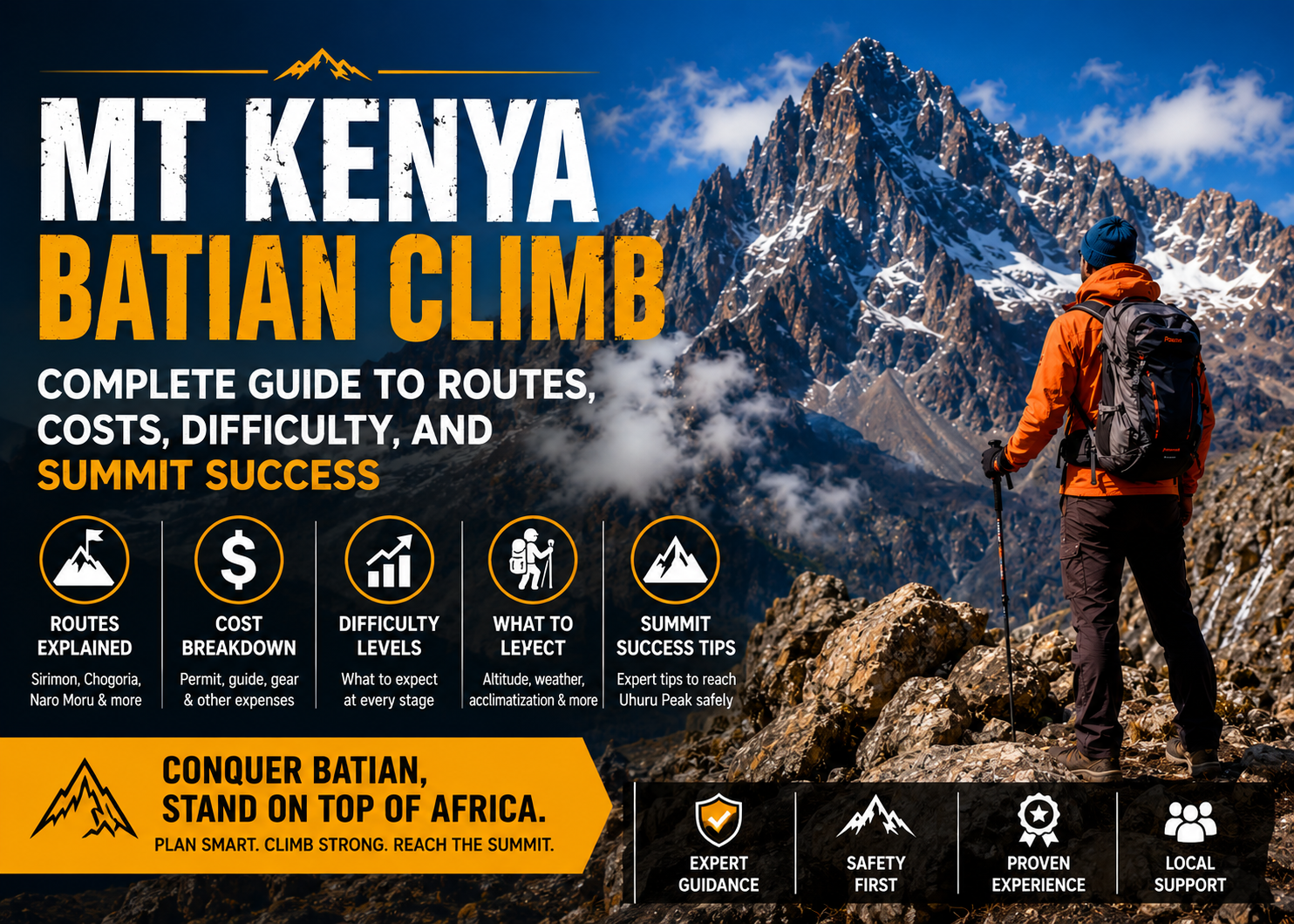
Mt Kenya Batian Climb


Mount Kenya stands as Africa’s second-highest mountain and one of the continent’s most respected climbing destinations. While many trekkers aim for Point Lenana, experienced mountaineers often set their sights on Batian, the highest peak on Mount Kenya at 5,199 meters (17,057 feet). Reaching this summit is a significant achievement that combines technical rock climbing, altitude endurance, and strategic preparation.

The mt kenya Batian climb attracts climbers from across the globe who seek a challenging alpine adventure in East Africa. Unlike trekking peaks that require only hiking skills, Batian demands technical climbing ability, proper equipment, and experienced mountain support.

For climbers planning this remarkable ascent, knowing the routes, costs, level of difficulty, and essential success factors can make a major difference. Ice Rock Trekking has helped countless adventurers experience Mount Kenya safely while maximizing their chances of reaching the summit.

What Is Batian Peak?

Batian is the highest point of Mount Kenya and the second-highest mountain peak in Africa after Kilimanjaro’s Uhuru Peak. The summit rises dramatically above glaciers, steep rock faces, and rugged alpine terrain.

Mount Kenya consists of three main peaks:

  • Batian (5,199m) – Highest peak
  • Nelion (5,188m) – Second highest peak
  • Point Lenana (4,985m) – Popular trekking summit

While Point Lenana can be reached through hiking routes, Batian requires technical rock climbing skills and specialized mountaineering equipment.

The peak was named after a Maasai chief and remains one of Africa’s most respected alpine climbing objectives.

Why Choose the Mt Kenya Batian Climb?

Batian offers a completely different experience from standard mountain trekking. Climbers are rewarded with:

Technical Climbing Challenge

The mountain features multi-pitch rock climbing sections that test both physical and mental endurance.

Exceptional Scenery

The climb passes through unique ecosystems, including:

  • Bamboo forests
  • Moorlands
  • Giant lobelia zones
  • Alpine valleys
  • Glacial landscapes

Less Crowded Experience

Compared to Kilimanjaro, Batian sees fewer climbers, creating a more remote and authentic mountain atmosphere.

Prestigious Achievement

Summiting Batian is considered one of Africa’s most significant alpine climbing accomplishments.

Best Routes for the Mt Kenya Batian Climb

Several approaches provide access to Batian. The route selection depends on climbing experience, weather conditions, and logistical preferences.

Sirimon Route

The Sirimon Route is among the most popular approaches.

Advantages

  • Gentle acclimatization profile
  • Scenic valleys
  • Reliable access throughout the year
  • Comfortable mountain huts

Highlights

  • Old Moses Camp
  • Shipton’s Camp
  • Mackinder Valley
  • North Face access

Many climbers prefer this route because it allows gradual altitude gain before attempting the summit.

Chogoria Route

The Chogoria Route is often considered the most scenic approach on Mount Kenya.

Key Attractions

  • Gorges Valley
  • Lake Michaelson
  • Nithi Falls
  • Spectacular cliffs

This route is excellent for acclimatization and photography while providing access to technical climbing sections.

Naro Moru Route

Naro Moru offers the shortest access to higher elevations.

Benefits

  • Fast approach
  • Efficient logistics
  • Suitable for climbers with limited time

However, its rapid altitude gain can increase acclimatization challenges.

Technical Climbing Routes to Batian

The summit can be reached through different climbing lines.

North Face Standard Route

The North Face Standard Route is the most frequently climbed route to Batian.

Characteristics

  • Moderate technical difficulty
  • Multi-pitch rock climbing
  • Excellent rock quality
  • Suitable for experienced alpine climbers

This route is commonly used during the dry season when weather conditions are favorable.

Gate of the Mists Route

This route is famous among experienced climbers.

Features

  • Greater technical demands
  • Complex route finding
  • Outstanding alpine scenery

It is generally recommended for advanced climbers.

Batian-Nelion Traverse

One of the most rewarding mountaineering experiences on Mount Kenya involves traversing between Batian and Nelion.

This route requires:

  • Strong climbing skills
  • Technical rope work
  • Excellent weather conditions

Difficulty Level of the Mt Kenya Batian Climb

A common question among climbers concerns the difficulty of Batian.

The answer is straightforward: Batian is significantly more challenging than Point Lenana.

Physical Difficulty

Climbers must contend with:

  • High altitude
  • Long summit days
  • Steep terrain
  • Exposure to changing weather

Technical Difficulty

Batian includes:

  • Rock climbing sections
  • Multi-pitch climbing
  • Rope management
  • Belaying techniques

Most climbing sections range around UIAA Grade IV and V, depending on the chosen route.

Mental Challenge

Exposure, altitude, and route-finding can test confidence and decision-making skills.

Who Can Attempt the Mt Kenya Batian Climb?

Batian is ideal for:

  • Experienced hikers
  • Rock climbers
  • Alpine climbers
  • Adventure travelers seeking technical ascents

Climbers should have prior experience with:

  • Rope systems
  • Multi-pitch climbing
  • Basic mountaineering techniques

Beginners can prepare by gaining climbing experience before attempting the summit.

Best Time for the Mt Kenya Batian Climb

Weather plays a critical role in summit success.

January to March

This period offers:

  • Stable weather
  • Dry rock conditions
  • Clear mountain views

Many climbers consider this the prime climbing season.

July to October

Another favorable season with:

  • Reduced rainfall
  • Better visibility
  • Reliable climbing conditions

Rainy Seasons

April to June and November often experience:

  • Wet rock
  • Reduced visibility
  • Greater climbing risks

Climbers generally avoid technical ascents during these periods.

Acclimatization and Altitude Considerations

Altitude is one of the biggest challenges on Mount Kenya.

Symptoms may include:

  • Headaches
  • Fatigue
  • Nausea
  • Sleep difficulties

To improve acclimatization:

  • Ascend gradually
  • Stay hydrated
  • Maintain proper nutrition
  • Include acclimatization days

Many successful itineraries include 4–6 days before summit attempts.

Equipment Required for Batian

Proper gear is essential for safety and performance.

Personal Clothing

  • Waterproof jacket
  • Waterproof pants
  • Thermal layers
  • Fleece jacket
  • Insulated gloves
  • Warm hat
  • Hiking boots

Climbing Equipment

  • Climbing harness
  • Helmet
  • Carabiners
  • Belay device
  • Climbing shoes
  • Dynamic rope

Additional Gear

  • Headlamp
  • Sunglasses
  • Trekking poles
  • Hydration system
  • First aid supplies

Ice Rock Trekking can assist climbers with equipment recommendations and rental arrangements.

Typical Mt Kenya Batian Climb Itinerary

Day 1

Arrival and transfer to Mount Kenya National Park.

Day 2

Trek to Old Moses Camp.

Day 3

Trek to Shipton’s Camp.

Day 4

Acclimatization hike and climbing preparation.

Day 5

Summit attempt on Batian.

Day 6

Descent to lower camps.

Day 7

Exit the park and return transfer.

Actual itineraries may vary depending on weather, acclimatization needs, and climbing objectives.

Mt Kenya Batian Climb Cost Breakdown

Several factors influence the total expedition cost.

Park Fees

Mount Kenya National Park charges conservation and entry fees.

Guide Fees

Technical climbing requires certified and experienced guides.

Porter Support

Porters assist with carrying gear and camp logistics.

Accommodation

Costs may include:

  • Mountain huts
  • Lodges
  • Hotels

Equipment Rental

Climbers without technical gear may rent equipment.

Transportation

Ground transfers to and from the mountain are usually included in organized packages.

Average Cost Range

The mt kenya Batian climb generally ranges between:

USD 1,500 to USD 3,500+ per person

Pricing varies depending on:

  • Group size
  • Route selection
  • Duration
  • Level of support
  • Equipment requirements

Summit Success Tips

Achieving the summit requires more than physical fitness.

Train Early

Focus on:

  • Endurance training
  • Hiking practice
  • Strength conditioning
  • Climbing sessions

Improve Technical Skills

Practice:

  • Belaying
  • Rope handling
  • Multi-pitch climbing
  • Anchor systems

Prioritize Acclimatization

Extra acclimatization days often increase summit success rates.

Stay Hydrated

Hydration supports both performance and altitude adaptation.

Use Professional Mountain Support

Experienced guides significantly improve safety and efficiency during technical climbs.

Monitor Weather Conditions

Summit attempts should be planned around stable weather windows.

Why Climb Batian With Ice Rock Trekking?

Ice Rock Trekking specializes in East African mountain adventures and provides professional support for climbers pursuing Mount Kenya’s highest peak.

Expert Mountain Teams

Our guides possess extensive experience on Mount Kenya’s technical routes.

Customized Climbing Programs

Every climber has different goals and skill levels. We create itineraries that match individual needs.

Safety-Focused Operations

Safety remains a priority throughout every stage of the expedition.

Local Knowledge

Our team understands Mount Kenya’s weather patterns, climbing routes, and logistical requirements.

Quality Equipment Support

We assist climbers in preparing the right gear for successful summit attempts.

Final Thoughts

The mt kenya Batian climb represents one of Africa’s most rewarding mountaineering challenges. Combining technical rock climbing, breathtaking alpine scenery, and the prestige of standing atop Mount Kenya’s highest point, Batian offers an unforgettable experience for skilled climbers.

Success depends on proper preparation, physical conditioning, acclimatization, technical competence, and experienced mountain support. Whether approaching through Sirimon, Chogoria, or another route, careful planning greatly increases the chances of reaching the summit safely.

With professional guidance from Ice Rock Trekking, climbers can focus on the adventure while benefiting from expert local knowledge, reliable logistics, and dedicated mountain support throughout the journey to Batian Peak.