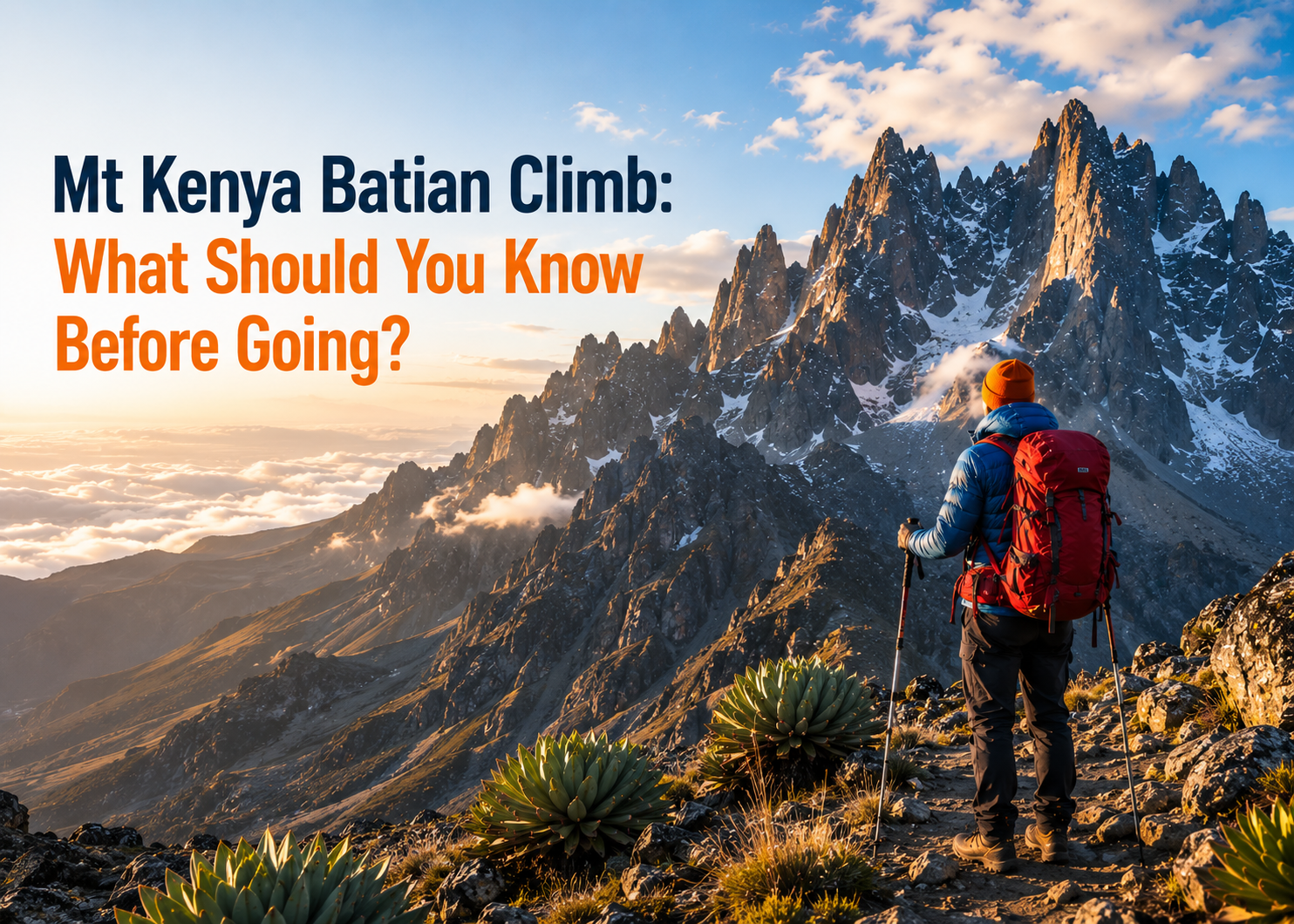
Mount Kenya offers a very different mountaineering experience from a standard high-altitude trek. Batian, the mountain’s highest summit at 5,199 meters, demands technical rock-climbing ability, strong physical conditioning, careful acclimatization, and confidence in exposed alpine terrain. Climbers considering a mt kenya Batian climb should treat it as a serious mountaineering objective rather than a trekking extension.
With the right preparation, climbing team, equipment, and route strategy, Batian offers a rewarding challenge amid some of East Africa’s most dramatic mountain scenery. Ice Rock Trekking helps climbers prepare for the demands of Mount Kenya while keeping safety, acclimatization, and realistic expectations at the center of the experience.
What Makes Batian Special?
Mount Kenya has several prominent peaks, but Batian stands above them all. At 5,199 meters, it is the highest point on Mount Kenya and the second-highest summit in Africa after Kilimanjaro.
Unlike Point Lenana, which trekkers can reach without technical rock-climbing skills, Batian requires ropes, climbing equipment, route-finding ability, and technical competence. Its steep rock faces, exposed sections, changing weather, and altitude create a serious alpine challenge.
The combination of trekking and technical climbing makes Batian especially attractive to experienced climbers. Reaching the summit requires more than stamina. Climbers need to move efficiently on rock, manage exposure, communicate with their climbing partner, and remain composed when conditions become demanding.
Batian vs Point Lenana: What Is the Difference?
One of the most important distinctions prospective visitors should know is the difference between Batian and Point Lenana.
Point Lenana stands at approximately 4,985 meters and is generally considered a trekking summit. It requires fitness, acclimatization, and determination, but normal routes do not involve sustained technical rock climbing.
Batian is entirely different. Reaching its 5,199-meter summit requires technical climbing across exposed rock terrain.
This distinction matters when choosing a Mount Kenya trip. A person who has completed Kilimanjaro, Everest Base Camp, or another demanding trek may possess excellent endurance but may not automatically have the technical experience required for Batian.
Strong trekking experience provides a valuable fitness base, but climbers should evaluate their rock-climbing skills separately.
How Difficult Is Climbing Batian?
Batian is a serious technical mountaineering objective. Difficulty comes from several factors working together rather than altitude alone.
Climbers must deal with sustained rock climbing, exposure, long summit days, cold temperatures, route-finding challenges, rapidly changing mountain weather, and physical fatigue.
Altitude makes every movement more demanding. A climbing sequence that feels manageable at lower elevation can require considerably more effort above 4,500 meters. Cold hands can also affect grip, rope handling, and equipment management.
Mental endurance matters just as much. Climbers need to remain focused for long periods while navigating exposed sections and managing fatigue.
Anyone planning Batian should arrive with realistic expectations. It is not a peak where enthusiasm can substitute for climbing preparation.
What Technical Skills Do You Need?
Previous rock-climbing experience is highly valuable for Batian. Climbers should feel comfortable using a harness, helmet, climbing rope, carabiners, belay devices, and other standard technical equipment.
Useful skills include:
- Belaying confidently and efficiently
- Moving securely over exposed rock
- Following multi-pitch climbing routes
- Rappelling or abseiling safely
- Using climbing commands clearly
- Managing ropes at belay stations
- Climbing while carrying essential equipment
- Maintaining balance on uneven rock
- Staying calm around significant exposure
Climbers who lack sufficient technical experience should consider training before traveling. Practice at a climbing center or outdoor crag can improve movement, rope handling, belaying, and confidence.
Technical preparation also makes the actual climb more enjoyable because climbers can focus on the mountain rather than trying to master basic techniques at altitude.
Which Route Is Used to Climb Batian?
Batian has established technical climbing routes, with route choice strongly influenced by season and prevailing conditions.
The North Face Standard Route is one of the best-known options. Climbers commonly consider it during periods when conditions favor the northern side of the mountain. The route involves multiple pitches of technical rock climbing and substantial exposure.
The Normal Route on the south side provides another approach during seasons when conditions are more suitable there.
Choosing between routes should never depend solely on personal preference. Weather, rock conditions, seasonal patterns, climber experience, and professional assessment all influence the safest and most practical option.
Ice Rock Trekking can help structure the approach and acclimatization schedule around the climbing objective and prevailing mountain conditions.
Why Is Acclimatization So Important?
Batian rises above 5,000 meters, making altitude a major consideration.
Even highly fit climbers can experience altitude-related symptoms. Cardiovascular fitness does not guarantee immunity from headaches, nausea, poor sleep, loss of appetite, or reduced performance.
A gradual approach allows the body more time to adapt to decreasing oxygen availability.
Mount Kenya offers an advantage because climbers can spend several days trekking through different ecological and altitude zones before reaching the technical climbing area. A carefully planned schedule can incorporate gradual elevation gain and appropriate rest.
Rushing the approach may save time on paper but can reduce summit chances and increase risk.
Climbers should report unusual or worsening symptoms rather than hiding them because of summit ambitions. Good decisions at altitude depend on honest communication.
What Fitness Level Is Required?
Batian requires a combination of cardiovascular endurance, muscular strength, climbing efficiency, and recovery capacity.
Long-distance running, cycling, stair climbing, hiking, and hill walking can build cardiovascular endurance. However, general fitness should be combined with climbing-specific preparation.
Upper-body strength helps, but efficient rock climbing depends heavily on footwork, balance, core stability, and controlled movement. Climbers who rely too heavily on their arms may tire quickly.
Training can include loaded hikes, stair sessions, squats, lunges, step-ups, core exercises, grip work, and regular climbing sessions.
Consistency matters more than occasional extreme workouts. A structured preparation period over several months allows the body to develop endurance gradually while reducing injury risk.
How Long Does a Batian Expedition Take?
The total duration varies according to the approach route, acclimatization schedule, climbing route, weather conditions, and individual performance.
Climbers should avoid creating an itinerary that leaves no flexibility. Mountain weather can disrupt even carefully planned schedules.
A practical expedition normally includes an approach phase, acclimatization days, positioning near the technical route, the main climbing attempt, descent, and return trek.
Including contingency time can be valuable. An additional day may provide an alternative opportunity if poor weather prevents climbing on the intended summit day.
Short itineraries can look attractive, but Batian rewards patience.
What Is the Best Time to Climb Batian?
Mount Kenya’s climbing seasons are closely connected to weather patterns and the orientation of technical routes.
Different sides of the mountain can experience different conditions during the year. For this reason, the preferred route may change according to season.
Climbers should consider precipitation, temperature, wind, visibility, and rock conditions when planning. Wet rock can dramatically increase technical difficulty, while freezing temperatures can make rope and equipment handling harder.
Mountain weather can still change unexpectedly during favorable periods. Climbers therefore need appropriate clothing and contingency planning regardless of the month selected.
What Equipment Should You Carry?
Equipment requirements for Batian extend well beyond normal trekking gear.
A typical technical climbing setup may include a helmet, harness, climbing shoes or suitable mountain footwear, ropes, carabiners, slings, belay equipment, protection systems, and rappelling equipment. The precise technical rack depends on the selected route and climbing arrangement.
Personal mountain equipment should include insulating layers, waterproof outerwear, gloves, warm headwear, trekking footwear, headlamp, sunglasses, water containers, and a suitable backpack.
A sleeping system appropriate for cold mountain conditions is also essential.
Climbers should discuss technical equipment responsibilities before departure. Knowing what is supplied and what must be brought personally prevents unnecessary duplication or missing essential items.
Every important item should be tested before the expedition.
What Weather Conditions Should You Expect?
Mount Kenya creates its own demanding high-altitude environment. Conditions can shift from sunshine to cloud, rain, wind, or freezing temperatures surprisingly quickly.
Lower sections may feel warm and humid, while higher elevations can become extremely cold, particularly before sunrise and after sunset.
Layering provides flexibility. Climbers can add or remove clothing as temperature and activity levels change.
Waterproof protection remains important even during relatively dry periods. Wet clothing at altitude can quickly become uncomfortable and potentially dangerous.
Climbers should also protect themselves from strong ultraviolet exposure. Sunglasses, sunscreen, suitable clothing, and lip protection can make a substantial difference during long days above the tree line.
How Important Is Mental Preparation?
Technical mountains test decision-making as much as physical ability.
Exposure can affect climbers differently. Someone who performs confidently at an indoor climbing wall may react differently when standing on a high mountain face with hundreds of meters of open space below.
Mental preparation involves developing familiarity with exposure, trusting climbing systems, maintaining controlled breathing, and concentrating on immediate movements.
Fatigue can also influence judgment. Climbers should practice making calm decisions while physically tired during training.
The strongest mindset is not simply determination to reach the summit. It is the ability to make sensible decisions when conditions suggest continuing may no longer be appropriate.
Why Does Summit Day Require Special Preparation?
A Batian summit attempt can involve many hours of sustained activity.
An early start may be necessary to take advantage of favorable conditions and provide sufficient time for both ascent and descent. Climbers must therefore organize equipment, clothing, food, and hydration before starting.
Efficiency becomes extremely important on multi-pitch terrain. Small delays at each pitch can accumulate into substantial lost time.
Climbers should know where essential items are stored and avoid repeatedly unpacking their bags.
Food should be easy to consume in cold conditions. Energy bars, dried fruit, nuts, sandwiches, gels, or other familiar high-energy foods can help maintain performance.
Hydration is equally important, although drinking regularly in cold weather often requires conscious effort.
What Safety Factors Matter Most?
Safety on Batian depends on preparation, communication, technical competence, weather assessment, and disciplined decision-making.
Professional climbing support becomes particularly important because local mountain knowledge can help with route selection, timing, changing conditions, and logistical planning.
Climbers should communicate immediately if they feel unwell, unusually weak, extremely cold, or uncomfortable with a technical section.
Equipment checks should take place before the climb rather than after a problem develops.
Turnaround decisions also deserve respect. Summit ambitions should never override deteriorating weather, insufficient time, altitude problems, or technical concerns.
A successful mountain expedition is one where everyone returns safely, regardless of whether the highest point is reached.
What Should You Eat and Drink During the Climb?
High-altitude activity increases energy demands, while altitude can simultaneously reduce appetite.
Meals containing carbohydrates, proteins, and fats can support sustained performance during the approach. Climbers should also carry familiar snacks that remain appealing when appetite drops.
Hydration requires regular attention. Cold temperatures can reduce the sensation of thirst even while the body continues losing fluids through breathing and physical exertion.
Drinking consistently throughout the approach helps climbers arrive at the technical section in better condition.
Introducing unfamiliar supplements or foods during the expedition is rarely ideal. Training sessions provide an opportunity to test snacks and hydration strategies beforehand.
How Can You Prepare Before Traveling to Kenya?
Preparation should begin months before departure.
Start by assessing current trekking fitness and technical climbing ability. Identify weaknesses early enough to improve them gradually.
A climber with excellent technical skills but limited endurance should prioritize cardiovascular conditioning and long hiking days. A strong endurance athlete with limited rock experience should spend more time climbing.
Practice wearing the footwear, harness, backpack, and clothing intended for the mountain whenever possible.
Training on consecutive days can also help simulate expedition fatigue. For example, a long hike followed by climbing practice the next day can reveal how well the body performs before full recovery.
Rest should remain part of the training schedule. Constant high-intensity exercise without recovery increases injury risk.
Why Climb Mount Kenya With Ice Rock Trekking?
A technical Mount Kenya expedition requires careful coordination between trekking logistics and climbing objectives.
Ice Rock Trekking supports climbers with locally informed itinerary planning, acclimatization scheduling, mountain logistics, route preparation, and professional support suited to the demands of Mount Kenya.
Local knowledge becomes especially valuable when dealing with access routes, camps, changing weather, altitude progression, and technical climbing schedules.
Rather than treating Batian as a simple summit target, the focus should remain on building a realistic expedition around the climber’s experience and the mountain’s conditions.
Common Mistakes Climbers Should Avoid
One common mistake is assuming that strong trekking experience automatically prepares someone for technical climbing. Endurance and rock-climbing competence are related but separate abilities.
Another mistake is rushing acclimatization. Extra time spent adjusting to altitude can improve both safety and climbing performance.
Poor equipment preparation can also create unnecessary problems. New boots, unfamiliar gloves, poorly fitted harnesses, or untested backpacks can become frustrating during long mountain days.
Some climbers also underestimate hydration and nutrition because cold weather suppresses thirst and appetite.
Finally, rigid summit expectations can lead to poor decisions. Batian demands flexibility. Weather, health, climbing speed, and route conditions must determine whether continuing remains sensible.
Is Batian Right for You?
Batian is best suited to climbers who want a genuine technical alpine objective rather than a trekking-only summit.
Ask yourself several questions before committing. Are you comfortable with multi-pitch rock climbing? Can you handle exposure? Have you spent long days hiking or climbing? Are you prepared to train consistently? Can you accept turning around if conditions become unsafe?
If the answer to several of these questions is no, gaining more experience first may create a safer and more rewarding future attempt.
Climbers who want to experience Mount Kenya without technical rock climbing can consider Point Lenana before progressing toward Batian.
Final Thoughts
Climbing Batian combines altitude, technical rock, dramatic scenery, physical endurance, and serious decision-making. Proper training, acclimatization, suitable equipment, realistic scheduling, and professional mountain support can significantly improve the quality and safety of the expedition.
Ice Rock Trekking approaches Batian as a technical climbing objective where preparation matters at every stage. For climbers with the necessary skills and commitment, Mount Kenya’s highest summit offers a demanding experience shaped by rugged terrain, changing conditions, and the satisfaction of taking on one of Africa’s most distinctive alpine challenges.