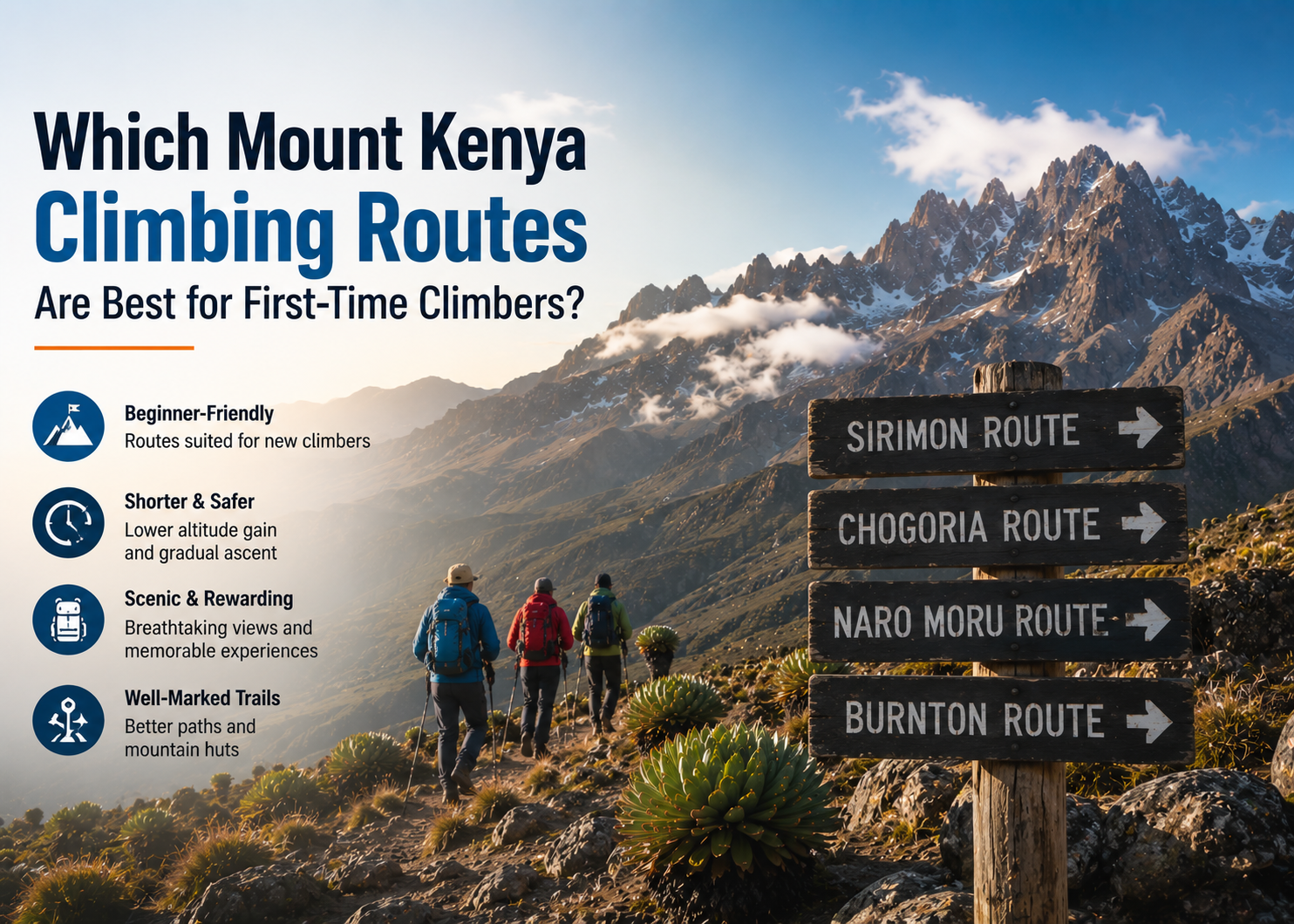
Mount Kenya offers an extraordinary combination of high-altitude trekking, rugged volcanic scenery, alpine lakes, dramatic valleys, and diverse vegetation. For someone preparing for a first climb, choosing the right route can make a major difference to comfort, acclimatization, scenery, and summit success.
Several mount kenya climbing routes reach the mountain’s trekking areas, but they offer very different experiences. Sirimon, Chogoria, and Naro Moru remain the main choices for trekkers heading toward Point Lenana. Ice Rock Trekking helps climbers select routes based on fitness, available time, preferred scenery, and previous altitude experience.
Why Route Selection Matters for First-Time Climbers
A first Mount Kenya climb involves much more than choosing a trail that reaches a high point. Climbers need to consider daily walking distances, elevation gain, sleeping altitude, trail conditions, weather exposure, accommodation, and opportunities for acclimatization.
A route that appears shorter may seem attractive, but rapid altitude gain can make the journey physically demanding. A slightly longer itinerary can provide more time for the body to adjust to reduced oxygen levels.
First-time climbers should consider:
- Number of trekking days
- Daily elevation gain
- Trail gradient
- Accommodation preferences
- Acclimatization opportunities
- Fitness requirements
- Landscape variety
- Seasonal trail conditions
- Summit-day difficulty
- Descent route
A well-planned route allows climbers to enjoy the mountain instead of focusing entirely on reaching the summit as quickly as possible.
What Are the Main Mount Kenya Climbing Routes?
Mount Kenya has several access trails, but three routes attract most recreational trekkers: Sirimon, Chogoria, and Naro Moru.
Each route has its own personality.
Sirimon provides relatively gradual terrain and excellent acclimatization opportunities. Chogoria delivers spectacular scenery, including lakes, valleys, cliffs, and dramatic highland landscapes. Naro Moru offers a direct approach and is commonly associated with shorter itineraries.
Some climbers combine two routes rather than ascending and descending the same way. For instance, ascending through Sirimon and descending through Chogoria creates a varied mountain experience.
For trekkers aiming for Point Lenana rather than the technical peaks of Batian or Nelion, these routes provide practical options with different levels of physical challenge.
Sirimon Route: A Strong Choice for First-Time Climbers
The Sirimon Route is one of the most suitable options for people making their first high-altitude trek on Mount Kenya.
The trail approaches from the northwest and generally offers a steady progression toward the upper mountain. Its relatively gradual profile makes it attractive for climbers concerned about acclimatization.
The lower section passes through forest before reaching heathland and open moorland. As elevation increases, vegetation becomes sparse and the landscape increasingly rugged.
One of Sirimon’s strongest advantages is its relatively manageable gradient. Climbers can maintain a comfortable walking rhythm instead of repeatedly dealing with extremely steep sections.
Why First-Time Climbers Like Sirimon
Sirimon offers several characteristics that suit beginners.
The route allows itineraries to be structured around sensible elevation gains. Its terrain also tends to feel less aggressive than some steeper alternatives. This gives trekkers more opportunity to concentrate on pacing, hydration, breathing, and acclimatization.
The scenery remains impressive throughout the climb, with wide valleys, rocky formations, alpine vegetation, and expansive mountain views.
For people who want a balanced combination of scenery, manageable terrain, and acclimatization potential, Sirimon deserves serious consideration.
What Can Climbers Expect on the Sirimon Route?
A typical Sirimon trek begins at Sirimon Gate. From there, climbers gradually move through different ecological zones.
Early stages may include forest and bamboo areas before the landscape opens into moorland. Higher sections feature unusual alpine vegetation, rocky valleys, and increasingly dramatic views.
Common overnight areas include Old Moses Camp and Shipton’s Camp, depending on the itinerary.
Shipton’s Camp sits beneath impressive high peaks and serves as an important staging area for trekkers heading toward Point Lenana.
Summit attempts usually begin before sunrise. Climbers move through cold, dark alpine terrain before reaching Point Lenana, where clear conditions can provide remarkable views across the surrounding mountain landscape.
Chogoria Route: Best for Spectacular Scenery
For climbers who place scenery high on their priorities, Chogoria is difficult to overlook.
The route approaches Mount Kenya from the eastern side and passes through some of the mountain’s most visually impressive terrain. Trekkers may encounter dramatic valleys, waterfalls, lakes, cliffs, moorlands, and volcanic formations.
Lake Ellis, Lake Michaelson, the Gorges Valley, and surrounding high-altitude landscapes contribute to Chogoria’s reputation.
The route can work well for first-time climbers when enough days are allocated for acclimatization.
Is Chogoria Suitable for Beginners?
Yes, provided the itinerary matches the climber’s fitness and altitude experience.
Chogoria includes sections that can feel physically demanding, particularly at higher elevations. However, a carefully paced itinerary gives climbers enough time to adjust.
Rather than rushing through the route, beginners can benefit from an itinerary that distributes elevation gain over several days.
Trekkers who regularly hike, walk long distances, or maintain reasonable cardiovascular fitness should find the route achievable with suitable preparation.
Chogoria can be especially rewarding for first-time visitors who want the climb itself to be as memorable as reaching Point Lenana.
Why Combine Chogoria and Sirimon?
A combined itinerary is often one of the most appealing ways to experience Mount Kenya.
Instead of walking up and down the same trail, climbers enter the mountain from one side and leave through another. This creates more landscape variety and reduces repetition.
One popular option involves ascending through Chogoria and descending through Sirimon. Another approach reverses the direction.
Ascending Chogoria can provide a scenic progression through lakes and valleys before reaching the higher mountain. Descending Sirimon then offers a relatively straightforward exit.
Alternatively, ascending Sirimon can provide a measured approach to altitude before descending through Chogoria’s spectacular scenery.
Ice Rock Trekking can structure the itinerary according to climbing experience, fitness level, available days, and preferred direction.
Naro Moru Route: The More Direct Option
Naro Moru is another established Mount Kenya trekking route. It approaches from the western side and is widely known for providing a relatively direct path toward Point Lenana.
Its shorter distance can appeal to trekkers with limited time, but shorter does not automatically mean easier.
A direct route can involve faster altitude gain, which may place greater demands on the body. Climbers also encounter the famous Vertical Bog, where wet conditions can make progress slower and more tiring.
During dry periods, trail conditions may be easier, while heavy rainfall can significantly change the trekking experience.
Is Naro Moru Good for a First Mount Kenya Climb?
It can be, particularly for fit trekkers who have previous hiking experience and follow a properly structured itinerary.
However, beginners should avoid choosing Naro Moru purely because it appears to provide a faster summit option.
Altitude responds to time and elevation rather than enthusiasm. Moving upward too quickly can increase the likelihood of headaches, fatigue, nausea, poor sleep, and other altitude-related symptoms.
A longer itinerary can therefore be a wiser choice, even for physically strong climbers.
For someone prioritizing acclimatization and a relaxed pace, Sirimon may have an advantage. For someone prioritizing scenery, Chogoria may offer more visual variety.
Sirimon vs Chogoria vs Naro Moru
Choosing between the three routes becomes easier when climbers identify what matters most to them.
Sirimon
Best suited for: First-time climbers seeking a balanced trek.
Main strengths: Gradual approach, good acclimatization potential, varied landscapes, and manageable trekking sections.
Considerations: Climbers wanting the most dramatic lake and valley scenery may prefer adding Chogoria as the descent.
Chogoria
Best suited for: Trekkers who value scenery and route diversity.
Main strengths: Alpine lakes, deep valleys, cliffs, waterfalls, moorlands, and dramatic landscapes.
Considerations: Some sections require strong walking fitness and careful pacing.
Naro Moru
Best suited for: Fit trekkers seeking a more direct route.
Main strengths: Established trail, straightforward access, and shorter approach.
Considerations: Faster altitude gain and potentially muddy sections can make the climb demanding.
For many beginners, combining Sirimon and Chogoria provides an excellent balance.
What Is the Best Mount Kenya Route for Beginners?
There is no single route that suits every beginner because first-time climbers arrive with different fitness levels, trekking backgrounds, schedules, and expectations.
However, Sirimon frequently stands out as a practical starting point.
Its gradual character makes pacing easier, while longer itineraries can provide valuable acclimatization time. Combining it with Chogoria creates additional scenery without requiring climbers to repeat the same trail.
A first-time climber with strong fitness who loves photography and dramatic landscapes may prefer Chogoria. Someone with limited trekking experience may feel more comfortable beginning with Sirimon.
The itinerary length matters just as much as the route itself.
How Many Days Should First-Time Climbers Allow?
Trying to complete Mount Kenya too quickly can reduce enjoyment and increase altitude-related challenges.
A five- or six-day trekking schedule can be more comfortable than a rushed itinerary, depending on the chosen route.
Extra time gives the body more opportunity to adapt while allowing climbers to maintain a sustainable pace.
Longer schedules may also provide time to enjoy viewpoints, lakes, unusual vegetation, and mountain landscapes rather than treating every day as a race toward the next camp.
For many recreational trekkers, Mount Kenya is not simply a summit objective. The changing environments along the route form a major part of the experience.
How Difficult Is Climbing Mount Kenya?
For trekkers heading to Point Lenana, Mount Kenya requires good physical fitness but does not normally demand technical climbing skills.
The challenge comes from several factors working together:
- High altitude
- Long trekking days
- Cold temperatures
- Uneven terrain
- Early summit departure
- Reduced oxygen
- Changing weather
- Mental fatigue
Someone comfortable walking on flat ground may still find mountain terrain difficult.
Training should therefore include uphill walking, longer hikes, stair climbing, cardiovascular exercise, and leg-strengthening activities.
Consistency matters more than occasional intense workouts.
Point Lenana vs Batian and Nelion
First-time visitors need to distinguish between trekking Point Lenana and climbing Mount Kenya’s technical summits.
Point Lenana stands at approximately 4,985 meters and is the primary trekking summit. It can be reached without technical rock-climbing skills under normal trekking conditions.
Batian, at 5,199 meters, is Mount Kenya’s highest summit. Nelion, at 5,188 meters, is another major technical peak.
Batian and Nelion require rock-climbing ability, specialist equipment, technical route knowledge, and considerably more mountaineering experience.
Beginners seeking their first Mount Kenya adventure generally aim for Point Lenana.
Why Acclimatization Matters More Than Speed
Altitude can affect anyone regardless of age or fitness.
As climbers move higher, atmospheric pressure decreases, meaning less oxygen is available with each breath. The body requires time to adapt.
Good acclimatization practices include walking at a steady pace, drinking sufficient fluids, eating properly, resting well, and avoiding unnecessarily rapid elevation gain.
Climbers should also communicate symptoms rather than hiding them.
Headaches, dizziness, unusual fatigue, nausea, or difficulty sleeping may indicate altitude-related problems. Symptoms should always be assessed seriously because conditions can worsen at higher elevations.
A sensible climbing schedule places health ahead of speed.
When Is the Best Time to Climb Mount Kenya?
Mount Kenya can experience changing weather throughout the year, but climbers often favor the drier periods.
January through February and roughly June through October can offer favorable trekking conditions, although mountain weather is never completely predictable.
Rain can make trails muddy and slippery, particularly on routes containing boggy sections. Higher elevations can experience freezing temperatures, wind, mist, rain, hail, or snow.
Even during a generally dry period, climbers should pack for changing conditions.
What Should First-Time Climbers Pack?
Good equipment improves safety and comfort throughout the trek.
Climbers normally need layered clothing that can adapt to different temperatures. Lower elevations may feel relatively warm, while summit conditions can be extremely cold.
Important items include sturdy hiking boots, moisture-managing base layers, warm mid-layers, an insulated jacket, waterproof outerwear, gloves, warm headwear, trekking trousers, sunglasses, sunscreen, a headlamp, water containers, and a suitable sleeping bag.
Trekking poles can be particularly useful during steep or uneven descents.
Avoid packing excessive unnecessary equipment. Every item should serve a practical purpose.
How Should You Train for Mount Kenya?
Preparation should begin several weeks before departure.
Walking remains one of the most useful forms of training because trekking requires sustained movement rather than short bursts of effort.
Gradually increase walking distance and include hills whenever possible. Carrying a light backpack during training can help your shoulders, legs, and core adapt to trekking conditions.
Cardiovascular activities such as cycling, jogging, swimming, or stair climbing can support endurance. Strength exercises targeting the legs and core can improve stability on uneven terrain.
Rest and recovery should remain part of the training schedule.
Why Local Trekking Support Matters
Mount Kenya is a high-altitude environment where route familiarity, weather awareness, pacing, camp organization, and logistical planning matter.
Working with an experienced trekking team allows climbers to concentrate on walking, acclimatizing, eating, resting, and enjoying the landscape.
Ice Rock Trekking supports climbers with route planning, trekking logistics, experienced mountain personnel, accommodation arrangements, meals, and practical preparation information.
For first-time climbers, professional support can also make unfamiliar mountain routines easier to manage.
Common Mistakes First-Time Climbers Should Avoid
One frequent mistake is selecting the shortest possible itinerary. Saving a day may sound attractive, but rapid altitude gain can make the trek considerably harder.
Another mistake involves starting too quickly. The opening stages may feel easy, encouraging trekkers to walk faster than necessary. A steady pace conserves energy for higher elevations.
Poor hydration, insufficient clothing, new hiking boots, inadequate training, and excessive luggage can also create avoidable problems.
First-time climbers should resist comparing their pace with other trekkers. People acclimatize differently, and reaching camp first offers little advantage.
Should You Ascend and Descend Different Routes?
For many trekkers, yes.
Using separate ascent and descent routes increases landscape variety and provides a broader impression of Mount Kenya.
A Sirimon-Chogoria combination is particularly attractive because the two sides offer contrasting terrain.
Sirimon provides open valleys and a measured high-altitude approach, while Chogoria features dramatic lakes, cliffs, gorges, and expansive landscapes.
The combination also makes the journey feel like a genuine mountain crossing rather than an out-and-back trek.
Choosing Your Route With Ice Rock Trekking
The right route should reflect your physical condition, trekking experience, available time, preferred scenery, and comfort with altitude.
Ice Rock Trekking can help evaluate these factors before selecting an itinerary.
For many first-time climbers, Sirimon offers an accessible introduction to Mount Kenya trekking. Chogoria is particularly attractive for scenery, while Naro Moru suits trekkers who prefer a more direct approach and can manage its physical demands.
Combining routes can provide the strongest overall experience, especially when enough days are included for acclimatization.
Final Thoughts
Choosing a Mount Kenya route should focus on more than reaching Point Lenana. The quality of the trek depends on acclimatization, pacing, scenery, preparation, weather readiness, and the structure of the itinerary.
Sirimon is often a strong option for beginners, while Chogoria adds exceptional landscape variety. Combining the two gives first-time climbers a rewarding way to experience different sides of the mountain. With suitable preparation and support from Ice Rock Trekking, the climb can become a memorable high-altitude adventure built around safety, scenery, and steady progress.