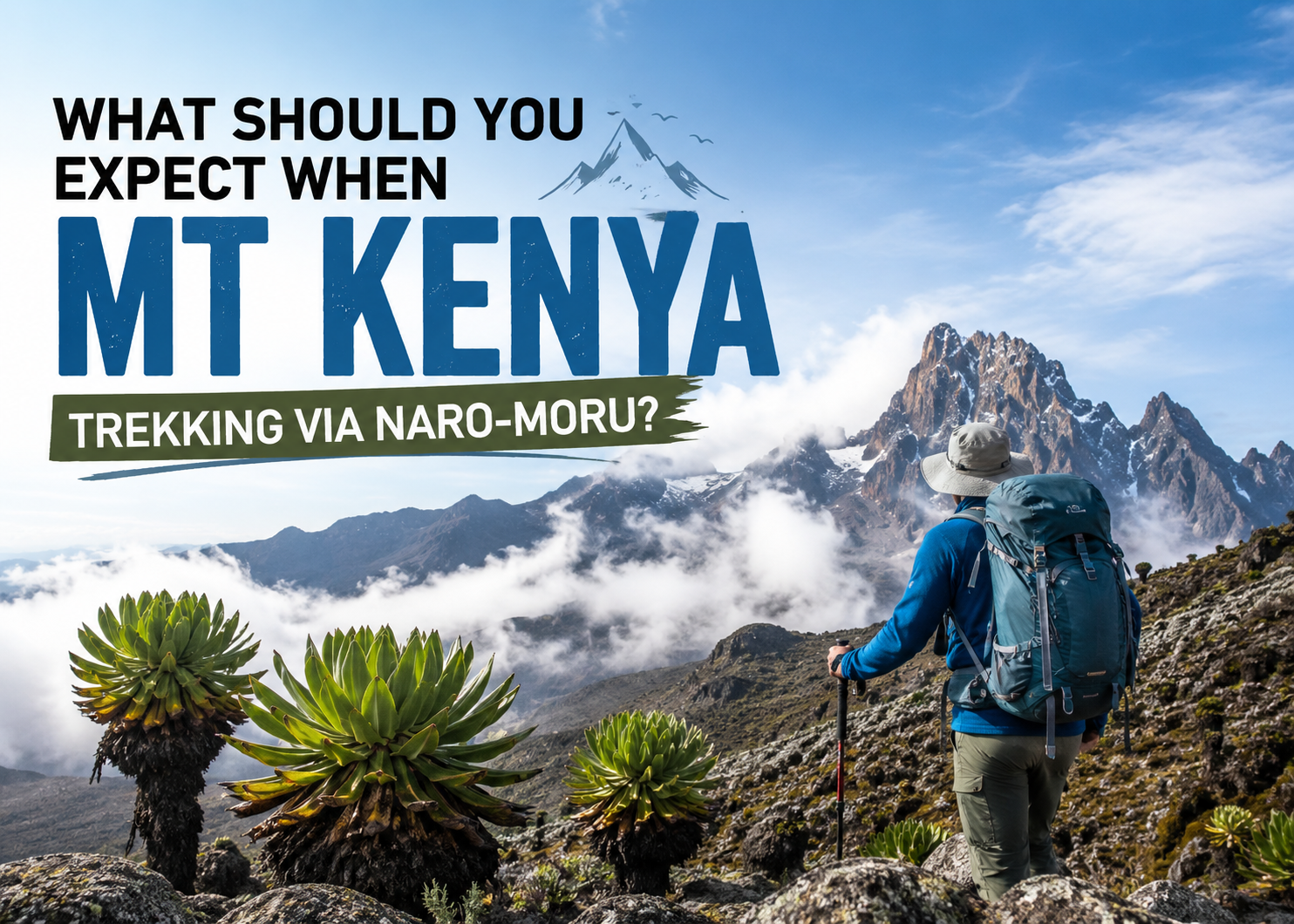
Mount Kenya rises dramatically above the central Kenyan landscape, offering trekkers a remarkable combination of volcanic terrain, alpine scenery, wildlife-rich forests, and challenging high-altitude trails. Among the established approaches to the mountain, the Naro-Moru Route has earned a reputation for being direct, demanding, and rewarding.
For climbers considering mt kenya trekking naro-moru, knowing what lies ahead can make preparation easier and expectations more realistic. From dense forests and the notorious Vertical Bog to alpine valleys and the ascent toward Point Lenana, every section brings a different experience. Ice Rock Trekking helps climbers approach this journey with careful planning, suitable pacing, and respect for the mountain environment.
What Makes the Naro-Moru Route Different?
The Naro-Moru Route approaches Mount Kenya from the western side and provides one of the most direct paths toward the mountain’s high-altitude areas. Its relatively short distance attracts trekkers who want an efficient route to Point Lenana, the mountain’s popular trekking summit.
However, shorter does not necessarily mean easier.
The route gains elevation relatively quickly, which places greater importance on acclimatization and controlled pacing. Climbers encounter forest trails, moorlands, wetlands, rocky alpine terrain, and steep summit sections within a relatively compact journey.
Another distinctive feature is the Vertical Bog. Depending on rainfall and trail conditions, this section can become muddy, slippery, and physically tiring. Trekkers who arrive expecting a straightforward mountain path may find this portion surprisingly challenging.
The variety of terrain makes Naro-Moru particularly interesting for experienced hikers as well as ambitious first-time high-altitude trekkers who prepare properly.
Where Does the Naro-Moru Trek Begin?
The journey generally starts around Naro Moru town before climbers travel toward the Mount Kenya National Park entrance and the trailhead.
The lower elevations feature fertile agricultural landscapes before the environment gradually changes as the route enters protected mountain territory.
Once trekking begins, climbers move through montane forest characterized by tall trees, dense vegetation, and cooler temperatures. This lower section creates a striking contrast with the exposed alpine landscape encountered later.
Wildlife may also be present in the forest zone. Mount Kenya National Park supports numerous animal and bird species, although sightings vary considerably.
The first stages should not be treated as a race. A measured walking speed helps climbers conserve energy while allowing their bodies to begin adapting to increasing altitude.
Expect Dramatic Changes in Vegetation
One of the most memorable aspects of trekking Mount Kenya is watching the environment transform as elevation increases.
The lower slopes feature dense montane forests where moisture supports thick vegetation. As trekkers climb higher, forests gradually give way to bamboo and heathland before transitioning into open moorland.
Higher still, unusual Afro-alpine vegetation begins to dominate the landscape.
Giant lobelias and groundsels are among the characteristic plants associated with Mount Kenya’s upper elevations. These distinctive species have adapted to harsh conditions involving intense daytime sunlight, freezing nighttime temperatures, and considerable daily temperature fluctuations.
Eventually, vegetation becomes sparse as trekkers enter rocky alpine areas.
Experiencing several ecological zones during one mountain journey gives the Naro-Moru Route much of its visual appeal.
The Vertical Bog Can Be Tougher Than Expected
Ask experienced Mount Kenya trekkers about Naro-Moru, and the Vertical Bog will frequently enter the conversation.
This section crosses high-altitude moorland where water collects in soft ground. Conditions vary considerably according to rainfall.
During dry periods, trekkers may encounter relatively manageable trails. After substantial rain, however, sections can become deeply muddy and slippery.
Good waterproof trekking boots become particularly valuable here. Gaiters can also help prevent mud and moisture from entering footwear.
Trekkers should concentrate on stable foot placement rather than trying to move quickly. Trekking poles can provide additional balance, especially when crossing uneven or waterlogged terrain.
The Vertical Bog is not simply an inconvenience. It represents one of the characteristic features that distinguish Naro-Moru from other Mount Kenya approaches.
Altitude Becomes a Major Factor
Point Lenana stands at approximately 4,985 meters above sea level, making altitude one of the most important considerations during the trek.
As elevation increases, atmospheric pressure decreases and less oxygen becomes available with each breath. Climbers may notice that normal physical activities suddenly require more effort.
Walking uphill can feel significantly harder. Breathing becomes faster, and recovery after steep sections may take longer.
Some trekkers experience headaches, reduced appetite, tiredness, disturbed sleep, or mild nausea while acclimatizing.
These symptoms should never be dismissed simply because reaching the summit is an important personal goal.
A slower itinerary can provide more time for acclimatization. Drinking sufficient fluids, eating regularly, maintaining a controlled pace, and communicating openly about symptoms are essential practices at altitude.
Professional trekking teams should continually observe participants and make safety-based decisions when necessary.
Mountain Weather Changes Quickly
Mount Kenya’s equatorial position does not mean consistently warm conditions.
Temperature varies dramatically with altitude and time of day. Lower forest sections can feel relatively mild, while upper elevations may become extremely cold, especially overnight and before sunrise.
Trekkers should expect possible combinations of sunshine, wind, rain, mist, and freezing temperatures.
Layering works better than relying on one heavy garment.
A practical clothing system normally includes moisture-managing base layers, insulating mid-layers, warm outer layers, and waterproof protection. Gloves, warm headwear, suitable trekking socks, and a weather-resistant shell become particularly important at higher elevations.
Climbers should also protect themselves from strong ultraviolet exposure. High altitude can intensify sun exposure even when temperatures feel cool.
Sunglasses, suitable sunscreen, and protective clothing can reduce unnecessary discomfort.
What Are Overnight Stops Like?
Accommodation arrangements depend on the itinerary, route conditions, and trekking program.
Mountain huts are associated with parts of the Naro-Moru approach, providing climbers with relatively basic accommodation in a rugged environment. Trekkers should expect practical facilities rather than hotel-style comfort.
Sleeping conditions can become cold, especially at higher elevations.
A suitable sleeping bag rated for low temperatures can make an enormous difference to comfort and recovery. Climbers may also benefit from keeping dry nighttime clothing separate from trekking clothes.
Mountain evenings usually become quiet fairly early because teams need sufficient rest before the next day’s climb.
The summit attempt often requires waking during the night or very early in the morning, making quality rest beforehand particularly valuable.
What Is Summit Night Like?
The ascent toward Point Lenana is often the most demanding and emotionally rewarding part of the trek.
Climbers generally begin while it is still dark so they can progress toward the summit around sunrise. Headlamps illuminate rocky paths while temperatures remain very low.
Movement should remain slow and consistent.
At this elevation, even physically fit trekkers can find themselves breathing heavily after relatively short sections. The combination of darkness, cold temperatures, altitude, and steep terrain creates a significant physical challenge.
Mental patience becomes almost as important as fitness.
Instead of concentrating constantly on the remaining distance, many climbers find it easier to focus on maintaining rhythm—step, breathe, repeat.
As daylight begins to appear, Mount Kenya’s rugged peaks and surrounding highlands gradually emerge from the darkness.
Reaching Point Lenana can provide remarkable views when weather conditions cooperate.
Is Naro-Moru Suitable for Beginners?
The route can be suitable for physically prepared beginners, but it should not be underestimated.
Previous high-altitude experience is helpful but not always essential for reaching Point Lenana. More important factors include cardiovascular fitness, leg endurance, appropriate equipment, realistic expectations, and enough time for acclimatization.
Beginners should train before arriving.
Regular hill walking is particularly valuable because it prepares the legs for sustained climbs and descents. Stair climbing, hiking, cycling, jogging, and other cardiovascular activities can complement trekking-specific preparation.
Training with a loaded daypack also helps climbers become accustomed to carrying water, clothing, snacks, and personal equipment.
Someone who exercises regularly but rarely hikes should still spend time walking on uneven terrain before attempting the mountain.
How Difficult Is the Trek?
Difficulty depends on several interacting factors rather than one specific trail feature.
Distance matters, but altitude, elevation gain, weather, terrain, acclimatization, fitness, and individual recovery all influence how challenging the trek feels.
Naro-Moru’s relatively direct approach means climbers may gain altitude quickly compared with longer alternatives.
The Vertical Bog can require significant effort, particularly in wet conditions. Upper mountain sections involve rocky and uneven terrain, while summit morning adds cold temperatures and thin air.
Descending also deserves attention.
Trekkers sometimes assume the hardest work ends at the summit. In reality, long downhill sections place considerable strain on knees, ankles, and leg muscles.
Trekking poles and controlled movement can make descents more manageable.
What Should You Pack?
Packing appropriately contributes directly to comfort and safety.
Climbers generally need sturdy waterproof hiking boots that have already been broken in, rather than brand-new footwear worn for the first time on the mountain.
Layered clothing should cover both mild lower-altitude conditions and freezing upper-mountain temperatures.
Other useful items include waterproof outerwear, warm gloves, a hat, quality hiking socks, sunglasses, sunscreen, a headlamp with spare batteries, reusable water containers, trekking poles, gaiters, and a suitable sleeping bag.
A small daypack should comfortably carry essential equipment required during each trekking stage.
Avoid excessive packing. Carrying unnecessary weight makes altitude trekking harder and can create additional fatigue.
Ice Rock Trekking can help participants determine which personal items are appropriate for their chosen itinerary and expected mountain conditions.
Food and Hydration Matter More at Altitude
Trekkers burn substantial energy while climbing, making regular meals important even when altitude affects appetite.
Carbohydrate-rich foods can provide accessible energy during sustained trekking. Protein and balanced meals also support recovery after long days.
Hydration deserves equal attention.
Cold conditions sometimes reduce the sensation of thirst, causing trekkers to drink less than they should. Regular fluid intake throughout the day is generally more practical than consuming large amounts occasionally.
Climbers should monitor how they feel and communicate concerns to the trekking team rather than trying to conceal fatigue or discomfort.
Maintaining nutrition and hydration will not eliminate altitude problems, but both support the body’s overall ability to perform.
How Does Naro-Moru Compare With Other Mount Kenya Routes?
Mount Kenya has several established trekking approaches, including Sirimon and Chogoria.
Naro-Moru stands out primarily because of its direct nature and distinctive terrain.
Sirimon is often appreciated for relatively gradual terrain and scenic high-altitude landscapes. Chogoria is famous for dramatic valleys, lakes, cliffs, and varied scenery.
Naro-Moru offers something different: a direct western approach with rapid environmental transitions and the challenging Vertical Bog.
Some itineraries combine routes, ascending from one side and descending another. This approach can provide greater landscape variety and prevent trekkers from retracing exactly the same trail.
Route selection should depend on available time, fitness, acclimatization needs, scenery preferences, and trekking objectives.
When Is a Good Time to Trek?
Mount Kenya can experience highly variable mountain weather, but some periods generally offer more favorable trekking conditions than others.
Drier periods are often preferred because trails can be easier to manage and mountain views may be clearer.
However, conditions at high altitude remain unpredictable regardless of season.
Rain can make the Vertical Bog substantially more difficult, while cold temperatures, cloud, and strong winds may occur higher on the mountain at different times of year.
Trekkers should therefore prepare for changing conditions rather than relying entirely on seasonal expectations.
Flexible expectations are particularly useful on mountains because weather can affect visibility, trail conditions, pace, and summit plans.
Why Pacing Matters
Fast walking does not necessarily produce better results at high altitude.
The body requires time to adjust as elevation increases. Maintaining a slow, steady pace can conserve energy and support acclimatization.
Experienced mountain teams often encourage deliberate walking even when trekkers initially feel capable of moving faster.
This can seem unnecessarily slow during the lower sections. Higher on the mountain, however, the value becomes clearer.
Climbers who spend too much energy early may struggle when altitude and steep terrain become more demanding.
Consistency matters more than speed.
Regular short breaks, controlled breathing, adequate hydration, and steady movement can help trekkers maintain energy across several days.
Environmental Responsibility on Mount Kenya
Mount Kenya is not merely a climbing destination. It is an ecologically important protected landscape with fragile high-altitude ecosystems.
Trekkers should minimize their environmental footprint throughout the journey.
Waste should be carried out or disposed of through approved systems. Staying on established trails helps reduce damage to vegetation and soil.
Climbers should avoid disturbing wildlife, picking plants, or leaving food waste behind.
Reusable water containers can also reduce dependence on disposable plastics.
Responsible trekking practices become increasingly important as mountain tourism grows. Tour operators, trekking professionals, porters, and visitors all share responsibility for protecting the landscape.
Ice Rock Trekking promotes respectful mountain travel that allows climbers to enjoy Mount Kenya while helping preserve its natural character.
What Can Make the Experience More Enjoyable?
Preparation influences enjoyment almost as much as physical ability.
Trekkers who arrive with realistic expectations usually adapt more easily to cold mornings, basic mountain facilities, changing weather, mud, fatigue, and slow progress at altitude.
Quality equipment also removes avoidable distractions.
Comfortable boots reduce foot problems. Effective rainwear keeps clothing dry. Warm layers improve rest, and trekking poles support stability on challenging ground.
A positive group atmosphere can also make difficult sections feel more manageable.
Mountain trekking involves shared meals, early starts, changing conditions, physical challenges, and moments of extraordinary scenery. Patience and cooperation often become important parts of the overall experience.
Why Trek Mount Kenya With Ice Rock Trekking?
A successful Mount Kenya trek involves far more than reaching a particular elevation.
Route planning, acclimatization, logistics, equipment preparation, pacing, meals, weather awareness, and mountain safety all contribute to the experience.
Ice Rock Trekking works with climbers to create well-planned Mount Kenya adventures suited to their objectives and trekking abilities.
For enthusiasts, the Naro-Moru Route offers an opportunity to experience Mount Kenya’s ecological diversity within a demanding mountain environment. For trekking professionals, it demonstrates how route selection, pacing, environmental conditions, and acclimatization must work together.
The mountain deserves preparation and respect at every stage.
Final Thoughts
Trekking Mount Kenya via Naro-Moru combines forest trails, muddy moorlands, unusual alpine vegetation, cold high-altitude conditions, and an exciting ascent toward Point Lenana. The route may be relatively direct, but altitude and changing terrain ensure that it remains a serious mountain undertaking.
With suitable fitness, dependable equipment, careful pacing, realistic expectations, and professional support from Ice Rock Trekking, climbers can experience one of Kenya’s most distinctive high-altitude adventures while appreciating the remarkable landscape that makes Mount Kenya special.