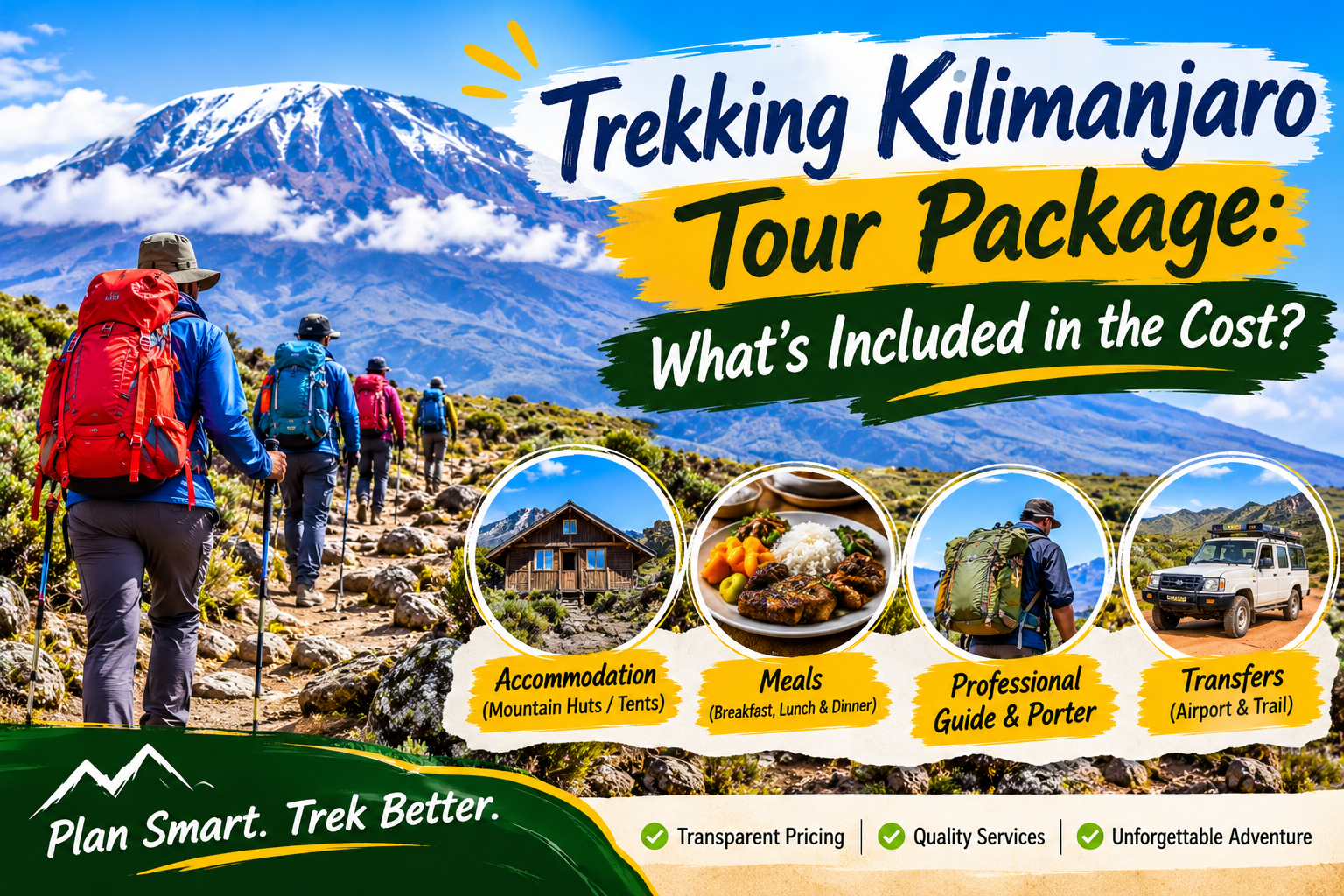
A Trekking Kilimanjaro tour package usually combines mountain accommodation, meals, crew support, park charges and essential transport into one booking.
However, two packages with similar prices can include very different services. Equipment, hotel nights, airport transfers and personal expenses often create the biggest differences.
For travellers comparing options with Ice Rock Trekking, the priority should be a clear written quotation that explains every inclusion and exclusion.
Knowing what each payment covers helps you compare offers fairly, calculate your overall budget and choose arrangements that suit your expectations.
What Does a Kilimanjaro Package Usually Include?
Many organised packages cover the main operational requirements of the climb. These commonly include mountain crew, food, overnight arrangements, park charges and transport.
Some also include airport transfers and hotel accommodation before and after the trek. Others charge separately for these services.
Flights, insurance, crew tips and personal equipment commonly fall outside the advertised price. Always check the specific itinerary and booking conditions.
The word “inclusive” only becomes useful when the operator lists the services behind it.
Before comparing prices, request confirmation of:
- The route and number of mountain days.
- The number of hotel nights.
- Mountain accommodation and equipment.
- Meals and drinking-water arrangements.
- Crew support and baggage allowances.
- Transport, park charges and applicable taxes.
- Personal expenses and optional upgrades.
This breakdown provides a stronger basis for comparison than a headline price alone.
Mountain Crew and Trek Support
A Kilimanjaro expedition depends on coordinated support. Your payment contributes towards the people who manage walking schedules, prepare food, carry equipment and organise camps.
Mountain Leadership
Ask who will lead the climb, how the team communicates and what support remains available if participants need different walking speeds.
The quotation should also explain staffing arrangements for your group size.
For private departures, check whether one climber’s early descent would affect the remaining group’s itinerary.
Porters and Cooking Staff
Porters transport allocated baggage and shared expedition equipment. Cooking staff prepare meals and manage kitchen arrangements throughout the trek.
Confirm your personal baggage allowance before packing. A package may cover one specified mountain bag while leaving daypack carrying outside the price.
Ask about staff welfare, working conditions, meals and equipment. Responsible employment practices form part of the service you purchase.
Park Charges, Permits and Taxes
Park-related charges represent an important part of the total cost. A useful quotation identifies these clearly instead of grouping everything under an unexplained administration fee.
Depending on the itinerary, relevant charges can include conservation, overnight accommodation and rescue levies.
Operators commonly include applicable park charges within their climbing packages, but the quotation should confirm the exact coverage.
Check whether the quoted amount also includes applicable taxes and any route-specific charges.
Ask how the operator handles official fee changes between your deposit and departure. Written terms should identify who pays any difference.
An itemised quotation also helps travel professionals compare supplier proposals and explain pricing accurately to clients.
Avoid assuming that a rescue-related park charge replaces personal insurance. Request separate explanations of park services, evacuation arrangements and your own financial responsibilities.
Accommodation on the Mountain
Your route determines the overnight arrangements, while the package specification determines the equipment and comfort level.
Camping arrangements and hut accommodation require different comparisons. Focus on what the operator actually supplies rather than broad descriptions such as “comfortable accommodation”.
Camping Equipment
For camping itineraries, ask whether the price includes:
- A sleeping tent and its occupancy.
- A sleeping mat or mattress.
- Dining shelter, where provided.
- Tables, chairs and eating utensils.
- Kitchen equipment.
- Equipment transport and camp setup.
Confirm whether you will share a tent and what a private tent costs.
A package that includes a tent may still exclude a sleeping bag. Check each item individually.
Hut Accommodation
Marangu itineraries commonly use mountain huts, while many other popular itineraries use camping arrangements. Check the accommodation specified for your chosen departure.
Ask about shared sleeping arrangements, bedding requirements and facilities.
Do not assume that hut accommodation includes private rooms, hotel-style bathrooms or all personal sleeping equipment.
Meals and Drinking Water
Mountain meals should appear clearly in the itinerary. Ask when the first included meal begins and when the final included meal ends.
A package might cover every mountain meal while excluding lunch on arrival, restaurant dinners or meals during additional hotel nights.
Request a sample menu if food arrangements influence your choice.
Useful questions include:
- Does the package include breakfast, lunch and dinner?
- Will lunches consist of packed food or cooked meals?
- What snacks should participants bring?
- How does the team prepare drinking water?
- Can the kitchen accommodate dietary requirements?
- Do special meal arrangements cost extra?
Explain allergies and dietary restrictions before paying a deposit. Ask the operator to confirm practical arrangements in writing.
Carry reusable water containers that match the operator’s packing instructions.
Hotel drinks, bottled refreshments and personal snack purchases may require a separate allowance.
Hotel Nights Before and After the Trek
Hotel accommodation can affect both the package price and your travel schedule. Check the number of nights, room type and meal basis.
A quotation should state whether you will share a twin room or receive a private room.
Also confirm:
- The hotel name or expected accommodation category.
- Included breakfast or other meals.
- Check-in and check-out arrangements.
- Single-room supplements.
- Charges for additional nights.
- Luggage-storage arrangements during the climb.
An itinerary described as eight days may refer only to mountain days. Another may count arrival and departure within the same total.
Compare the complete travel schedule before booking flights.
If you want additional rest time after arrival, request the hotel and transfer costs alongside your main quotation.
Airport Transfers and Mountain Transport
Transport can include several separate journeys. Each should appear in the booking details.
Airport collection, hotel transfers, transport to the starting point and collection after descent do not necessarily share the same inclusion status.
Confirm the named airport and the destination covered by each transfer.
Ask whether the price includes:
- Arrival collection.
- Departure transfer.
- Hotel-to-mountain transport.
- Transport from the finishing point.
- Transfers between different hotels.
- Arrangements following an early descent.
Shared transfers may operate around group schedules. Private transfers may carry an additional charge.
Provide flight details early and request instructions for delays, missed connections or arrivals outside the planned collection window.
These details matter particularly when participants arrive on different flights.
Personal Equipment and Rental Costs
Personal clothing and sleeping equipment can add substantially to your overall spending.
A Trekking Kilimanjaro tour package should distinguish shared expedition equipment from items each participant must bring or hire.
Check the status of:
- Sleeping bags.
- Trekking poles.
- Insulated jackets.
- Waterproof clothing.
- Walking boots.
- Head torches.
- Gloves and thermal layers.
- Duffel bags and daypacks.
Request rental prices before comparing package totals. Confirm equipment specifications, availability, collection arrangements and any deposit.
Ask whether the team checks equipment before departure and what happens if an essential item proves unsuitable.
Avoid buying everything immediately. First compare the operator’s packing list with equipment you already own.
Well-fitting footwear deserves particular attention because rental availability does not guarantee a suitable fit.
Safety Equipment and Emergency Arrangements
Ask for a clear description of safety provisions rather than relying on a general promise of support.
Request details of the equipment carried, communication methods and procedures for arranging assistance.
The operator should explain:
- How staff monitor participants during the trek.
- Who makes decisions about continuing or descending.
- What emergency equipment accompanies the group.
- How the team contacts outside assistance.
- What happens when someone leaves the itinerary early.
- Which resulting expenses remain the traveller’s responsibility.
Ask separately about emergency transport, additional accommodation and hospital-related expenses.
These questions concern both operational readiness and financial planning.
A clear emergency procedure provides more useful information than an unexplained safety surcharge or an equipment list without operating details.
What Usually Costs Extra?
The advertised package price rarely represents your complete travel budget. List personal and external expenses before deciding what you can comfortably afford.
Flights and Entry Arrangements
Check international flights, connecting travel, entry-document expenses and any necessary overnight stops.
Flight schedules can also create additional hotel and transfer requirements.
Insurance
Request the operator’s insurance requirements before purchasing cover. Check the policy wording against the planned activity, itinerary and maximum altitude.
Ask the insurer directly about any unclear exclusions.
Crew Tips
Request a suggested tipping budget and an explanation of how the team distributes contributions.
Keep this allowance separate from the package payment unless the quotation explicitly includes it.
Personal Spending
Allow for restaurant meals, drinks, laundry, communications, souvenirs and optional activities.
Equipment rentals, single-room supplements and private toilet facilities may also cost extra.
Common package exclusions include flights, insurance, tips and personal equipment, although individual offers vary.
Why Do Package Prices Differ?
Price differences usually reflect several choices working together. Compare the service specification before deciding whether one offer provides better value.
Itinerary Length
Additional mountain days require more food, staffing and overnight arrangements. They can therefore increase operational costs.
Assess what each extra day contributes to the schedule rather than judging it only as an added expense.
Group Size
Shared departures distribute some costs across several participants. Private trips reserve arrangements for your party and may cost more per person.
Ask whether the advertised rate depends on a minimum group size.
Equipment and Service Level
Tent occupancy, mattress quality, meal arrangements, hotel category and private facilities can all influence the quotation.
Request specific descriptions rather than relying on labels such as standard, premium or luxury.
Route Logistics
Different starting points and transport requirements can affect costs. Compare quotations for the same route and duration wherever possible.
How to Calculate Your Complete Budget
Build your budget from the confirmed quotation rather than an advertised starting price.
Use this calculation:
Total trip budget = package price + flights + entry costs + insurance + equipment + tips + additional accommodation + personal spending.
Add a separate contingency allowance for unexpected changes.
For example, a hypothetical US$2,800 package with US$1,200 in personal and travel expenses produces a US$4,000 total before contingency.
These figures illustrate the calculation; they do not represent an Ice Rock Trekking quotation.
Check the payment currency, deposit, balance deadline and transaction charges.
If you pay from India, calculate the rupee equivalent using your payment provider’s applicable exchange rate and fees when payment falls due.
Questions to Ask Ice Rock Trekking Before Booking
Request a written proposal from Ice Rock Trekking that connects the price to your preferred itinerary, travel dates and group requirements.
Use the following questions to clarify the offer:
- What exactly does the quoted price include?
- Which expenses must participants pay separately?
- How many mountain days and hotel nights does it cover?
- What equipment must each participant bring?
- Does the price depend on group size?
- What supplements might apply?
- What happens after an early descent?
- What are the cancellation and amendment terms?
Keep the quotation, itinerary and payment conditions together.
A well-defined package makes the financial commitment clearer and helps everyone plan around the same expectations.
Conclusion
The right Trekking Kilimanjaro tour package combines clearly specified services with a realistic total budget.
Compare accommodation, staffing, food, transport, equipment and park charges alongside the headline price.
Before booking with Ice Rock Trekking, request written inclusions, exclusions and payment conditions. Clear details help you choose confidently and prepare for the full journey.