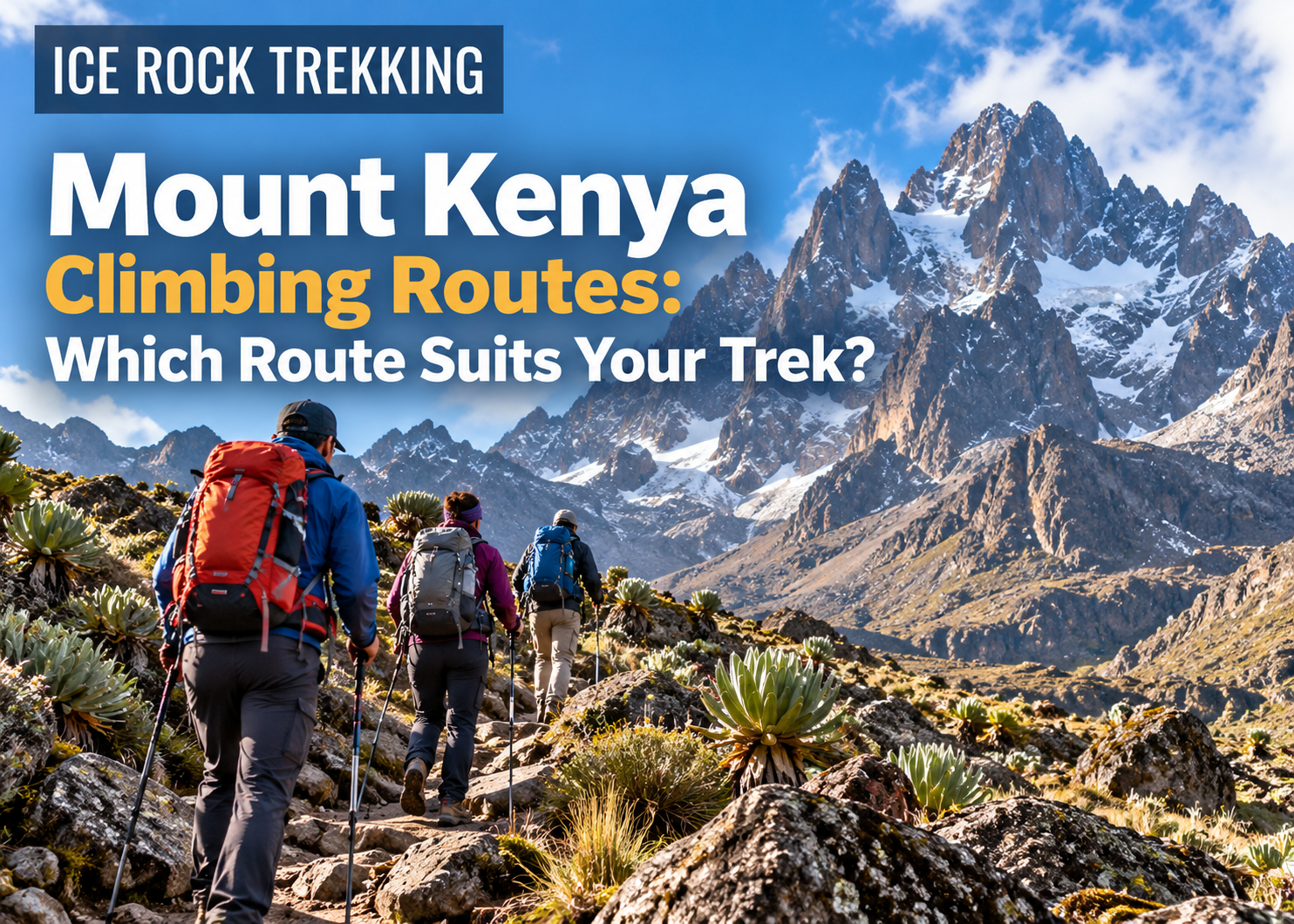
Choosing between mount kenya climbing routes starts with your fitness, available time and preferred trekking experience. Each approach offers a different mountain perspective.
Sirimon attracts trekkers seeking a measured ascent. Chogoria appeals to those prioritising dramatic scenery. Naro Moru offers a shorter approach with demanding sections.
However, route names alone cannot determine the right choice. Daily altitude gains, overnight stops and descent arrangements matter just as much.
For travellers planning with Ice Rock Trekking, the strongest starting point is a clear comparison of terrain, duration, accommodation and summit expectations.
Which Mount Kenya Route Should You Choose?
For a first comparison, match each route to your main priority. Then assess the actual itinerary before making a booking.
- Sirimon: Consider this approach for a relatively gradual trail and established overnight stops.
- Chogoria: Choose this side for lakes, valleys and varied scenery, with sufficient time for the longer approach.
- Naro Moru: Consider this route for direct access, while allowing adequate acclimatisation time.
- Sirimon–Chogoria traverse: Combine two approaches for contrasting landscapes and a varied trekking experience.
- Technical summit expedition: Select specialist arrangements if Batian or Nelion is your objective.
These recommendations provide a starting point. Your previous altitude exposure and proposed sleeping elevations should shape the final decision.
Know Which Summit Your Trek Includes
Before comparing routes, confirm the summit named in your itinerary. “Climbing Mount Kenya” can describe very different objectives.
Most trekking itineraries target Point Lenana, which stands at approximately 4,984 metres. Batian reaches 5,199 metres, while Nelion reaches 5,188 metres.
Batian and Nelion require technical mountaineering skills on their established climbing routes. Point Lenana is the usual objective for trekkers.
Point Lenana for Trekking
Point Lenana involves a demanding high-altitude ascent. Loose ground, cold conditions and possible snow or ice can complicate the final approach.
A trekking classification does not make the summit easy. You still need stamina, secure footing and the ability to follow instructions under fatigue.
Batian and Nelion for Technical Climbing
Technical expeditions require a separate assessment of climbing experience, equipment and conditions. A standard trekking package should never imply automatic access to these summits.
Ask Ice Rock Trekking to identify the precise objective, approach route and technical requirements before comparing expedition proposals.
Sirimon Route: A Balanced Starting Point
Sirimon approaches from the north-western side of Mount Kenya. Its established trail passes through forest and moorland towards the upper mountain.
Common itineraries use Old Moses Camp and Shipton’s Camp. The approach continues through the Mackinder Valley, with increasingly open views near the peaks.
Who Should Consider Sirimon?
Sirimon deserves consideration if you want a manageable introduction to mountain trekking without selecting the shortest possible programme.
It can suit:
- First-time high-altitude trekkers with suitable fitness.
- Walking groups seeking established overnight stops.
- Travellers combining an ascent with a Chogoria descent.
- Trekkers who prefer a more measured approach.
However, a relatively gradual trail can still include substantial daily altitude gains. Always inspect the overnight schedule rather than relying on route descriptions.
What Are Its Limitations?
Some itineraries place a long walking day between lower and upper camps. That combination of distance and elevation can challenge inexperienced trekkers.
Ask whether the programme includes an intermediate overnight stop or an additional acclimatisation day. Confirm what that extra day actually involves.
Sirimon works best when its itinerary supports your pace. A familiar route name cannot compensate for an overly compressed schedule.
Chogoria Route: For Scenery and Variety
Chogoria approaches from the east and offers a longer journey through varied mountain landscapes. Lakes, escarpments and the Gorges Valley distinguish this side.
Its appeal extends beyond the summit attempt. The approach creates opportunities to appreciate the mountain’s changing terrain throughout the trek.
Who Should Consider Chogoria?
Chogoria suits trekkers who value the journey as much as the summit. It rewards those willing to allocate sufficient walking time.
Consider this route if you:
- Enjoy landscape photography.
- Prefer a longer mountain experience.
- Feel comfortable with camping arrangements.
- Want to combine different ascent and descent routes.
- Can accommodate additional transport planning.
Check the starting point carefully. Vehicle access and the amount of forest walking can change the distance included in a proposed itinerary.
What Should You Check Before Booking?
Ask for a complete accommodation schedule. Do not assume that every overnight stop offers the same facilities as established mountain huts.
Confirm tent arrangements, sleeping equipment, meal provision and toilet facilities. These details influence comfort, particularly during wet or cold weather.
A Chogoria itinerary should also allow enough time for descent. Scenic stops become less enjoyable when a tight transfer schedule forces constant rushing.
Naro Moru Route: Direct but Physically Demanding
Naro Moru approaches from the western side. Common itineraries pass through the Meteorological Station area and continue towards Mackinder’s Camp.
The route includes the well-known Vertical Bog, where wet ground can make progress slower and more tiring than its distance suggests.
Who Should Consider Naro Moru?
Naro Moru may appeal to experienced walkers who prefer a direct approach and already have a realistic assessment of their mountain fitness.
Its established overnight stops can also suit travellers who prefer hut accommodation, subject to availability and the exact package.
However, choosing a shorter approach should never mean removing necessary acclimatisation time. Walking speed and altitude tolerance are separate considerations.
What Makes This Route Challenging?
Wet terrain can increase effort, while the ascent towards higher camps demands sustained stamina. The descent can place considerable pressure on tired knees.
Ask how the itinerary distributes climbing, recovery and descent. A short programme may concentrate several demanding stages into consecutive days.
For inexperienced trekkers, adding time can make the overall experience more manageable. The booking decision should reflect the full schedule rather than advertised brevity.
Should You Combine Two Routes?
A traverse uses one route for ascent and another for descent. This arrangement offers contrasting scenery and avoids repeating the entire approach.
Sirimon–Chogoria is an appealing combination for travellers seeking a varied experience. Other combinations may suit different accommodation preferences or transport arrangements.
Why Choose a Traverse?
A traverse can provide:
- Different landscapes on the ascent and descent.
- More variety across successive trekking days.
- Opportunities to compare the mountain’s contrasting slopes.
- A route structure that matches specific overnight preferences.
However, a traverse does not automatically improve acclimatisation. Its benefits depend on the number of days, sleeping elevations and daily workload.
What Changes Logistically?
Starting and finishing at different gates requires coordinated transport. Your luggage, vehicle arrangements and onward accommodation need clear planning.
Ask whether the quotation includes both transfers. Also confirm the expected finishing time and arrangements if weather or a slower descent changes the schedule.
How Many Days Should You Allow?
For initial planning, consider approximately five to six mountain days, then adjust the programme around your altitude history and proposed overnight stops.
Some itineraries run shorter, while others include additional acclimatisation, scenic extensions or less demanding daily stages. Duration alone cannot establish suitability.
Distinguish between mountain days and total holiday days. Airport transfers, arrival accommodation and onward travel may sit outside the advertised trekking duration.
When Does Extra Time Help?
Additional time can provide room for a more measured ascent, recovery between demanding stages and adjustments when conditions affect progress.
Ask how the itinerary uses each extra day. A repeated overnight elevation may offer different benefits from simply adding another long walking stage.
Avoid selecting the shortest itinerary solely to reduce cost. Compare the practical effect of each day on walking demands and altitude exposure.
Compare Sleeping Elevations Before Distances
Distance explains only part of a mountain day. A shorter stage with a substantial altitude gain may feel harder than a longer lower-level walk.
Request these details for every stage:
- Starting and finishing elevations.
- Overnight elevation.
- Approximate walking distance.
- Expected walking time.
- Highest point reached.
- Available alternatives if progress slows.
Fitness does not prevent altitude illness. Symptoms can affect strong walkers, so an itinerary must allow decisions based on health rather than summit pressure.
Do not ascend to sleep higher while experiencing altitude illness symptoms. Worsening symptoms at the same elevation require descent and appropriate medical assistance.
Discuss previous altitude problems or relevant medical conditions with a qualified clinician before departure. Ask the operator how its team handles illness and evacuation.
Match the Route to Your Fitness
Choose according to the walking demands you can sustain over consecutive days. A single successful day hike offers limited preparation for a mountain expedition.
Your training should address climbing, descending, balance and recovery. Practise with the daypack and footwear you intend to use.
Useful preparation includes:
- Regular uphill walks.
- Longer outings on uneven ground.
- Consecutive walking days.
- Leg and core strengthening.
- Controlled downhill practice.
- Gradual increases in walking duration.
If descents trouble your knees, discuss the proposed exit route carefully. Summit day often continues well beyond the highest point.
Also consider group pace. A private itinerary may offer more scheduling flexibility, while a shared departure requires compatible expectations across participants.
Consider Weather and Trail Conditions
Route descriptions reflect general characteristics. Actual conditions can change the effort required on any approach.
Rain can soften trails and complicate access roads. Cold, wind and reduced visibility can affect the upper mountain, including the summit attempt.
Ask about conditions close to departure and confirm how the team adapts the itinerary. Avoid treating seasonal expectations as a guarantee.
Pack for Changing Conditions
Your packing list should include:
- Waterproof jacket and trousers.
- Insulating layers.
- Warm gloves and headwear.
- Broken-in trekking boots.
- Spare socks.
- Headtorch and spare power.
- Sun protection.
- Refillable water containers.
- Appropriate sleeping equipment.
Keep essential clothing dry inside your pack. Confirm which items the package supplies and which you must bring or hire.
Compare Accommodation and Package Value
Accommodation can influence route preference, but facilities vary between overnight stops. Confirm each location rather than accepting a general promise of mountain accommodation.
Ask about bedding, sleeping bags, washing arrangements and room sharing. For camping itineraries, check tent occupancy and the equipment supplied.
What Should the Quotation Explain?
A useful quotation separates the major inclusions:
- Park and accommodation charges.
- Mountain staff and meal provision.
- Transport to and from the mountain.
- Camping or hut arrangements.
- Equipment hire.
- Drinking-water arrangements.
- Emergency procedures.
- Excluded expenses and optional extras.
Compare quotations for the same duration and service level. A lower headline price may reflect fewer mountain days or additional excluded costs.
Ask about staff welfare and baggage limits too. Responsible load planning supports the team and helps you pack appropriately.
Questions to Ask Ice Rock Trekking
A productive enquiry starts with your available dates, recent hiking experience, group size and accommodation preferences.
Share any previous difficulty at altitude. Explain whether you prioritise scenery, a measured pace, hut accommodation or a particular summit.
Then request clear answers to these questions:
- Which route best matches the group’s experience?
- What are the overnight elevations?
- How demanding is the longest day?
- Where does the summit attempt begin?
- What happens if someone needs to descend?
- Which transfers and equipment does the price include?
- How much flexibility does the itinerary allow?
These details make proposals easier to compare and help establish realistic expectations before committing.
Choose the Route That Fits Your Trek
Sirimon offers a useful starting point for many first-time trekkers. Chogoria appeals to scenery-focused walkers, while Naro Moru suits those considering a direct approach.
A traverse adds variety, provided its duration and daily stages match your abilities.
Discuss your priorities with Ice Rock Trekking and request a detailed itinerary. The right choice balances terrain, acclimatisation, accommodation and a manageable descent.