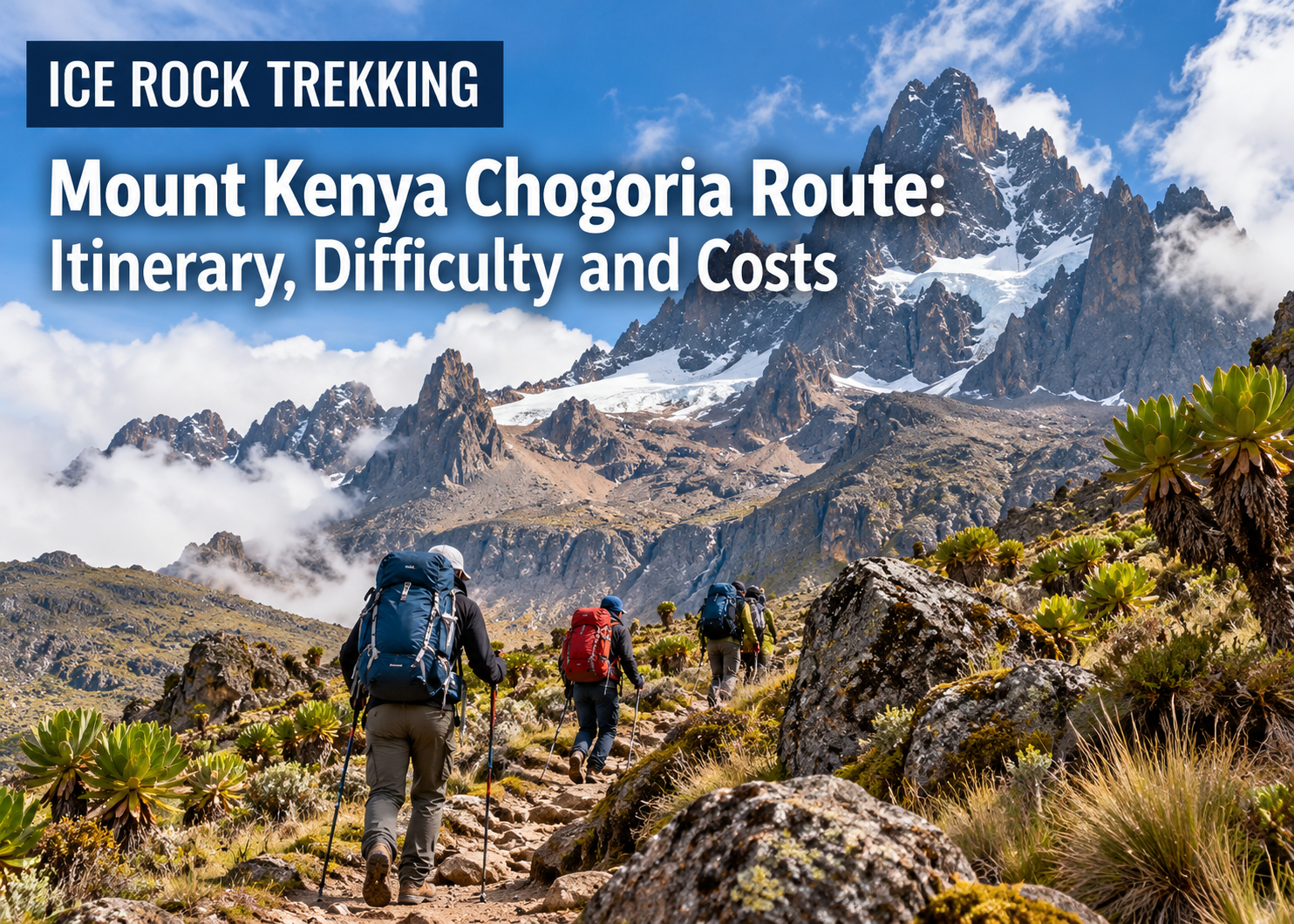
The mount kenya chogoria route attracts trekkers who want dramatic scenery, varied landscapes and a rewarding approach to Point Lenana.
Forest trails gradually open into moorland, mountain lakes and rocky valleys. Higher up, steep ridges and changing weather add challenge to the journey.
Choosing this route involves more than selecting departure dates. Trek duration, sleeping elevations, transport arrangements and personal fitness all influence the experience.
For travellers considering Ice Rock Trekking, the starting point is a clear itinerary that balances scenery, acclimatisation and realistic daily effort.
What Makes the Chogoria Route Different?
Chogoria approaches Mount Kenya from the eastern side. Its appeal comes from the changing scenery between the forested lower slopes and the upper mountain.
Lake Ellis, the Gorges Valley and the surrounding ridgelines create memorable viewpoints. However, itineraries do not automatically include every lake, waterfall or viewpoint.
Some programmes follow the main ascent corridor, while others add side walks or alternative camps. These differences affect walking hours, altitude gain and overall cost.
Trekkers can ascend and descend through Chogoria or combine it with another route. A traverse through Sirimon provides different scenery during the descent.
Before booking, check the actual overnight locations and walking stages. Two packages carrying the same route name can offer substantially different experiences.
Which Summit Does the Route Reach?
Most trekking itineraries target Point Lenana, Mount Kenya’s commonly visited trekking summit, at approximately 4,985 metres.
Batian and Nelion rise higher and involve technical climbing. A standard Chogoria trekking package should not imply that it includes either technical summit.
Kenya Wildlife Service distinguishes the mountain’s three prominent peaks, with Batian reaching 5,199 metres and Nelion reaching 5,188 metres.
For most recreational trekkers, Point Lenana provides the appropriate objective. Nevertheless, its altitude and exposed upper terrain require serious preparation.
Reaching it usually involves trekking rather than technical rock climbing in favourable conditions. Snow, ice or poor weather can change the equipment and skills required.
How Many Days Should You Allow?
Five- and six-day Chogoria programmes are available, while longer itineraries allow additional time for acclimatisation, scenery or a less compressed schedule.
A six-day itinerary provides a useful planning framework. However, the number of advertised days alone does not reveal how gradually the programme gains altitude.
Some packages count long road transfers within their duration. Others include additional mountain nights, which can produce a different ascent profile.
Five Days: A More Compressed Schedule
A five-day trek may suit appropriately prepared walkers, particularly those arriving with recent altitude exposure.
However, shorter schedules can involve substantial elevation gains and a demanding summit-to-descent stage. Fitness alone does not make rapid ascent suitable.
Check how many nights the programme includes above the forest zone and whether it allows flexibility before the summit attempt.
Six or Seven Days: More Planning Flexibility
Additional days can create room for shorter stages, an acclimatisation walk or another night before moving higher.
Their value depends on placement. An extra transfer day offers a different benefit from an additional mountain night.
Ask for daily sleeping elevations alongside the itinerary. This makes comparison more useful than judging packages by duration alone.
Suggested Six-Day Chogoria–Sirimon Itinerary
The following outline illustrates a possible traverse. Camps, walking times and summit arrangements require confirmation against conditions and the group’s needs.
Published Chogoria itineraries commonly link the lower mountain, Lake Ellis and Mintos before Point Lenana. Descent arrangements vary between programmes.
Day One: Travel to the Chogoria Side
Travel from Nairobi towards Chogoria, then continue towards the agreed mountain access point.
Road conditions influence how far vehicles can proceed. Confirm whether the package includes suitable mountain transport and any walking required beyond the drop-off.
Depending on arrival time, the afternoon may include a short walk, equipment checks and a briefing before the first mountain night.
Day Two: Walk Towards Lake Ellis
Leave the lower mountain accommodation or campsite and continue towards Lake Ellis, following the agreed trail.
This stage introduces more open scenery and the steady effort of carrying a daypack at increasing altitude.
Keep the pace comfortable and protect essential clothing from rain. Reaching camp with energy remaining matters more than completing the stage quickly.
Day Three: Continue Towards Mintos
The route moves into higher, more exposed terrain on the approach towards Mintos, commonly listed at approximately 4,200 metres.
Walking becomes slower as the air thins. The team should assess progress and wellbeing throughout the stage.
Views towards the Gorges Valley may feature along the chosen trail, but visibility depends on cloud and weather.
Day Four: Allow Time Before the Summit
A deliberately paced programme can use this day for an additional high-altitude night and a suitable acclimatisation walk.
The exact plan should reflect the previous ascent, weather and individual condition. A longer schedule still requires sensible elevation gains.
Prepare summit clothing, head torches and snacks before resting. Confirm the turnaround arrangements and the descent plan with the mountain team.
Day Five: Attempt Point Lenana and Descend
Summit attempts often begin before dawn, involving cold conditions, darkness and slow movement across steep upper terrain.
After Point Lenana, descend towards the Sirimon side, with Shipton’s Camp forming one possible overnight destination.
This is a demanding stage. Reaching the summit marks only part of the day, so preserve energy and concentration for the descent.
Day Six: Continue Down Sirimon and Depart
Continue through the Sirimon descent corridor towards the agreed exit and vehicle collection point.
The final walking distance depends on the previous night’s camp. Some programmes require a long descent before the road transfer.
Keep onward travel flexible. Weather, walking speed and road conditions can affect arrival times.
How Difficult Is the Chogoria Route?
The route is physically demanding because it combines consecutive walking days, increasing altitude and a challenging summit stage.
Difficulty also depends on itinerary design. A rushed ascent can feel substantially harder than a programme with appropriately placed mountain nights.
Walking Terrain
Expect a mixture of established trails, uneven ground, rocky sections and potentially muddy lower paths.
Higher stages offer less shelter from wind and precipitation. Fatigue can make otherwise manageable footing more difficult late in the day.
Trekking poles can assist balance, particularly during descents. Practise using them before departure rather than introducing unfamiliar equipment on summit day.
Altitude and Endurance
Strong cardiovascular fitness supports walking performance, but it does not guarantee a comfortable response to altitude.
Allow time for adjustment and report changes in wellbeing promptly. The summit objective should remain flexible throughout the trek.
Long descents also challenge knees and thighs. Preparation should include downhill walking, not just uphill effort.
Suitability for First-Time Trekkers
First-time high-altitude trekkers can consider Chogoria with suitable preparation, experienced mountain support and a carefully planned schedule.
However, beginners should distinguish limited altitude experience from limited walking fitness. Several demanding days can expose weaknesses in footwear, conditioning and pacing.
Choose a programme that matches actual preparation rather than an ambitious target.
What Does the Mount Kenya Chogoria Route Cost?
There is no single fixed price. Group size, duration, transport, accommodation and included services all influence the final quotation.
As a market reference, published six-day offers include starting prices around US$1,050 and another advertised package at US$1,310 per person.
These examples have different conditions and inclusions; they do not establish an Ice Rock Trekking tariff.
Request a dated quotation for the exact programme. A starting price may depend on a minimum group size or a particular accommodation arrangement.
Main Cost Factors
The most significant variables commonly include:
- Duration: Additional mountain days increase staffing, food and accommodation requirements.
- Group size: Shared transport and support costs can reduce individual expenditure.
- Access transport: Mountain road transfers may require suitable vehicles.
- Accommodation: Camping arrangements and available indoor accommodation carry different costs.
- Equipment: Sleeping bags, insulated clothing and other rentals may cost extra.
- Route combination: A traverse requires collection from a different mountain exit.
What Should the Quotation Include?
Ask for a written breakdown covering:
- Applicable park entry and camping charges.
- Mountain leadership, cooking and porter services.
- Meals and drinking-water arrangements.
- Tents, sleeping mats and shared equipment.
- Transfers between the agreed collection and return points.
- Mountain accommodation and any town hotel nights.
- Taxes, payment charges and equipment rentals.
Confirm exclusions separately. Flights, travel insurance, gratuities, personal purchases and additional accommodation can materially increase the overall budget.
How to Compare Packages Fairly
Compare programmes with matching durations, sleeping locations and service levels. The lowest headline figure may reflect fewer inclusions or a more compressed itinerary.
Ask how much luggage porters carry and what remains in each trekker’s daypack. Confirm any baggage limits before packing.
Check emergency communication arrangements, evacuation procedures and the circumstances that could trigger additional charges.
Also request cancellation terms and the policy for an early descent. These details help travellers assess financial commitments before payment.
For professional trip planners, written service specifications make supplier comparisons clearer and reduce misunderstandings after arrival.
When Is the Best Time to Trek Chogoria?
January to February and roughly July to September commonly offer drier trekking conditions. However, mountain weather remains variable throughout these periods.
Rain can affect lower trails and access roads, while higher sections may experience freezing conditions, snow or ice.
Choose dates with the full itinerary in mind. A suitable walking season does not remove the need for waterproof clothing and flexible summit decisions.
Photographers should allow realistic time for changing visibility. A tight programme may leave little opportunity to wait for clearer views.
Confirm recent trail and road conditions shortly before departure, particularly when planning travel near seasonal transitions.
What Should You Pack?
Pack for warm walking conditions, rain, strong sun and cold mountain nights. Equipment should work as a coordinated clothing and sleeping system.
Clothing and Footwear
Prioritise:
- Broken-in walking boots with reliable grip.
- Comfortable trekking socks and spare pairs.
- Moisture-managing base layers.
- A warm fleece or similar mid-layer.
- An insulated jacket suitable for cold conditions.
- Waterproof jacket and trousers.
- Warm gloves, a hat and sun protection.
Keep sleeping clothes dry throughout the trek. Waterproof packing inside the main bag protects essential insulation even when external fabric becomes wet.
Personal Equipment
Carry a dependable head torch, spare power, water containers, sunglasses and sunscreen.
A comfortable daypack should hold layers, snacks, water and personal essentials without unnecessary weight.
Confirm the required sleeping-bag specification and whether the package supplies a sleeping mat. Check rental equipment before leaving for the mountain.
Pack personal medication and disclose relevant health considerations during trip planning.
How Should You Prepare Physically?
Build preparation around repeated walking rather than occasional intense exercise. The aim is to maintain steady effort across several consecutive days.
Increase hill-walking duration gradually and practise carrying the daypack planned for the trek.
Include back-to-back walking days where practical. These sessions reveal how well the body recovers between stages.
Strength work can support balance and leg endurance. Step-ups, controlled squats and suitable core exercises complement walking preparation.
Use training walks to test boots, socks, waterproofs and snacks. Small equipment problems become more disruptive during a remote mountain journey.
Planning Your Trek with Ice Rock Trekking
When discussing a Chogoria programme with Ice Rock Trekking, share previous trekking experience, available dates, fitness level and preferred accommodation.
Request the proposed overnight elevations, daily walking expectations and complete cost breakdown before selecting the itinerary.
Mention photography priorities or specific places of interest. Lake Michaelson, for example, requires explicit itinerary confirmation rather than an assumption.
The strongest plan combines realistic pacing, clear logistics and enough flexibility for mountain conditions.
Chogoria rewards careful preparation with a varied journey towards Point Lenana. Choose the schedule around the whole trek, including the descent and recovery.