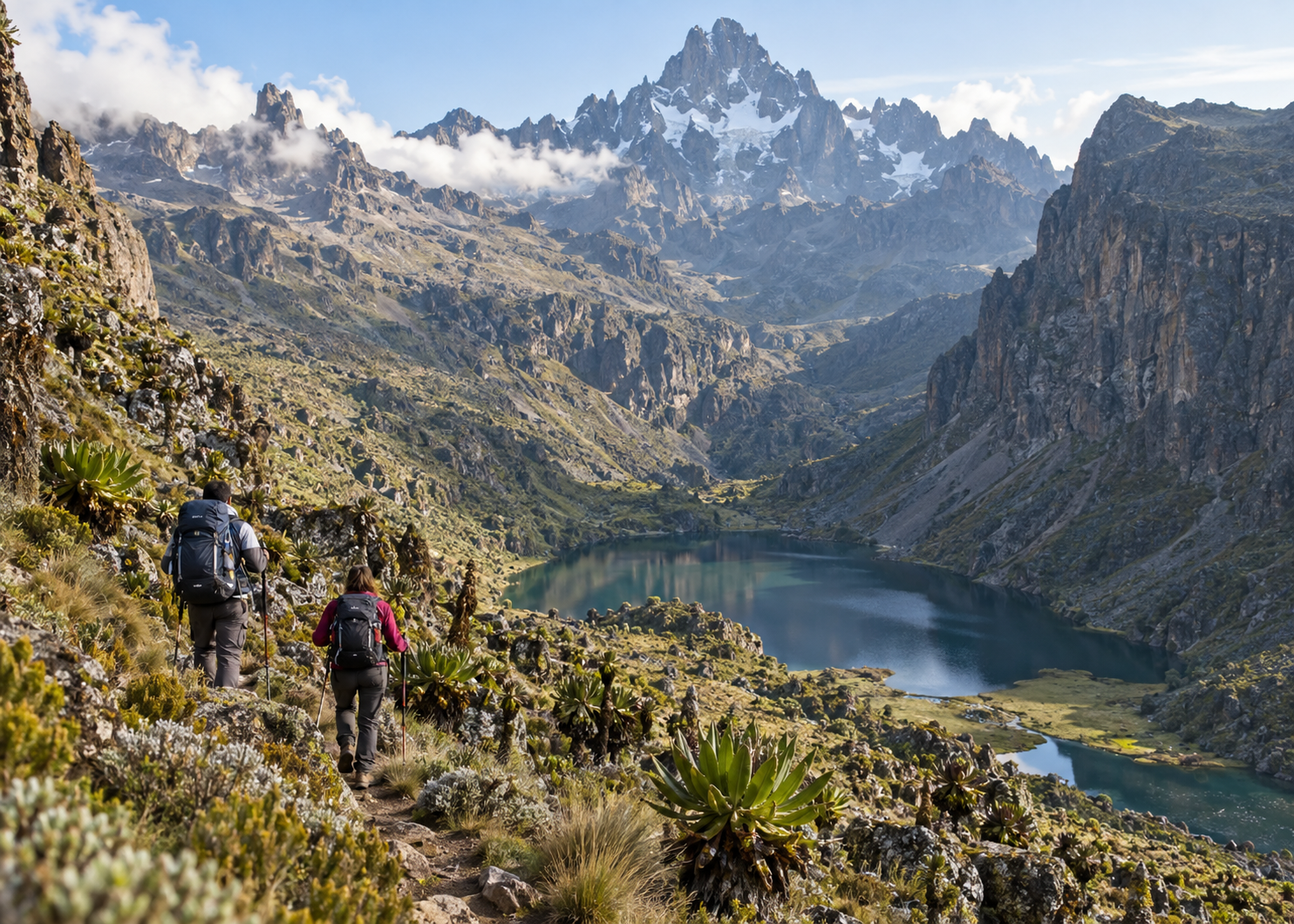
Mount Kenya is one of Africa’s most rewarding high-altitude trekking destinations, offering dramatic valleys, volcanic landscapes, alpine scenery, rugged peaks, and diverse wildlife. Among its trekking approaches, the chogoria route mount Kenya experience stands out for its scenic beauty and distinctive landscapes.
The Chogoria approach is particularly attractive to trekkers who want more than a straightforward ascent. The trail passes through forest, moorland, open valleys, unusual rock formations, alpine vegetation, and high-altitude terrain before connecting with routes leading toward the mountain’s summit area.
For travelers planning a Mount Kenya trek, choosing the right route is an important decision. Distance, altitude gain, walking hours, accommodation, weather, acclimatization, park charges, porter support, and summit objectives all affect the overall experience.
Ice Rock Trekking organizes Mount Kenya trekking experiences with attention to safety, pacing, logistics, and local mountain conditions. Whether you are preparing for your first high-altitude trek or looking for a demanding African mountain adventure, the Chogoria side provides a memorable way to experience Mount Kenya.
Why Choose the Chogoria Route on Mount Kenya
The Chogoria Route is known for its spectacular scenery. Compared with some other approaches, the landscape changes considerably throughout the trek.
Trekkers may encounter dense mountain forest at lower elevations, followed by bamboo zones, moorland, giant heather, high-altitude valleys, and rocky terrain. The route also provides access to some of Mount Kenya’s most recognizable natural features.
Highlights can include:
- Chogoria forest
- Lake Ellis
- Minto’s Hut area
- Hall Tarns
- Gorges Valley
- Giant groundsel and lobelia
- High-altitude volcanic landscapes
- Views toward Batian and Nelion
- Sunrise around Point Lenana
- Diverse mountain wildlife
One of the major advantages is the opportunity to combine scenic trekking with gradual altitude gain. A carefully planned itinerary can give the body more time to adjust before reaching the summit zone.
Chogoria Route Mount Kenya Starting Point
The trek generally begins from the Chogoria side of Mount Kenya. Access to the trailhead involves road travel from nearby towns and can include a rougher mountain road depending on weather and seasonal conditions.
Many itineraries use a vehicle to reach a suitable starting point before walking into the mountain environment.
The exact starting location can vary according to road conditions, park regulations, weather, and the selected itinerary. This is important because the actual walking distance can change when vehicles cannot travel as high as expected.
For this reason, trekkers should confirm the planned starting elevation and walking distance with their trekking operator before departure.
Main Chogoria Route Trekking Itinerary
A typical Chogoria trekking program can range from several days to a longer itinerary designed for better acclimatization. A five-day or six-day schedule is commonly considered when balancing trekking time with an efficient travel plan.
Day 1: Nairobi to Chogoria and Mountain Approach
The journey normally begins with road travel toward Chogoria. After reaching the area, the team continues toward the mountain entrance or an appropriate trailhead.
Depending on the selected itinerary and road conditions, the first walking section may be relatively moderate.
The lower slopes are characterized by forest and changing vegetation. Wildlife can occasionally be spotted, although sightings are never guaranteed.
Day 2: Forest to Higher Moorland
As the trek continues, the landscape gradually opens up. Dense forest gives way to bamboo and moorland vegetation.
The pace should remain comfortable. There is little advantage in walking aggressively at altitude, particularly during the early stages.
Trekkers may spend the night at a mountain camp or designated accommodation depending on the itinerary.
Day 3: Lake Ellis or High-Altitude Valley Section
Lake Ellis is one of the attractive points along the Chogoria side. Its surroundings provide a peaceful setting and excellent views of the mountain landscape.
Some itineraries use Lake Ellis as an acclimatization point, while others continue farther toward higher camps.
This section gives trekkers an opportunity to experience the changing environment before reaching the summit zone.
Day 4: Hall Tarns and Summit Preparation
The trail becomes more rugged as it approaches the higher elevations.
Hall Tarns and the surrounding cliffs create one of the most impressive sections of the Chogoria approach. The scenery becomes distinctly alpine, with dramatic rock walls, open valleys, and sparse vegetation.
The evening should be focused on rest, hydration, nutrition, and preparation for the summit attempt.
Day 5: Point Lenana Summit and Descent
The summit day normally begins very early.
Point Lenana, at approximately 4,985 metres, is the highest trekking summit on Mount Kenya and the usual objective for non-technical trekkers.
The pre-dawn ascent can be physically demanding because of the altitude, cold temperatures, darkness, and steep terrain.
Reaching the summit around sunrise can provide spectacular views when weather conditions are clear.
After spending a short period at the summit, trekkers descend to a lower camp. The descent is usually faster than the ascent but can still be tiring.
Day 6: Descent and Return
The final day involves descending toward the mountain exit and continuing by vehicle toward the onward destination.
Longer programs may add an extra acclimatization or recovery day, which can be useful for trekkers who want a less rushed experience.
Chogoria Route Difficulty
The Chogoria Route is generally considered challenging rather than an easy hiking trail.
The main difficulty comes from altitude rather than technical climbing for trekkers aiming for Point Lenana.
Factors that influence difficulty include:
- High elevation
- Long walking days
- Steep sections
- Rocky terrain
- Cold temperatures
- Reduced oxygen availability
- Early-morning summit ascent
- Variable weather
- Individual fitness
- Acclimatization ability
A person who regularly hikes and has reasonable cardiovascular fitness may be well prepared for the physical demands. However, fitness does not eliminate altitude-related risks.
Walking slowly, maintaining steady breathing, drinking regularly, eating enough food, and allowing appropriate acclimatization are important elements of a successful trek.
Is Chogoria Route Suitable for Beginners?
Yes, but beginners should not underestimate the mountain.
Previous high-altitude trekking experience is helpful but not mandatory for Point Lenana if the itinerary is appropriately designed.
A beginner should ideally prepare through regular walking, uphill training, stair climbing, strength exercises, and longer weekend hikes.
The biggest mistake is arriving at Mount Kenya without preparation and expecting fitness alone to solve altitude problems.
A professional mountain crew can help with pacing, route decisions, camp arrangements, meals, and monitoring during the trek.
Chogoria Route Mount Kenya Cost
The total cost of a Mount Kenya trek depends on the number of days, group size, accommodation arrangements, park fees, transport, food, crew requirements, equipment, and the level of service included.
A trekking package may include:
- Mount Kenya National Park fees
- Mountain crew services
- Professional trekking guides
- Porters
- Meals during the trek
- Camping equipment
- Accommodation where applicable
- Transport to and from the mountain
- Emergency support arrangements
Some expenses may remain separate, including international flights, visas, personal insurance, personal equipment, tips, hotel stays before or after the trek, and optional activities.
Because park fees and operational expenses can change, travelers should request an updated quotation from Ice Rock Trekking before confirming their itinerary.
The cheapest package is not always the best choice for a high-altitude trek. Proper staffing, food, safety planning, equipment, and acclimatization can make a significant difference.
Best Time for Chogoria Route Mount Kenya
Mount Kenya can be climbed during different periods of the year, but weather conditions strongly influence the trekking experience.
The generally preferred periods are the drier seasons, when trails tend to be more manageable and visibility can be better.
Dry conditions can make steep and rocky sections easier to negotiate. Clear weather also increases the possibility of enjoying views from Point Lenana.
Wet periods can bring slippery trails, muddy sections, cloud cover, and more challenging conditions.
However, mountain weather can change quickly regardless of season. Trekkers should therefore carry suitable waterproof and warm clothing even when traveling during a traditionally favorable period.
What to Pack for Chogoria Route
Packing correctly is essential for a comfortable Mount Kenya trek.
Recommended equipment includes:
- Waterproof hiking boots
- Comfortable trekking socks
- Thermal base layers
- Fleece or insulated jacket
- Waterproof jacket and trousers
- Warm hat
- Gloves
- Sun hat
- Sunglasses
- Sunscreen
- Headlamp
- Trekking poles
- Water bottles or hydration system
- Sleeping bag suitable for low temperatures
- Backpack
- Duffel bag for porter transport
- Personal first-aid supplies
- High-energy snacks
- Toiletries
- Power bank
- Small personal medication kit
Avoid overpacking. Porters have weight limitations, and carrying unnecessary equipment can make the trek harder.
Fitness Preparation for Mount Kenya
Preparation should begin several weeks before departure.
Walking is the simplest way to build endurance, but adding elevation training makes preparation more effective.
A useful weekly routine can include:
Walking: Long-distance walks to develop endurance.
Stairs: Useful for strengthening the legs and improving cardiovascular capacity.
Strength training: Squats, lunges, step-ups, and core exercises can support uphill movement.
Hill walking: The closest practical preparation for mountain terrain.
Recovery: Rest days allow the body to adapt and reduce injury risk.
Try to include longer hikes before departure. If possible, practice carrying a daypack similar to the one you will use during the trek.
Altitude on Mount Kenya
Altitude is one of the most important considerations when trekking above 4,000 metres.
At high elevation, the body receives less available oxygen. Some trekkers adjust well, while others experience symptoms associated with altitude sickness.
Possible symptoms include:
- Headache
- Nausea
- Dizziness
- Reduced appetite
- Fatigue
- Shortness of breath
- Difficulty sleeping
Trekkers should report unusual symptoms to their mountain crew rather than hiding them.
A responsible trekking team can assess the situation and determine whether to continue, rest, descend, or seek medical assistance.
Point Lenana vs Batian and Nelion
Mount Kenya has three principal summits: Batian, Nelion, and Point Lenana.
Point Lenana is the primary trekking summit and can be reached without the technical climbing requirements associated with Batian and Nelion.
Batian and Nelion involve technical climbing, specialist equipment, route knowledge, and advanced climbing skills.
Therefore, travelers should clearly state their summit objective when booking. A normal trekking package for Point Lenana should not be confused with a technical climbing expedition to Batian or Nelion.
Chogoria Route Compared With Other Mount Kenya Routes
Mount Kenya offers several approaches, with the Naro Moru and Sirimon routes being among the better-known alternatives.
The Chogoria side is especially appealing for trekkers prioritizing scenery and varied landscapes.
Naro Moru is often selected for its direct approach and traditional trekking characteristics.
Sirimon is known for its gradual approach and attractive high-altitude scenery.
Some itineraries combine routes, such as ascending through one side and descending through another. This creates a more varied experience and avoids repeating the same trail.
Responsible Trekking on Mount Kenya
Mountain tourism should benefit local communities while minimizing environmental impact.
Trekkers can support responsible travel by:
- Carrying reusable water bottles
- Avoiding single-use plastics
- Staying on established trails
- Following park regulations
- Avoiding litter
- Respecting wildlife
- Supporting local mountain crews
- Using properly managed waste systems
- Respecting other trekking groups
The mountain environment is fragile, particularly at high elevations where vegetation grows slowly.
Why Trek With Ice Rock Trekking
Ice Rock Trekking focuses on creating well-organized mountain experiences with practical planning and experienced local support.
For the Chogoria Route, a good operator should pay attention to more than simply getting trekkers from one camp to another. Route selection, acclimatization, crew coordination, meals, equipment, weather decisions, emergency procedures, and summit pacing all matter.
Ice Rock Trekking can help travelers select an itinerary based on their available time, fitness, summit objective, and preferred trekking style.
Final Thoughts
The chogoria route mount Kenya experience combines challenging high-altitude trekking with some of the mountain’s most impressive landscapes. From forested slopes and open moorlands to Lake Ellis, Hall Tarns, and the summit approach, the route offers plenty of variety.
Success on Mount Kenya depends on preparation, sensible pacing, appropriate equipment, acclimatization, and a strong mountain support team.
For travelers planning a Mount Kenya adventure, choosing an itinerary that allows enough time for altitude adjustment is often more valuable than simply selecting the shortest package.
With careful preparation and professional support from Ice Rock Trekking, the Chogoria approach can become one of the most memorable trekking experiences in East Africa.