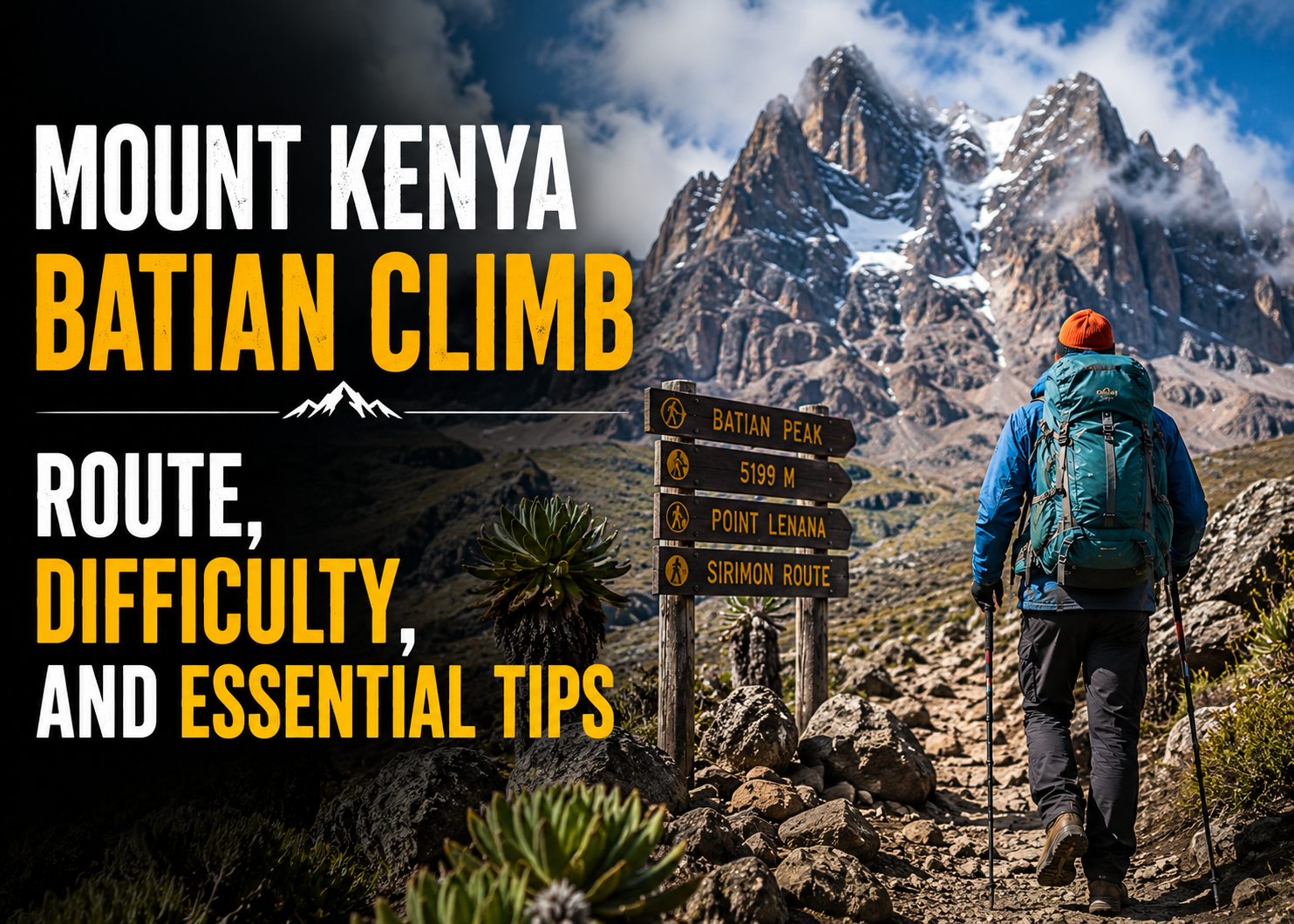
Reaching Batian, the highest peak on Mount Kenya, is a remarkable achievement that attracts experienced climbers from across the globe. Standing at 5,199 meters, Batian demands technical climbing skills, physical endurance, careful planning, and respect for the mountain’s changing conditions. Unlike trekking routes leading to Point Lenana, Batian requires rock climbing techniques, rope work, and a strong understanding of alpine environments.
The mount kenya batian climb is much more than reaching a summit. Every section presents a combination of breathtaking scenery, exposed rock faces, glacier remnants, dramatic ridges, and unforgettable sunrise views. Success depends on choosing the right route, preparing properly, climbing with experienced professionals, and allowing enough time for acclimatization. At Ice Rock Trekking, we help climbers experience this challenging ascent with experienced mountain guides, quality equipment, and carefully planned itineraries.
What Makes Batian Different from Other Mount Kenya Peaks?
Mount Kenya has three famous summits:
- Batian (5,199 m)
- Nelion (5,188 m)
- Point Lenana (4,985 m)
Most visitors climb Point Lenana because it is accessible through trekking routes without technical climbing. Batian, however, is reserved for experienced climbers capable of handling exposed rock terrain and multi-pitch climbing.
Batian is the true highest point of Mount Kenya, requiring both mountaineering and rock climbing abilities. Climbers encounter steep granite walls, narrow ledges, chimneys, cracks, and exposed traverses that demand concentration throughout the ascent.
Where Is Batian Located?
Batian forms part of the rugged central massif of Mount Kenya National Park. The peak consists mainly of solid volcanic granite, shaped over thousands of years through erosion and glaciation.
Unlike many snow-covered mountains, Batian offers classic alpine rock climbing rather than glacier travel. Although glaciers once dominated the mountain, only small remnants remain.
Its dramatic vertical cliffs make it one of Africa’s finest alpine climbing destinations.
Why Climbers Choose the Mount Kenya Batian Climb
Experienced mountaineers choose Batian because it offers:
- Technical alpine climbing
- Stunning granite rock formations
- Exceptional mountain scenery
- Less crowded climbing routes
- Challenging multi-pitch climbing
- Spectacular summit views
- Excellent training for larger alpine expeditions
Many climbers use Batian as preparation for bigger mountains due to its combination of altitude, exposure, and technical climbing.
Best Routes for the Mount Kenya Batian Climb
Several climbing routes reach Batian, although two remain the most popular.
North Face Standard Route
The North Face Standard Route is the classic line during the dry season.
It offers:
- Stable rock
- Predictable weather
- Good climbing conditions
- Easier route finding
- Numerous established belays
This route contains approximately twenty climbing pitches, combining cracks, slabs, chimneys, and exposed traverses.
Difficulty generally falls around UIAA IV+ to V or approximately 5.6–5.8 in the Yosemite Decimal System.
South-East Face Route
The South-East Face Route becomes more suitable during wetter months when the north face receives more moisture.
This route features:
- Longer climbing sections
- More technical moves
- Greater route-finding challenges
- Increased exposure
Although highly rewarding, it is recommended only for experienced alpine climbers.
Typical Mount Kenya Batian Climb Itinerary
A successful expedition normally lasts five to seven days.
Day One
Arrival and transfer to Mount Kenya National Park.
Equipment inspection.
Briefing with climbing guides.
Day Two
Trek toward mountain huts.
Gradual altitude gain.
Acclimatization begins.
Day Three
Continue hiking to Austrian Hut or Shipton’s Camp.
Hydration.
Rest.
Equipment preparation.
Day Four
Early morning summit attempt.
Multi-pitch climbing.
Summit Batian.
Descend carefully.
Return to camp.
Day Five
Descend through scenic trekking routes before departure.
Longer itineraries allow additional acclimatization, increasing summit success rates.
Difficulty of the Mount Kenya Batian Climb
The mount kenya batian climb is considered one of Africa’s most demanding alpine climbs.
Challenges include:
Technical Rock Climbing
Unlike trekking peaks, Batian requires:
- Rope systems
- Belaying
- Multi-pitch climbing
- Crack climbing
- Chimney climbing
- Rappelling
Previous climbing experience is essential.
High Altitude
At over 5,000 meters, oxygen levels decrease significantly.
Many climbers experience:
- Headaches
- Fatigue
- Reduced endurance
- Slower recovery
Proper acclimatization minimizes altitude-related problems.
Long Summit Day
Summit day often starts before sunrise.
Climbers spend many hours ascending and descending technical terrain, making endurance just as important as climbing ability.
Weather Changes
Mountain weather changes rapidly.
Clear skies may suddenly become:
- Rain
- Mist
- Strong winds
- Cold temperatures
Experienced local guides closely monitor weather patterns throughout the expedition.
Physical Preparation
Strong fitness greatly improves climbing performance.
Recommended training includes:
Cardiovascular Conditioning
Build endurance through:
- Running
- Hiking
- Cycling
- Swimming
- Stair climbing
Aim for consistent training several months before departure.
Strength Training
Focus on:
- Legs
- Core
- Back
- Shoulders
- Grip strength
Functional exercises improve climbing efficiency.
Climbing Practice
Practice regularly on:
- Indoor climbing walls
- Outdoor rock faces
- Multi-pitch routes
Become comfortable using climbing equipment before arriving.
Hiking with a Backpack
Carry a loaded backpack during training hikes to simulate mountain conditions.
Essential Climbing Skills
Before attempting Batian, climbers should know:
- Belaying
- Rope management
- Anchor systems
- Basic rescue awareness
- Rappelling
- Efficient movement on rock
- Helmet safety
Professional mountain guides handle route management, but climbers should possess solid foundational skills.
Equipment Checklist
Bringing reliable equipment improves safety and comfort.
Clothing
Pack:
- Waterproof shell jacket
- Waterproof trousers
- Thermal base layers
- Fleece jacket
- Down jacket
- Warm climbing pants
- Hiking shirts
- Extra socks
- Warm hat
- Sun hat
- Gloves
Layering helps manage rapidly changing temperatures.
Footwear
Choose:
- Mountaineering boots
- Comfortable trekking shoes
- Gaiters if necessary
Boots should already be broken in before the expedition.
Climbing Equipment
Essential gear includes:
- Helmet
- Harness
- Climbing shoes
- Locking carabiners
- Belay device
- Personal anchor
- Slings
- Prusik loops
Many operators provide technical equipment, although experienced climbers often prefer their own gear.
Accessories
Carry:
- Headlamp
- Sunglasses
- Sunscreen
- Lip balm
- Trekking poles
- Water bottles
- Hydration system
- Camera
- Personal medication
Best Season for the Mount Kenya Batian Climb
Weather significantly influences climbing success.
The most favorable months are:
January to March
Generally offers:
- Dry rock
- Stable weather
- Better visibility
- Comfortable climbing temperatures
July to October
Another excellent climbing season featuring:
- Lower rainfall
- Reliable climbing conditions
- Beautiful mountain scenery
Heavy rainfall during April, May, and November increases rock slipperiness and route difficulty.
Acclimatization Matters
Altitude affects every climber differently.
Good acclimatization includes:
- Climbing gradually
- Drinking plenty of water
- Avoiding alcohol
- Eating nutritious meals
- Sleeping adequately
- Following guide recommendations
Many successful itineraries include extra acclimatization days rather than rushing toward the summit.
Safety Tips for Batian Climbers
Safety should remain the highest priority throughout every expedition.
Never Rush
Slow, consistent movement conserves energy and improves decision-making.
Stay Hydrated
Drink water regularly, even when temperatures feel cold.
Eat Frequently
Small meals and snacks help maintain energy during long climbing days.
Listen to Your Guides
Professional guides know local conditions and make decisions based on safety.
Inspect Equipment
Double-check:
- Harness buckles
- Helmets
- Rope systems
- Carabiners
- Belay devices
Small mistakes become serious in alpine environments.
Respect Weather Changes
Turning back is sometimes the safest decision.
Successful climbers understand that mountains will always remain for another attempt.
Wildlife Along the Trek
Although climbing focuses on rock terrain, lower elevations feature remarkable wildlife.
Visitors may encounter:
- Rock hyrax
- Mountain antelope
- Buffalo
- Colobus monkeys
- Sunbirds
- Eagles
The diverse ecosystems make the expedition even more memorable.
Photography Opportunities
Batian offers exceptional photography throughout the journey.
Popular subjects include:
- Sunrise over African landscapes
- Alpine valleys
- Granite cliffs
- Tarn lakes
- Mountain flora
- Glacier remnants
- Dramatic ridgelines
Carrying a lightweight camera allows climbers to capture unforgettable moments without adding excessive weight.
Environmental Responsibility
Mount Kenya is both a national park and a UNESCO-recognized natural treasure.
Responsible climbers should:
- Carry out all waste
- Stay on established paths
- Avoid damaging vegetation
- Respect wildlife
- Minimize noise
- Follow park regulations
Protecting the mountain ensures future generations can enjoy the same experience.
Why Climb with Ice Rock Trekking?
Choosing an experienced operator significantly improves safety, organization, and overall experience.
Ice Rock Trekking offers:
- Experienced mountain guides
- Carefully planned itineraries
- Quality climbing support
- Reliable logistics
- Safety-focused operations
- Local mountain expertise
- Personalized climbing assistance
- Strong emphasis on acclimatization
Our team works closely with every climber to maximize safety while creating a rewarding mountain experience from arrival to departure.
Common Mistakes to Avoid
Many unsuccessful attempts result from avoidable errors.
Common mistakes include:
- Poor physical preparation
- Insufficient acclimatization
- Ignoring weather forecasts
- Carrying unsuitable equipment
- Underestimating technical difficulty
- Climbing too quickly
- Neglecting hydration
- Wearing new boots
Planning carefully reduces unnecessary risks.
Final Thoughts
The mount kenya batian climb stands among Africa’s finest alpine adventures, combining technical rock climbing, breathtaking scenery, and the satisfaction of reaching the highest point on Mount Kenya. Success comes from preparation, patience, strong fitness, proper acclimatization, and climbing with experienced professionals who understand the mountain’s unique challenges.
Whether your goal is expanding alpine climbing experience or achieving a long-awaited summit, Batian delivers an unforgettable mountaineering challenge. With careful planning and expert support from Ice Rock Trekking, every stage of the expedition becomes safer, more enjoyable, and rewarding, allowing you to focus on the climb while creating lasting memories on one of Africa’s most iconic peaks.