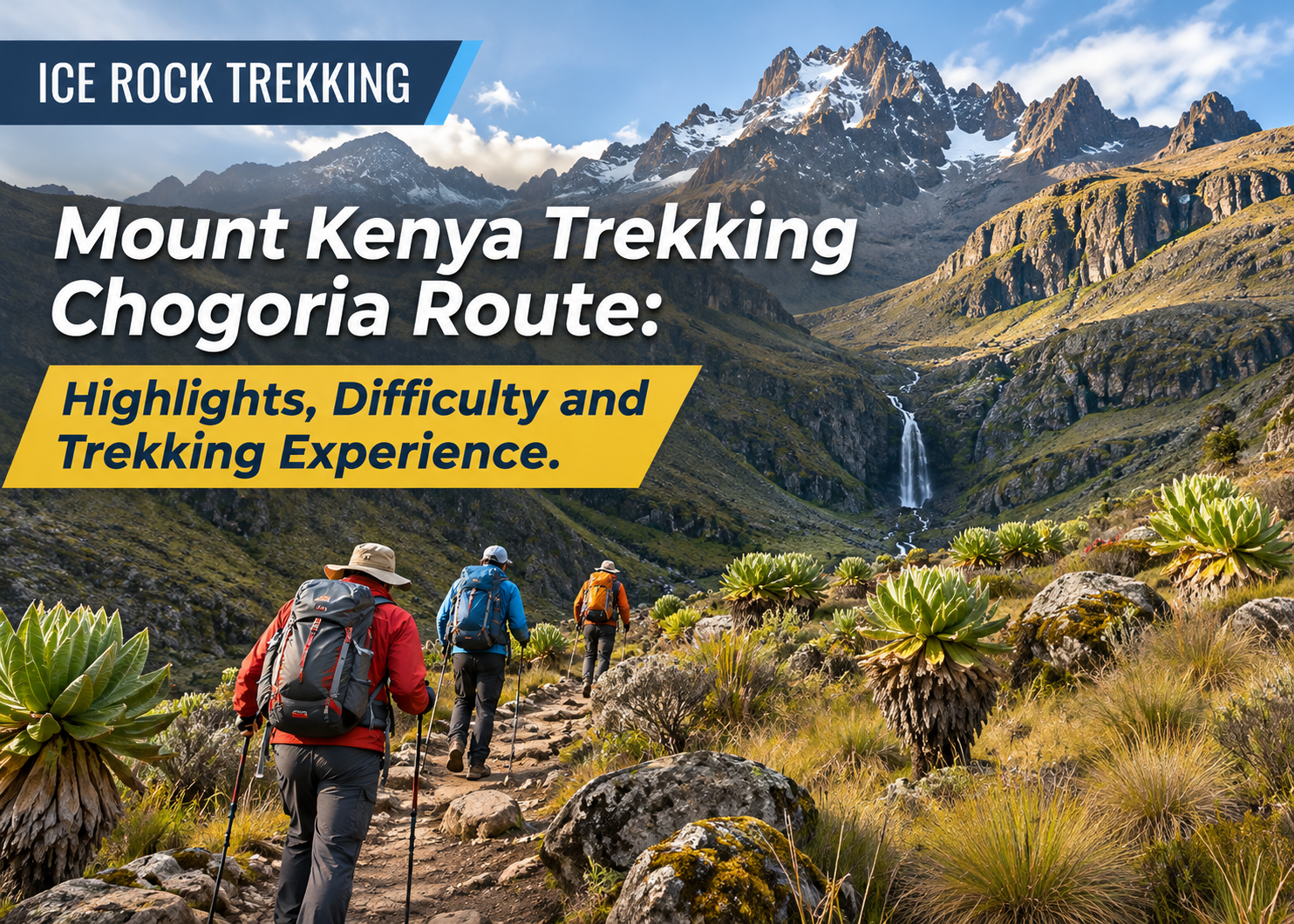
Mount Kenya offers an extraordinary combination of dramatic mountain landscapes, alpine vegetation, glacial lakes and challenging trekking trails. The Chogoria Route stands out for its remarkable scenery, diverse ecosystems and rewarding approach to Point Lenana. Travellers who choose the mount kenya trekking chogoria route can experience spectacular valleys, waterfalls, rocky ridges and peaceful mountain surroundings. Whether you enjoy high-altitude adventures or scenic wilderness expeditions, this route offers a memorable experience. Ice Rock Trekking helps adventurers prepare for their mountain journeys through carefully planned trekking itineraries that prioritise preparation, acclimatisation and safety.
What Is the Mount Kenya Chogoria Route?
The Chogoria Route is an eastern trekking route that passes through Mount Kenya National Park towards Point Lenana, which stands approximately 4,985 metres above sea level. The trail features dense forests, bamboo vegetation, expansive moorlands, mountain lakes and striking geological formations.
Unlike routes that prioritise shorter summit approaches, Chogoria offers opportunities to appreciate the mountain’s natural diversity throughout the expedition. Trekkers encounter changing landscapes as they progress towards higher elevations, making every stage visually distinctive.
Many adventurers combine the Chogoria ascent with a descent through the Sirimon Route to experience different sides of Mount Kenya during a single expedition. Mt Kenya Sirimon Chogoria Route+1
Mount Kenya Chogoria Route: Key Facts
| Trekking feature | Details |
|---|---|
| Location | Mount Kenya, Kenya |
| Starting direction | Eastern side |
| Trekking summit | Point Lenana |
| Summit elevation | 4,985 metres |
| Recommended duration | 5–6 days |
| Difficulty level | Moderate to challenging |
| Popular trekking periods | January–February and June–September |
| Terrain | Forests, moorlands and rocky alpine trails |
| Accommodation | Mountain camps and selected huts |
| Technical climbing | Generally unnecessary for Point Lenana |
| Popular descent route | Sirimon Route |
Major Highlights of the Mount Kenya Chogoria Route
The Chogoria Route features several natural attractions that make the trekking experience particularly rewarding.
1. Beautiful Mountain Forests
The lower sections of the trail pass through dense mountain forests containing indigenous trees, bamboo and diverse vegetation. These surroundings provide a peaceful introduction to the expedition.
Trekkers may encounter forest birds and wildlife while walking through these lower elevations. The sheltered environment also offers an interesting contrast to the exposed landscapes further up the mountain.
2. Spectacular Gorges Valley
Gorges Valley represents one of the most impressive geographical features along the Chogoria Route. Deep valleys, towering cliffs and rugged slopes create dramatic views across the eastern mountain landscape.
The valley offers excellent photography opportunities, particularly when favourable weather provides clear visibility. Its distinctive geological formations also make it an attractive destination for nature enthusiasts.
3. Lake Michaelson
Lake Michaelson lies within a spectacular mountain setting surrounded by steep cliffs and rocky formations. Its tranquil waters contrast beautifully with the rugged alpine environment.
Depending on their itinerary, trekkers may visit viewpoints overlooking the lake or follow trails towards its surroundings. The lake remains a prominent attraction for travellers who appreciate remote natural landscapes.
4. Nithi Falls
Nithi Falls adds another scenic highlight to the Chogoria trekking experience. Flowing water, surrounding vegetation and rocky terrain create an appealing setting for rest stops and photography.
Certain trekking itineraries incorporate a visit to the waterfall, allowing participants to experience more of Mount Kenya’s natural diversity.
5. Lake Ellis
Lake Ellis offers a peaceful high-altitude setting surrounded by open mountain landscapes. Some trekking itineraries incorporate camping near the lake, providing opportunities for gradual acclimatisation.
The surrounding trails offer attractive views and opportunities to appreciate the mountain’s changing vegetation.
6. Point Lenana Summit
Reaching Point Lenana represents the primary objective for many Chogoria trekkers. At approximately 4,985 metres, the summit provides extensive views across Mount Kenya’s mountainous surroundings when weather conditions permit.
A successful ascent rewards trekkers with a remarkable sense of achievement after several days of physical effort and altitude adjustment. Daring Escapes+2
How Difficult Is the Mount Kenya Chogoria Route?
The Chogoria Route presents a moderate to challenging trekking experience. Although most trekkers do not require technical mountaineering skills to reach Point Lenana under suitable conditions, the expedition demands physical endurance, preparation and responsible altitude management.
High-Altitude Conditions
Increasing elevation reduces oxygen availability, making ordinary physical activities more demanding. Trekkers may notice changes in their breathing, energy levels and walking pace.
Gradual ascent, adequate rest and appropriate acclimatisation help the body adapt to these conditions.
Long Trekking Distances
Several stages involve hours of continuous walking across uneven terrain. Participants must maintain their energy throughout the expedition rather than concentrating exclusively on summit day.
Regular endurance training can improve physical readiness for these extended walking periods.
Challenging Terrain
The route includes forest paths, rocky slopes, steep ascents and uneven mountain trails. Rain, frost or snow can increase difficulty and affect walking conditions.
Suitable footwear and trekking poles can improve stability across demanding sections.
Changing Weather Conditions
Mount Kenya experiences considerable temperature variations. Comfortable daytime conditions can quickly give way to cold winds, rainfall or freezing temperatures at higher elevations.
Trekkers should carry appropriate clothing and equipment to manage unpredictable weather throughout the journey.
Five-Day Mount Kenya Chogoria Trekking Itinerary
Ice Rock Trekking offers a five-day, four-night expedition that combines the Chogoria ascent with the Sirimon descent. The following itinerary provides a general overview of this trekking experience. Mt Kenya Sirimon Chogoria Route
Day 1: Nairobi to Chogoria
The expedition begins with a journey from Nairobi towards Chogoria on Mount Kenya’s eastern side. After travelling through agricultural landscapes and forested surroundings, trekkers begin their mountain adventure.
The initial walking stage introduces participants to the mountain environment and provides opportunities to establish a comfortable trekking rhythm.
Day 2: Chogoria to the Higher Mountain Trails
Trekkers continue through changing vegetation zones towards more open landscapes. Forest surroundings gradually transition into mountain grasslands and moorlands.
Depending on the selected trail, participants may enjoy views of waterfalls, lakes and surrounding ridges. Maintaining a steady pace remains important as elevation increases.
Day 3: Trekking Towards the Summit Base
The third day introduces more dramatic alpine scenery as trekkers approach higher elevations. Gorges Valley, rocky formations and distant mountain peaks create memorable views along the trail.
Participants should prioritise hydration, nutrition and rest while preparing for the demanding summit stage.
Day 4: Point Lenana Summit and Sirimon Descent
Trekkers typically begin the summit attempt before sunrise, subject to weather conditions and individual readiness.
The final ascent requires patience, endurance and careful movement across rocky terrain. After reaching Point Lenana, participants descend towards the Sirimon side of the mountain.
Day 5: Final Descent and Return to Nairobi
The final trekking stage continues through lower mountain landscapes towards the Sirimon exit. Participants experience different vegetation and scenery before completing their mountain expedition.
The return journey to Nairobi concludes the adventure.
Best Time to Trek Mount Kenya via the Chogoria Route
Weather plays an important role in determining trail conditions, visibility and overall trekking comfort.
January to February
These months generally offer relatively dry conditions, making them attractive for summit attempts and mountain photography. Trekkers should still prepare for freezing temperatures at higher elevations.
June to September
This period generally experiences comparatively dry weather and favourable trekking conditions. Many adventurers select these months for multi-day mountain expeditions.
March to May
The longer rainy season can create muddy trails, reduced visibility and challenging forest conditions. Trekkers considering these months should prepare for additional weather-related difficulties.
October to December
Short seasonal rains can affect trekking conditions during this period. Clear weather remains possible, although participants should maintain flexibility in their travel arrangements.
What Fitness Level Does the Chogoria Route Require?
The Chogoria Route requires good cardiovascular fitness, muscular endurance and the ability to walk for several consecutive days.
Cardiovascular Training
Activities such as brisk walking, cycling, jogging and swimming can improve cardiovascular endurance. Regular exercise helps prepare the body for sustained physical activity.
Strength Training
Exercises that strengthen the legs, core and lower back can improve stability and reduce fatigue during steep ascents and descents.
Practice Hikes
Completing practice hikes across uneven terrain helps participants prepare for extended walking periods. Gradually increasing distance and elevation can improve trekking readiness.
Altitude Preparation
Physical fitness alone cannot prevent altitude sickness. Trekkers should select itineraries that provide adequate acclimatisation opportunities and communicate any unusual symptoms to their mountain team.
Essential Equipment for the Chogoria Trek
Appropriate equipment contributes significantly to comfort and safety throughout a Mount Kenya expedition.
Trekkers should consider carrying:
- Trekking boots: Comfortable, supportive footwear with reliable grip.
- Thermal clothing: Insulating layers for cold mountain conditions.
- Waterproof jacket: Protection against rainfall and strong winds.
- Trekking trousers: Comfortable clothing suitable for extended walking.
- Sleeping bag: Insulation appropriate for freezing mountain temperatures.
- Trekking poles: Additional support across uneven slopes.
- Headlamp: Reliable lighting for early morning summit attempts.
- Water containers: Sufficient capacity to maintain hydration.
- Sun protection: Sunscreen, sunglasses and protective headwear.
- Personal medical supplies: Essential medications and basic first-aid items.
Participants should confirm equipment requirements with their trekking operator before departure.
Chogoria Route vs. Sirimon Route
Both routes offer rewarding experiences, although their landscapes, terrain and trekking characteristics differ.
| Feature | Chogoria Route | Sirimon Route |
|---|---|---|
| Mountain approach | Eastern side | North-western side |
| Scenery | Lakes, waterfalls and deep valleys | Open moorlands and mountain valleys |
| Difficulty | Moderate to challenging | Moderate to challenging |
| Ascent characteristics | Varied terrain and demanding sections | Generally more gradual approach |
| Photography | Dramatic cliffs and alpine lakes | Expansive mountain panoramas |
| Ideal for | Scenic mountain expeditions | Trekkers seeking a relatively gradual ascent |
Combining both routes allows participants to experience greater geographical diversity without retracing the entire ascent.
Wildlife and Vegetation Along the Chogoria Route
Mount Kenya supports diverse ecosystems that change considerably with elevation. Lower forest regions contain indigenous trees, bamboo and habitats that support numerous wildlife species.
As trekkers ascend, dense vegetation gradually gives way to open moorlands. Giant lobelias and groundsels contribute to the distinctive appearance of the mountain’s Afro-alpine environment.
Higher elevations feature increasingly rocky landscapes with limited vegetation. These environmental transitions make the Chogoria expedition particularly appealing to photographers, conservation enthusiasts and nature lovers.
Trekkers should observe wildlife from a safe distance, avoid disturbing vegetation and follow responsible environmental practices throughout their expedition.
Safety Tips for Trekking the Chogoria Route
High-altitude trekking requires responsible decision-making. Maintaining a flexible schedule and recognising individual physical limitations can reduce unnecessary risks.
Participants should maintain a comfortable walking pace, drink sufficient water, consume regular meals and wear suitable protective clothing.
Headaches, nausea, dizziness and unusual fatigue may indicate altitude-related illness. Trekkers should report symptoms immediately and avoid ascending when symptoms worsen. Severe symptoms require urgent descent and medical attention.
Weather conditions may also require changes to the planned itinerary. Summit ambitions should never take priority over personal safety.
Travellers should arrange appropriate travel insurance that includes high-altitude trekking and emergency evacuation coverage.
Why Choose Ice Rock Trekking for the Chogoria Route?
Ice Rock Trekking offers mountain expeditions for travellers who want to experience Mount Kenya’s natural landscapes through organised trekking programmes.
Our trekking services focus on practical expedition planning, suitable route selection, mountain logistics and preparation requirements.
Our Chogoria and Sirimon combination allows participants to appreciate different mountain environments during a single journey. Trekkers can discuss itinerary preferences, physical readiness, accommodation arrangements and equipment requirements before departure.
Whether you plan an individual adventure or a group expedition, Ice Rock Trekking can help coordinate your Mount Kenya trekking arrangements according to your travel objectives.
Conclusion
The Mount Kenya Chogoria Route offers an exceptional combination of scenic landscapes, physical challenges and rewarding high-altitude experiences. From peaceful forests and spectacular waterfalls to dramatic valleys and Point Lenana, every stage presents distinctive natural attractions. Proper preparation, suitable equipment and gradual acclimatisation contribute to a safer and more enjoyable expedition. Ice Rock Trekking offers organised trekking experiences for adventurers seeking to appreciate Mount Kenya’s remarkable natural beauty while pursuing their mountain ambitions.
FAQs
1. What is the Chogoria Route on Mount Kenya?
The Chogoria Route is an eastern trekking route on Mount Kenya that passes through forests, waterfalls, alpine lakes and Gorges Valley towards Point Lenana at approximately 4,985 metres.
2. How difficult is the Mount Kenya Chogoria Route?
The Chogoria Route is moderately difficult to challenging because of high altitude, extended walking distances, rocky terrain, steep ascents and unpredictable mountain weather.
3. How many days does the Chogoria Route take?
Most Chogoria trekking expeditions take five to six days. Travellers may select longer itineraries to allow additional acclimatisation, scenic excursions and rest periods.
4. Is the Mount Kenya Chogoria Route suitable for beginners?
Physically fit beginners can attempt the Chogoria Route with appropriate training, professional mountain support, suitable equipment and sufficient acclimatisation time.
5. What is the best month to trek the Chogoria Route?
January, February and the period between June and September generally offer relatively favourable trekking conditions. However, mountain weather can change during any season.
6. What are the main attractions along the Chogoria Route?
The main attractions include Gorges Valley, Lake Michaelson, Lake Ellis, Nithi Falls, mountain forests, Afro-alpine vegetation and panoramic views from Point Lenana.
7. Does the Chogoria Route require technical climbing skills?
The standard trekking ascent to Point Lenana generally does not require technical climbing skills under suitable conditions. Batian and Nelion, however, require technical mountaineering expertise.
8. Can trekkers ascend Chogoria and descend through Sirimon?
Yes. Trekkers can ascend Mount Kenya through Chogoria and descend through Sirimon. This combination offers diverse landscapes and avoids repeating the entire ascent route.
9. How much does Mount Kenya Chogoria trekking cost?
Trekking costs depend on expedition duration, group size, national park fees, transportation, accommodation, mountain support, meals and equipment arrangements. Request a personalised quotation for accurate pricing.
10. Does Ice Rock Trekking organise Chogoria Route expeditions?
Yes. Ice Rock Trekking offers a five-day, four-night Chogoria Route expedition with a Sirimon descent, allowing travellers to experience different sides of Mount Kenya during their adventure.