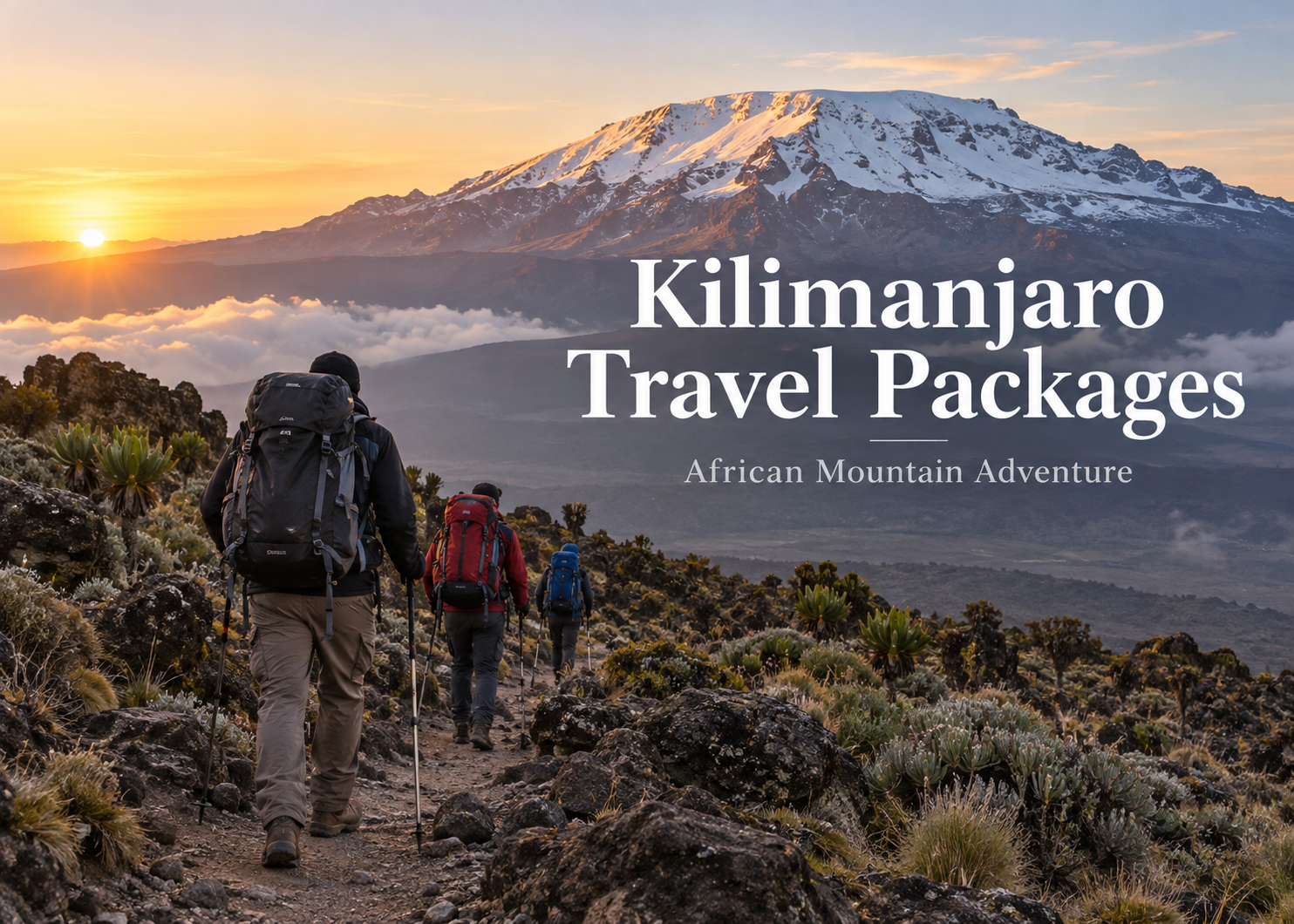
Mount Kilimanjaro is more than a mountain to tick off a travel list. Rising above Tanzania’s northern landscape, it offers an extraordinary combination of high-altitude trekking, dramatic scenery, changing ecosystems, and the personal satisfaction of reaching Uhuru Peak, Africa’s highest point.
For travelers planning this adventure, choosing the right Kilimanjaro travel packages can make a major difference. The route, number of trekking days, accommodation style, acclimatization schedule, group size, transfers, meals, and professional mountain support all influence the quality of the experience.
At Ice Rock Trekking, we help trekkers plan mountain adventures around practical needs rather than simply selling a fixed itinerary. Whether you are a first-time high-altitude trekker, an experienced mountaineer, a couple seeking a private adventure, or a group looking for a professionally organized expedition, there is a Kilimanjaro experience suited to your ambitions.
Why Choose Kilimanjaro for Your Next Mountain Adventure?
Kilimanjaro stands at approximately 5,895 metres above sea level. Its remarkable appeal comes from the fact that trekkers can experience several distinct ecological zones during one expedition.
The lower slopes feature cultivated farmland and lush forest. Higher elevations transition into moorland and alpine desert before the landscape becomes stark, cold, and increasingly rugged near the summit.
The changing scenery keeps the trek engaging. One day may involve walking through dense vegetation, while another brings volcanic rock, open alpine terrain, glaciers, and spectacular views across Tanzania.
Reaching Uhuru Peak is physically demanding, but the experience is not limited to the summit morning. The gradual transformation of the landscape, evenings at mountain camps, conversations with guides and fellow trekkers, and the rhythm of walking day after day become equally memorable.
What Are Kilimanjaro Travel Packages?
Kilimanjaro travel packages are organized trekking programs that combine the essential services required for a Mount Kilimanjaro expedition.
Depending on the operator and package, these may include:
- Airport transfers
- Hotel accommodation before and after trekking
- National park fees
- Professional mountain guides
- Porters and mountain crew
- Meals during the trek
- Camping equipment
- Hut accommodation on selected routes
- Emergency support
- Transportation to and from trailheads
- Pre-trek briefing
- Summit support
- Optional safari or beach extensions
The exact inclusions vary, so travelers should always compare what is included rather than choosing a package based only on its advertised price.
A low-cost option may appear attractive initially but can become expensive when park fees, transfers, equipment, accommodation, meals, or additional services are added separately.
Popular Routes Included in Kilimanjaro Packages
The route you select influences the scenery, trekking duration, accommodation, traffic levels, and acclimatization opportunities.
Machame Route
The Machame Route is one of the most popular choices for trekkers who want spectacular scenery and a more adventurous trail experience.
Often called the “Whiskey Route,” it passes through forest, moorland, alpine desert, and high-altitude terrain. The route generally takes around six to seven trekking days, although longer itineraries can provide additional acclimatization time.
It is particularly appealing to active travelers who enjoy varied landscapes and challenging trail sections.
Marangu Route
Marangu is commonly known as the “Coca-Cola Route.” Unlike camping-focused routes, it uses mountain huts for overnight accommodation.
The trail is relatively straightforward in terms of terrain, but the shorter versions of the itinerary can provide less time for acclimatization. Trekkers who choose Marangu should consider a longer schedule when possible.
Lemosho Route
Lemosho is an excellent choice for travelers seeking a scenic approach and a more gradual acclimatization profile.
The trail begins on the western side of Kilimanjaro and crosses beautiful highland landscapes before joining sections shared with other routes.
Longer Lemosho itineraries are popular because they provide additional time on the mountain and can help trekkers adapt to increasing altitude.
Rongai Route
Rongai approaches Kilimanjaro from the northern side. It tends to be quieter than some of the more heavily used routes and provides a different perspective of the mountain.
Its relatively drier environment can also make it appealing during periods when weather conditions on other sides of the mountain are less favourable.
Northern Circuit
For travelers with more time, the Northern Circuit offers one of the longest approaches to the summit.
It circles much of Kilimanjaro and provides excellent acclimatization opportunities. Because of its longer duration, it can be particularly attractive to trekkers who prioritize a gradual ascent and a quieter experience.
How Many Days Should You Spend on Kilimanjaro?
The number of days you spend trekking is one of the most important decisions when selecting your package.
Although shorter itineraries may reduce the overall price, rushing an ascent can make altitude adaptation more difficult.
A longer itinerary generally allows the body more time to adjust as elevation increases. It also provides a more relaxed trekking rhythm and gives you additional opportunities to appreciate the mountain.
For many travelers, a six- to nine-day trekking itinerary offers a sensible balance between time, cost, scenery, and acclimatization.
At Ice Rock Trekking, we can structure an itinerary around your experience level, preferred route, available vacation time, and fitness.
Kilimanjaro Trekking Difficulty
Kilimanjaro does not require advanced technical climbing skills on the standard trekking routes. However, that does not mean reaching the summit is easy.
The biggest challenge is altitude.
As you climb higher, oxygen availability decreases. Trekkers may experience headaches, tiredness, reduced appetite, disturbed sleep, or nausea. Severe symptoms should never be ignored.
Physical preparation helps, but fitness alone does not guarantee a successful summit. A strong runner or gym enthusiast can still struggle with altitude, while a moderately fit trekker with good pacing and acclimatization may perform extremely well.
The most useful preparation includes:
- Regular walking or hiking
- Cardiovascular training
- Strength exercises
- Long weekend hikes
- Stair climbing
- Training with a loaded backpack
- Adequate rest
- Practicing steady pacing
The goal is not to race uphill. Kilimanjaro rewards consistency.
What Is Summit Night Like?
Summit night is often the toughest and most memorable part of the expedition.
Trekkers normally begin the final ascent during the night, walking under a dark sky while temperatures drop significantly. Headlamps illuminate the trail as the group climbs slowly toward the summit.
The pace is deliberately controlled. Short breaks help maintain energy without allowing the body to cool excessively.
As dawn approaches, the horizon begins to brighten. Reaching Stella Point or continuing toward Uhuru Peak can be an emotional moment after several days of trekking.
Standing at Uhuru Peak, surrounded by the high-altitude landscape, offers a sense of achievement that is difficult to replicate elsewhere.
Best Time for Kilimanjaro Travel Packages
Kilimanjaro can be climbed during much of the year, but weather conditions vary by season.
The traditionally preferred periods are the drier months, especially:
- January to early March
- June to October
- Some parts of December
The mountain can also be climbed during wetter periods, but trekkers should expect greater chances of rain, muddy trails, cloud cover, and changing conditions.
Choosing the best period depends on your priorities. Some travelers prefer clearer weather and busier trails, while others may accept variable conditions in exchange for fewer people.
What Does a Kilimanjaro Package Cost?
The price of Kilimanjaro travel packages varies depending on route, duration, group size, accommodation, operator standards, park charges, transfers, and additional services.
A typical package may include several fixed costs that do not change significantly between operators, especially official park-related charges. Other costs depend on the level of service provided.
When comparing prices, check whether the package includes:
- Park and conservation fees
- Camping or hut fees
- Rescue-related charges
- Professional guides
- Porter services
- Meals
- Drinking water
- Transfers
- Hotel nights
- Airport pickup
- Equipment
- Staff wages and tips
An unusually cheap package deserves careful examination. Quality mountain operations depend on trained staff, appropriate equipment, reliable logistics, and responsible treatment of the mountain crew.
Responsible Trekking Matters
A successful Kilimanjaro expedition should benefit both travelers and the people who make the journey possible.
Porters carry essential equipment, prepare camps, support meals, and help maintain the smooth operation of the expedition. Ethical trekking operators should provide fair working conditions, suitable equipment, proper meals, reasonable loads, and respectful treatment.
Travelers can also contribute by reducing plastic waste, following park rules, staying on designated trails, and avoiding unnecessary environmental impact.
At Ice Rock Trekking, responsible mountain tourism is an important part of the experience we aim to provide.
What Should You Pack for Kilimanjaro?
Packing correctly is essential because conditions change dramatically with altitude.
Important items include:
- Waterproof trekking boots
- Moisture-wicking base layers
- Warm insulating layers
- Waterproof jacket and trousers
- Fleece or insulated jacket
- Warm hat
- Gloves
- Sunglasses
- Headlamp
- Trekking poles
- Comfortable backpack
- Sleeping bag suitable for low temperatures
- Water bottles or hydration system
- Sunscreen
- Personal medication
- Basic toiletries
- High-energy snacks
- Comfortable trekking socks
Avoid overpacking. Your mountain crew will handle much of the heavier equipment, while you should carry only what you need during each day’s walking.
Combining Kilimanjaro With a Tanzania Safari
One of the biggest advantages of choosing Tanzania for a mountain holiday is the opportunity to combine Kilimanjaro with a wildlife safari.
After completing the trek, travelers can visit destinations such as Serengeti National Park, Ngorongoro Conservation Area, Tarangire National Park, or Lake Manyara.
A safari extension creates a natural contrast to the mountain experience. Instead of trekking through alpine landscapes, you can spend your days watching elephants, lions, giraffes, zebras, wildebeest, and other wildlife.
For travelers with additional vacation time, Zanzibar can also be added for beaches, relaxation, and coastal culture.
This combination turns a mountain expedition into a broader East African adventure.
Why Choose Ice Rock Trekking?
Choosing a trekking company is about more than finding an itinerary at the right price.
Ice Rock Trekking focuses on creating well-organized mountain experiences with attention to safety, route selection, acclimatization, logistics, and personal service.
Our team can assist with selecting an appropriate route, preparing for altitude, organizing transfers, arranging accommodation, and coordinating the mountain crew.
Whether you are interested in a private climb, small group expedition, family adventure, or a longer acclimatization-focused itinerary, the right planning can make your Kilimanjaro experience considerably more comfortable.
Planning Your Kilimanjaro Adventure
The best Kilimanjaro travel packages are not necessarily the shortest or cheapest. They are the ones that match your physical preparation, travel schedule, preferred scenery, comfort expectations, and approach to mountain travel.
Give yourself enough time to prepare physically. Select an itinerary that allows sensible acclimatization. Pack according to the changing conditions. Work with experienced mountain professionals. Most importantly, respect the mountain and listen to your body.
Kilimanjaro offers much more than a summit photograph. It is a journey through changing landscapes, challenging altitude, local culture, and unforgettable African scenery.
With the right preparation and a thoughtfully planned expedition from Ice Rock Trekking, your journey toward Uhuru Peak can become one of the most rewarding adventures you have ever undertaken.