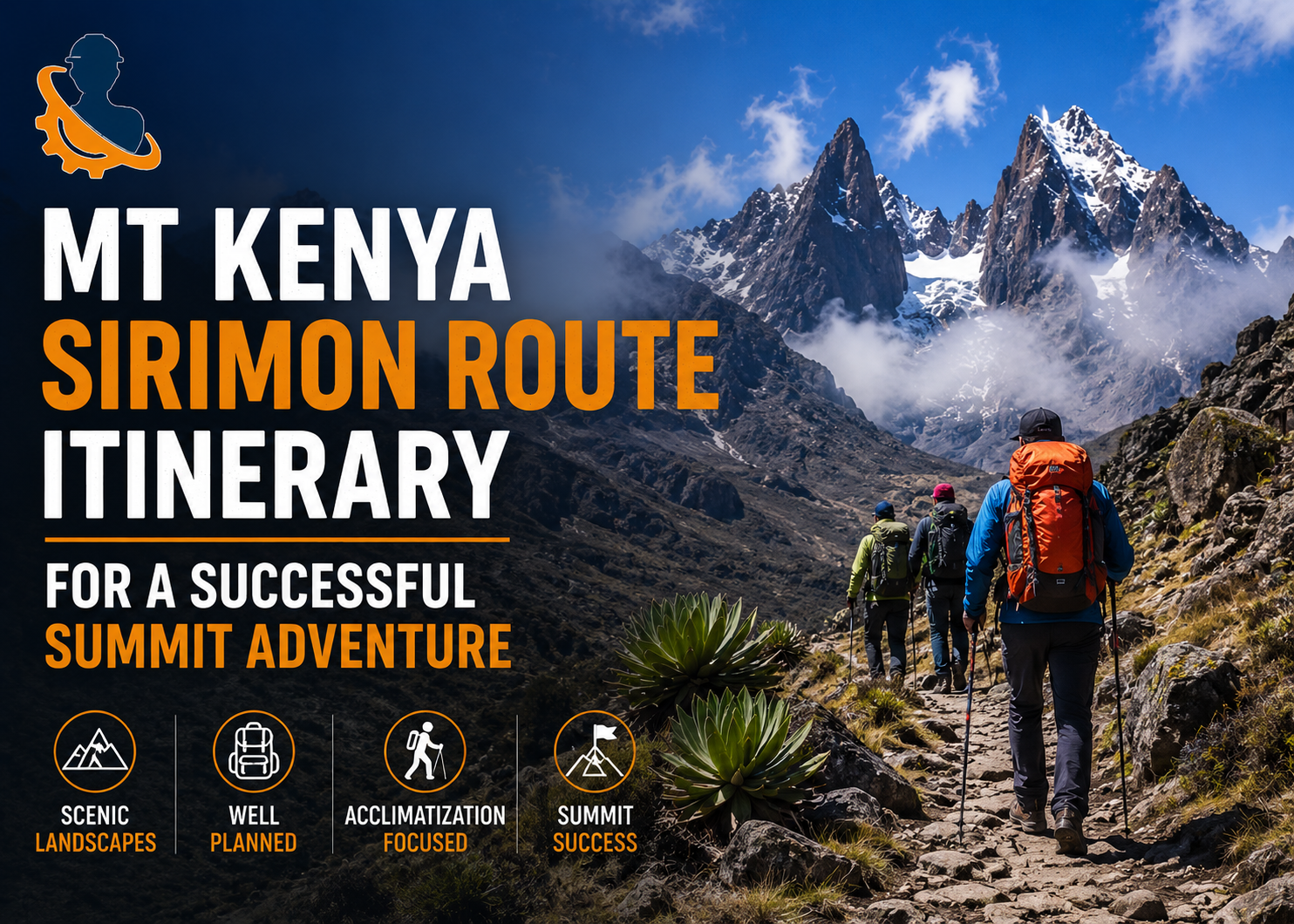
Reaching the summit of Mount Kenya is a rewarding experience that combines breathtaking landscapes, challenging trails, and unforgettable memories. Among all the trekking paths leading to the mountain, the mt kenya sirimon route stands out for its gradual ascent, scenic terrain, and high summit success rate. It offers trekkers an excellent balance between adventure and safety while allowing enough time for proper acclimatization.
Whether you are an experienced mountaineer or planning your first high-altitude trek, selecting the right itinerary can make a significant difference. At Ice Rock Trekking, we help adventurers prepare for every stage of their expedition with carefully planned itineraries, experienced mountain crews, and personalized support.
Why Choose the Mt Kenya Sirimon Route?
The mt kenya sirimon route is widely regarded as one of the most comfortable and scenic approaches to Mount Kenya. Beginning on the northwestern side of the mountain, it features gentle elevation gains, diverse ecosystems, and spectacular mountain views.
Unlike steeper routes, Sirimon allows trekkers to adjust gradually to increasing altitude. This significantly improves comfort levels and enhances the likelihood of reaching Point Lenana successfully.
Major advantages include:
- Gradual elevation profile
- Excellent acclimatization opportunities
- Beautiful alpine landscapes
- Lower traffic than some other routes
- Comfortable mountain huts and camps
- Ideal for beginner and experienced trekkers alike
The combination of moderate terrain and incredible scenery makes this route one of the most popular choices for Mount Kenya expeditions.
Overview of the Mt Kenya Sirimon Route
Starting Elevation: Approximately 2,650 meters
Highest Point: Point Lenana (4,985 meters)
Difficulty Level: Moderate
Typical Duration: 4 to 6 days
Best For:
- First-time high-altitude trekkers
- Nature lovers
- Photographers
- Experienced hikers
- Group adventures
- Private expeditions
The route travels through forests, bamboo zones, giant heather, alpine moorlands, rocky valleys, and glacier-covered peaks, providing constant changes in scenery throughout the journey.
Best Time to Trek the Mt Kenya Sirimon Route
Weather plays an important role in summit success.
The driest months generally provide better trail conditions and clearer mountain views.
Popular trekking seasons include:
January to March
- Clear skies
- Dry trails
- Excellent summit visibility
- Comfortable daytime temperatures
June to October
- Stable weather
- Beautiful mountain scenery
- Lower rainfall
- Ideal trekking conditions
Although climbing is possible during much of the year, wetter months often bring muddy trails and reduced visibility.
Physical Preparation Before Your Trek
A successful summit begins weeks before arriving at Mount Kenya.
Preparing your body improves endurance while reducing fatigue during higher elevations.
Recommended activities include:
- Long-distance hiking
- Stair climbing
- Running
- Cycling
- Swimming
- Strength training
- Core exercises
Aim to train consistently for at least six to eight weeks before your expedition.
Suggested 5-Day Mt Kenya Sirimon Route Itinerary
A five-day schedule provides an excellent balance between trekking pace and acclimatization.
Day 1: Nairobi to Sirimon Gate and Trek to Old Moses Camp
Distance: Approximately 9 km
Walking Time: 3–4 hours
Elevation Gain:
- Sirimon Gate: 2,650 m
- Old Moses Camp: 3,300 m
After leaving Nairobi early in the morning, you’ll arrive at Sirimon Gate for registration and a briefing.
The trail begins with a gradual climb through lush forests filled with cedar trees, bamboo vegetation, and wildlife.
Possible wildlife sightings include:
- Zebras
- Buffalo
- Colobus monkeys
- Bushbucks
- Numerous bird species
After several hours of comfortable hiking, you’ll reach Old Moses Camp, where you’ll enjoy dinner and your first night on the mountain.
Day 2: Old Moses Camp to Shipton’s Camp
Distance: Approximately 14 km
Walking Time: 6–7 hours
Elevation:
- Old Moses Camp: 3,300 m
- Shipton’s Camp: 4,200 m
This stage introduces trekkers to dramatic alpine scenery.
The trail crosses:
- Mackinder Valley
- Moorlands
- Giant lobelias
- Giant groundsels
- Rocky ridges
As altitude increases, walking becomes slower, making hydration and steady pacing essential.
Upon arrival at Shipton’s Camp, you’ll rest while enjoying spectacular evening views of Mount Kenya’s towering peaks.
Day 3: Acclimatization and Short Hike
One of the most important days of the expedition focuses on adapting to altitude.
Many trekkers take a short acclimatization hike before returning to Shipton’s Camp for rest.
Benefits include:
- Better oxygen adaptation
- Reduced altitude sickness risk
- Improved summit performance
- Increased energy
Hydration remains extremely important throughout the day.
Most climbers spend the afternoon relaxing, preparing equipment, and getting adequate sleep before summit day.
Day 4: Summit Point Lenana and Descend to Old Moses
Summit Start:
Approximately 2:30–3:00 AM
Distance:
Around 22 km including descent
This is the most exciting day of the expedition.
Trekkers begin climbing before dawn using headlamps.
Although temperatures can be very cold, the reward comes with sunrise over the Kenyan landscape.
Upon reaching Point Lenana, you’ll witness:
- Sunrise above the clouds
- Batian Peak
- Nelion Peak
- Glacial valleys
- Vast mountain ranges
After celebrating at the summit, the descent begins back toward Old Moses Camp.
Descending immediately after the summit reduces time spent at extreme altitude.
Day 5: Old Moses Camp to Sirimon Gate
Distance:
Approximately 9 km
Walking Time:
2–3 hours
The final morning offers one last opportunity to enjoy the mountain’s peaceful environment before descending through forests toward Sirimon Gate.
Upon arrival, certificates are often presented to successful climbers before returning to Nairobi.
Altitude and Acclimatization Tips
Altitude affects every trekker differently.
Even physically fit hikers can experience symptoms.
Common symptoms include:
- Headaches
- Fatigue
- Loss of appetite
- Mild dizziness
- Poor sleep
Helpful acclimatization strategies include:
- Walk slowly
- Drink 3–4 liters of water daily
- Avoid alcohol before climbing
- Eat regular meals
- Follow your guide’s instructions
- Report symptoms early
Patience is one of the strongest assets during high-altitude trekking.
Essential Packing List
Packing wisely contributes greatly to comfort and safety.
Clothing
- Waterproof jacket
- Waterproof trousers
- Insulated jacket
- Thermal base layers
- Fleece jacket
- Hiking shirts
- Trekking pants
- Warm gloves
- Wool hat
- Sun hat
Footwear
- Waterproof hiking boots
- Camp shoes
- Hiking socks
- Thermal socks
Equipment
- Trekking poles
- Sleeping bag
- Backpack
- Daypack
- Water bottles
- Headlamp
- Sunglasses
- Sunscreen
- Lip balm
- Camera
- Power bank
Personal Items
- First aid kit
- Personal medication
- Wet wipes
- Toiletries
- Energy snacks
Meals During the Trek
Nutrition becomes increasingly important as altitude rises.
Professional trekking teams prepare freshly cooked meals designed to provide sufficient energy throughout the expedition.
Typical menu includes:
Breakfast
- Eggs
- Porridge
- Toast
- Fruit
- Tea
- Coffee
Lunch
- Rice
- Chicken
- Vegetables
- Soup
Dinner
- Pasta
- Potatoes
- Stew
- Fresh vegetables
- Dessert
Vegetarian and special dietary requests can usually be accommodated with advance notice.
Wildlife Along the Route
One of the unique highlights of the mt kenya sirimon route is its diverse wildlife.
Depending on the season and weather, trekkers may encounter:
- Mountain antelope
- Hyrax
- Bushbuck
- Zebra
- Buffalo
- Rock hyrax
- Colobus monkeys
- Sunbirds
- Eagles
- Various alpine bird species
Responsible trekking helps preserve these habitats for future visitors.
Photography Opportunities
Mount Kenya offers countless opportunities for stunning photographs.
Popular photography locations include:
- Forest trails
- Moorlands
- Mackinder Valley
- Giant lobelias
- Shipton’s Camp
- Point Lenana sunrise
- Batian and Nelion peaks
- Alpine lakes
- Glacier formations
Carry extra batteries since colder temperatures reduce battery performance.
Safety Measures on the Mountain
Safety always comes before speed.
Professional trekking operators monitor every participant throughout the expedition.
Important safety practices include:
- Daily health checks
- Pulse and oxygen monitoring
- Slow ascent pace
- Emergency response planning
- Experienced mountain guides
- Proper hydration reminders
- Weather monitoring
Following these practices significantly improves the overall trekking experience.
Why a Professional Trekking Team Matters
While Mount Kenya is accessible, climbing with an experienced team provides several advantages.
Professional services include:
- Licensed mountain guides
- Skilled cooks
- Friendly porters
- Emergency preparedness
- Route planning
- Park logistics
- Camping support
- Meal preparation
This allows trekkers to focus entirely on enjoying the mountain rather than worrying about logistics.
Common Mistakes to Avoid
Many summit attempts become more difficult because of preventable mistakes.
Avoid these common issues:
- Walking too fast
- Ignoring hydration
- Wearing new hiking boots
- Packing unnecessary gear
- Skipping physical preparation
- Eating too little
- Ignoring altitude symptoms
- Sleeping poorly before summit day
Small decisions throughout the trek often determine summit success.
Why Trek with Ice Rock Trekking?
Choosing the right trekking company can transform your Mount Kenya experience.
At Ice Rock Trekking, every itinerary is carefully planned to maximize safety, comfort, and summit success. Our knowledgeable guides understand the mountain’s terrain, weather patterns, and altitude challenges, allowing trekkers to move with confidence from the first step to Point Lenana.
Our services include:
- Professional mountain guides
- Experienced porters
- Freshly prepared meals
- Personalized trekking itineraries
- Quality camping equipment
- Safety-focused operations
- Flexible group and private departures
- Reliable transportation arrangements
We believe every climber deserves a memorable and well-supported adventure while experiencing the incredible beauty of Mount Kenya.
Frequently Asked Questions
Is the mt kenya sirimon route suitable for beginners?
Yes. Its gradual ascent makes it one of the best options for first-time high-altitude trekkers with a reasonable fitness level.
How many days are recommended?
Five days is considered ideal because it provides better acclimatization and improves summit success.
Which summit is reached on this itinerary?
Most trekkers aim for Point Lenana, standing at 4,985 meters above sea level.
Do I need technical climbing skills?
No. Reaching Point Lenana does not require technical mountaineering equipment or advanced climbing experience.
Can I rent trekking equipment?
Yes. Many essential items, including sleeping bags and trekking poles, are available for rent through experienced trekking operators.
What fitness level is required?
Moderate physical fitness is sufficient. Regular cardiovascular exercise and hiking before your trip will make the experience more enjoyable.
Final Thoughts
The mt kenya sirimon route combines scenic landscapes, gradual altitude gain, and excellent trekking conditions, making it one of the finest choices for reaching Point Lenana. A well-planned itinerary, proper preparation, quality equipment, and experienced mountain support all contribute to a rewarding summit experience. With Ice Rock Trekking, every stage of the journey is carefully organized so you can focus on the adventure, embrace the mountain’s beauty, and create lasting memories from one of Africa’s most iconic trekking destinations.