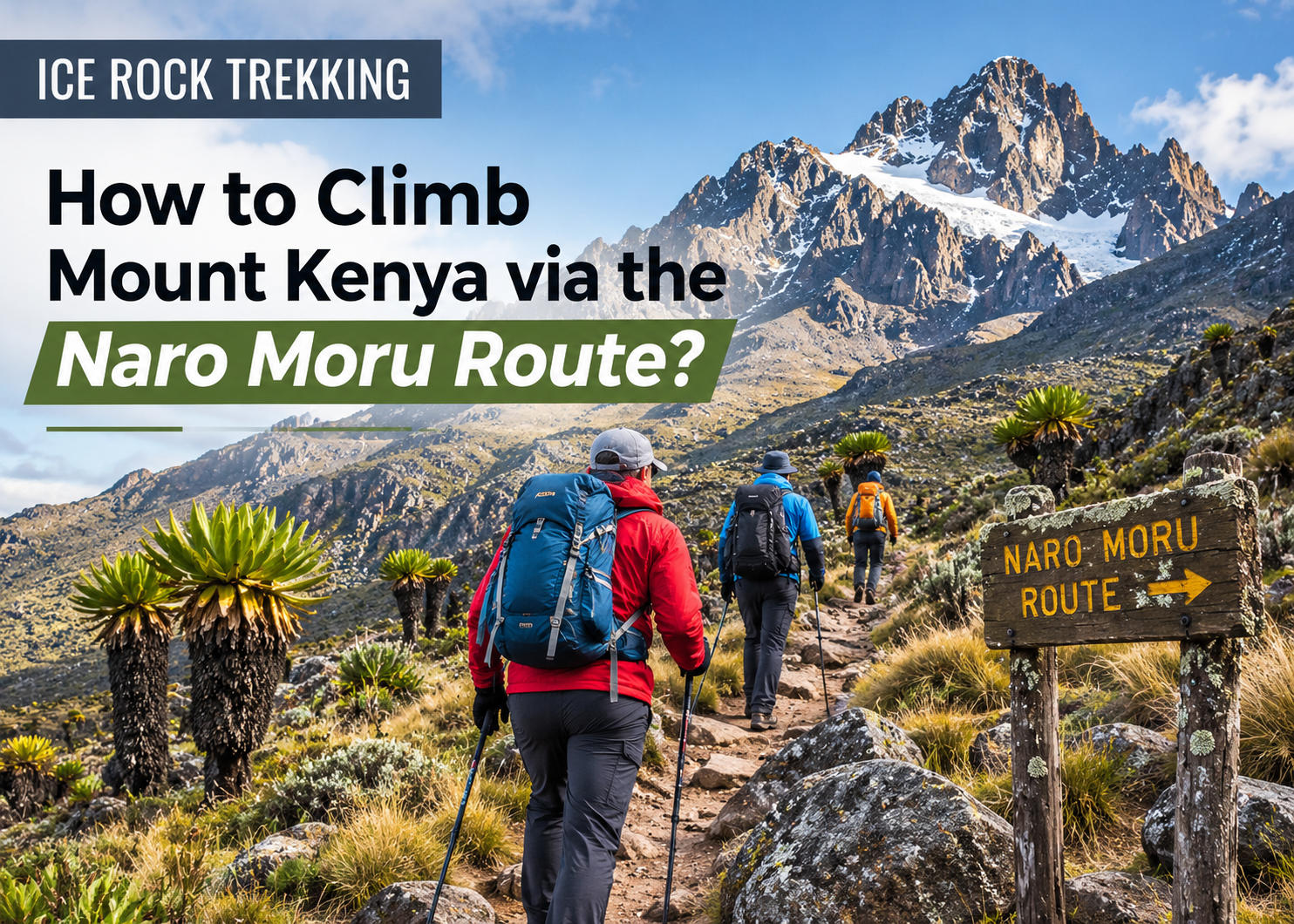
The Naro Moru Route offers an adventurous approach to Mount Kenya, combining dense forests, alpine vegetation, steep mountain trails and spectacular summit views. Trekkers planning a naro moru route mount kenya expedition should consider physical fitness, altitude acclimatisation, weather conditions and itinerary duration before departure. Although this route provides a relatively direct approach to Point Lenana, its steep gradients demand careful preparation. Ice Rock Trekking helps adventurers plan mountain expeditions with suitable itineraries, organised logistics and an emphasis on trekking safety.
What Is the Naro Moru Route on Mount Kenya?
The Naro Moru Route is a popular trekking trail that approaches Mount Kenya from its western side. It begins near Naro Moru town and passes through mountain forests, moorlands, the Vertical Bog and Teleki Valley before reaching Point Lenana.
Point Lenana, standing at approximately 4,985 metres above sea level, is the highest trekking peak on Mount Kenya. Unlike Batian and Nelion, which require technical mountaineering skills, Point Lenana is accessible to suitably prepared trekkers under favourable conditions.
The relatively direct ascent makes Naro Moru attractive to adventurers seeking a challenging mountain experience within a limited timeframe. However, its rapid elevation gain requires responsible acclimatisation. mck.or.ke+1
Naro Moru Route: Key Trekking Information
| Trekking factor | Details |
|---|---|
| Mountain | Mount Kenya |
| Location | Central Kenya |
| Starting point | Naro Moru Gate |
| Summit destination | Point Lenana |
| Summit altitude | Approximately 4,985 metres |
| Recommended duration | 5–6 days or longer if needed |
| Difficulty level | Moderate to challenging |
| Main camps | Met Station and Mackinder’s Camp |
| Major challenge | Vertical Bog and rapid altitude gain |
| Preferred trekking seasons | January–February and July–September |
| Technical climbing | Generally unnecessary for Point Lenana in suitable conditions |
| Accommodation | Mountain huts or tents, depending on availability |
Why Choose the Naro Moru Route to Climb Mount Kenya?
The Naro Moru Route appeals to trekkers who appreciate challenging terrain, changing landscapes and high-altitude adventure. Its distinctive characteristics make it different from other Mount Kenya trekking routes.
Direct Approach to Point Lenana
The route follows a relatively direct western approach towards the mountain’s upper elevations. Trekkers can reach Point Lenana without following an extended mountain circuit, although additional acclimatisation days remain advisable.
Diverse Natural Landscapes
The journey passes through several ecological zones. Thick forests gradually give way to open moorlands, distinctive alpine plants, rocky valleys and exposed mountain ridges.
Challenging Trekking Experience
Steep slopes, muddy terrain and substantial elevation changes provide opportunities for experienced hikers to challenge their endurance and mountain trekking abilities.
Flexible Descent Options
Trekkers can return through Naro Moru or arrange a descent through the Sirimon Route. A cross-mountain itinerary introduces different landscapes and provides a more varied trekking experience.
How to Reach the Naro Moru Route Starting Point?
Most international visitors arrive at Jomo Kenyatta International Airport in Nairobi before travelling towards Naro Moru town.
The road journey from Nairobi generally takes three to four hours, depending on traffic, weather and road conditions. Travellers can arrange private transportation or include transfers within an organised trekking package.
After reaching Naro Moru, trekkers proceed towards the national park entrance. Before beginning the ascent, they should complete registration formalities, confirm accommodation arrangements and check their equipment.
Arriving a day before the expedition allows sufficient time for rest, equipment inspection and initial altitude adjustment.
How to Climb Mount Kenya via the Naro Moru Route in Five Days?
A five-day itinerary can provide additional preparation and recovery time compared with shorter expeditions. However, trekkers without previous altitude exposure may need a longer schedule with intermediate overnight stops.
The following represents an illustrative itinerary for suitably acclimatised participants.
Day 1: Nairobi to Naro Moru
Travel from Nairobi to Naro Moru and settle into your accommodation. Meet the mountain support team, review the trekking itinerary and inspect clothing, footwear and essential equipment.
Spend the remaining time resting, hydrating and taking a gentle walk. An early night helps prepare your body for the following day’s ascent.
Day 2: Naro Moru Gate to Met Station
The expedition begins at Naro Moru Gate. After completing the park entry formalities, follow the forest trail towards Met Station, situated at approximately 3,050 metres.
The gradual forest ascent introduces trekkers to changing mountain conditions. Maintain a comfortable walking pace, take regular hydration breaks and avoid unnecessary physical exertion.
Spend the night at Met Station, subject to accommodation availability.
Day 3: Met Station to Mackinder’s Camp
This stage introduces one of the most demanding sections of the route. Trekkers cross the Vertical Bog before continuing through open moorlands towards Teleki Valley and Mackinder’s Camp, located at roughly 4,200–4,350 metres.
Waterproof footwear and trekking poles become particularly useful on wet, uneven ground.
The substantial increase in sleeping altitude requires careful monitoring. Additional overnight stops may be necessary, particularly for participants without previous acclimatisation.
Day 4: Acclimatisation Around Mackinder’s Camp
Dedicate this day to altitude adjustment, recovery and summit preparation. Depending on individual health and weather conditions, the mountain team may arrange a short acclimatisation hike before returning to camp.
Eat nutritious meals, maintain hydration and report any unusual symptoms. Prepare warm clothing, headlamps, gloves and essential summit equipment before resting.
Day 5: Point Lenana Summit and Descent
Begin the summit attempt before sunrise if weather and health conditions permit. The trail becomes increasingly rocky, cold and exposed as trekkers approach Point Lenana.
After reaching the summit, enjoy panoramic mountain views before starting the descent. Return towards Met Station and continue to the park entrance if conditions and physical endurance allow.
Some groups may require an additional overnight stay to complete the descent comfortably and safely.
How Difficult Is the Naro Moru Route?
The Naro Moru Route presents moderate to challenging trekking conditions. Although reaching Point Lenana generally does not require technical rock climbing, several factors influence the difficulty of the expedition.
Steep Mountain Slopes
Several sections involve continuous uphill walking. Trekkers need sufficient cardiovascular endurance, muscular strength and balance to manage these gradients comfortably.
The Vertical Bog
The Vertical Bog consists of steep, marshy terrain where mud, moisture and slippery vegetation can make walking difficult. Rainfall can further complicate progress through this section.
High Altitude
Reduced oxygen availability at higher elevations can cause fatigue, headaches, dizziness and breathing difficulties. Even physically fit individuals can develop altitude sickness.
Unpredictable Weather
Temperatures can drop rapidly near the summit. Rainfall, strong winds, snowfall and limited visibility may affect trekking conditions and require itinerary adjustments.
What Is the Best Time to Climb Mount Kenya via Naro Moru?
Choosing a suitable trekking season can improve walking conditions, visibility and overall comfort.
January to February
These months generally offer relatively dry weather, clearer skies and favourable trekking conditions. Reduced rainfall can make navigating the Vertical Bog more manageable.
June to September
This period provides another favourable trekking window. Trekkers may encounter colder temperatures at higher elevations, particularly during early morning summit attempts.
March to May
Heavy seasonal rainfall can create muddy trails, slippery surfaces and challenging walking conditions. Trekkers considering this period should prepare for increased moisture and potential delays.
October to December
Short seasonal rains can affect mountain conditions during parts of this period. Weather patterns vary, making flexible scheduling particularly important.
January, February, August and September generally provide some of the most favourable trekking conditions. Mount Kenya National Park+1
How to Prepare Physically for the Naro Moru Route?
Physical preparation should begin several weeks before departure. A balanced training programme can improve endurance, mobility and recovery during consecutive trekking days.
- Cardiovascular training: Include brisk walking, cycling, swimming and jogging to improve stamina.
- Strength training: Perform squats, lunges, step-ups and core exercises to strengthen muscles involved in mountain trekking.
- Hill walking: Practise walking uphill and downhill to prepare your legs for changing gradients.
- Backpack training: Carry a moderately weighted backpack during practice hikes to become familiar with additional weight.
- Flexibility exercises: Include regular stretching to maintain mobility and reduce muscular stiffness.
- Long-distance hiking: Complete progressively longer hikes to develop endurance for extended mountain walking sessions.
Physical fitness supports trekking performance but does not prevent altitude sickness.
How to Prevent Altitude Sickness During the Climb?
Altitude management plays an essential role in completing a Mount Kenya expedition safely. The direct ascent through Naro Moru makes acclimatisation especially important.
Above 3,000 metres, medical recommendations generally favour limiting daily increases in sleeping altitude to approximately 500 metres and including additional acclimatisation nights. CDC Yellow Book™
Trekkers should maintain a steady walking pace, drink adequate water, consume regular meals and communicate openly with the mountain team.
Headaches, nausea, dizziness and unusual fatigue may indicate acute mountain sickness. Avoid further ascent if symptoms develop. Worsening symptoms require descent and medical assessment.
Severe breathlessness at rest, confusion or difficulty walking require immediate emergency assistance and descent.
Consult a healthcare professional before departure, particularly if you have existing medical conditions or a history of altitude-related illness.
What Should You Pack for the Naro Moru Route?
Appropriate trekking equipment improves comfort and helps protect against changing mountain conditions.
Clothing and Footwear
- Waterproof trekking boots
- Moisture-wicking base layers
- Thermal clothing
- Insulated mountain jacket
- Waterproof trousers and outer jacket
- Warm trekking socks
- Insulated gloves
- Warm hat and sun hat
Trekking Equipment
- Comfortable daypack
- Adjustable trekking poles
- Headlamp with spare batteries
- Insulated water bottles
- Suitable cold-weather sleeping bag
- Waterproof backpack cover
- Sunglasses with UV protection
- Personal first-aid supplies
Personal Essentials
Carry sunscreen, lip balm, toiletries, personal medication, identification documents, energy snacks and travel insurance information.
Check equipment suitability before departure rather than relying on unfamiliar clothing or footwear during the expedition.
What Can You Expect Along the Naro Moru Trail?
The Naro Moru Route offers considerable ecological diversity within a relatively compact mountain corridor.
Montane Forests
The lower elevations feature dense forests, towering trees and abundant vegetation. Trekkers may encounter birds, monkeys and other wildlife within protected forest habitats.
Alpine Moorlands
Higher elevations introduce open grasslands, giant lobelias and distinctive mountain plants. These landscapes reflect the remarkable adaptations of vegetation to high-altitude environments.
Teleki Valley
Teleki Valley provides impressive mountain scenery, rocky landscapes and views towards Mount Kenya’s central peaks.
Point Lenana
The summit offers panoramic views of surrounding peaks, rugged ridges and expansive landscapes when visibility permits. Reaching Point Lenana represents a rewarding achievement for well-prepared trekkers.
Naro Moru vs Sirimon vs Chogoria Route
Mount Kenya offers several trekking approaches, each with distinctive characteristics.
| Feature | Naro Moru | Sirimon | Chogoria |
|---|---|---|---|
| Mountain approach | Western | Northwestern | Eastern |
| Difficulty | Moderate to challenging | Moderate | Moderate to challenging |
| Ascent profile | Relatively steep | More gradual | Varied |
| Main attraction | Direct summit approach | Gradual trekking terrain | Dramatic mountain scenery |
| Terrain | Forests and marshlands | Valleys and moorlands | Lakes, ridges and valleys |
| Acclimatisation | Requires careful planning | Generally more favourable | Depends on itinerary |
Naro Moru suits trekkers who enjoy steep terrain, while Sirimon may offer a more comfortable ascent profile. Chogoria appeals particularly to nature enthusiasts and landscape photographers.
How Much Does the Naro Moru Route Trek Cost?
The cost of climbing Mount Kenya through Naro Moru depends on expedition duration, group size, accommodation preferences and included services.
A trekking package may cover national park entry charges, transportation, mountain staff, meals, accommodation and camping equipment.
Private expeditions generally cost more per participant than shared group departures. Additional acclimatisation days can also increase the overall expenditure.
Request a detailed quotation before booking and check whether the package includes emergency arrangements, equipment hire and return transportation.
Travel insurance, international flights, personal equipment and staff gratuities may require separate budgeting.
Essential Safety Tips for Climbing Mount Kenya via Naro Moru
Responsible mountain preparation helps minimise unnecessary risks throughout the expedition.
- Maintain a steady pace: Avoid rushing through steep sections.
- Monitor weather conditions: Adjust trekking plans when severe weather develops.
- Stay hydrated: Drink water regularly without forcing excessive consumption.
- Wear suitable footwear: Choose boots with reliable grip and ankle support.
- Arrange travel insurance: Confirm coverage for high-altitude trekking and emergency evacuation.
- Follow professional advice: Respect the mountain team’s safety decisions.
- Protect the environment: Carry waste away and avoid disturbing wildlife.
Always prioritise personal safety over reaching the summit within a predetermined schedule.
Why Choose Ice Rock Trekking for Your Naro Moru Expedition?
Ice Rock Trekking offers Mount Kenya trekking itineraries for adventure enthusiasts seeking organised mountain experiences.
Our trekking arrangements focus on practical expedition preparation, suitable route selection and coordinated mountain logistics.
Trekkers can discuss itinerary duration, accommodation preferences, group arrangements, equipment requirements and alternative descent options before departure.
Whether you prefer a traditional Naro Moru ascent or a combined Naro Moru–Sirimon expedition, selecting an itinerary that matches your fitness and acclimatisation requirements remains essential.
Contact Ice Rock Trekking to plan your Mount Kenya adventure and request a personalised trekking quotation.
Conclusion
Climbing Mount Kenya via the Naro Moru Route offers an exciting combination of physical challenges, remarkable scenery and high-altitude adventure. Successful trekking requires appropriate fitness, reliable equipment, gradual acclimatisation and careful weather assessment. Selecting a suitable itinerary allows trekkers to appreciate the mountain while prioritising safety and comfort. Ice Rock Trekking can help you organise your expedition, prepare for changing mountain conditions and plan a rewarding journey towards Point Lenana.
FAQs
1. How long does it take to climb Mount Kenya via the Naro Moru Route?
Most trekkers should consider five to six days or longer, depending on their fitness, previous altitude exposure, weather conditions and acclimatisation requirements.
2. Is the Naro Moru Route suitable for beginners?
Physically fit beginners may attempt the Naro Moru Route with adequate training, professional mountain support and sufficient acclimatisation. Its steep gradients make it more demanding than some alternative routes.
3. What is the highest point on the Naro Moru Route?
Point Lenana is the main trekking summit accessible through the Naro Moru Route. It stands at approximately 4,985 metres above sea level.
4. What is the hardest section of the Naro Moru Route?
The Vertical Bog presents a significant challenge because of its steep, wet and uneven terrain. The final summit ascent also demands considerable endurance due to high altitude and cold temperatures.
5. When is the best time to climb Mount Kenya through Naro Moru?
January to February and July to September generally offer favourable trekking conditions, with relatively lower rainfall and better opportunities for clear mountain views.
6. Do I need technical climbing equipment for the Naro Moru Route?
Point Lenana generally does not require technical climbing equipment under favourable conditions. However, snow and ice may require specialist equipment and additional mountain skills.
7. Can I ascend through Naro Moru and descend through Sirimon?
Yes. A Naro Moru–Sirimon traverse allows trekkers to approach Mount Kenya from the western side and descend through its northwestern landscapes.
8. Where do trekkers stay on the Naro Moru Route?
Met Station and Mackinder’s Camp serve as principal overnight locations. Accommodation arrangements may include mountain huts or tents, depending on availability and itinerary requirements.
9. Is the Naro Moru Route shorter than other Mount Kenya routes?
Naro Moru provides one of the most direct approaches to Point Lenana. However, trekkers should avoid selecting shorter itineraries at the expense of proper acclimatisation.
10. How can I book a Mount Kenya Naro Moru Route expedition?
Contact Ice Rock Trekking with your preferred travel dates, group size, trekking experience and accommodation preferences to discuss suitable itineraries, package inclusions and expedition costs.