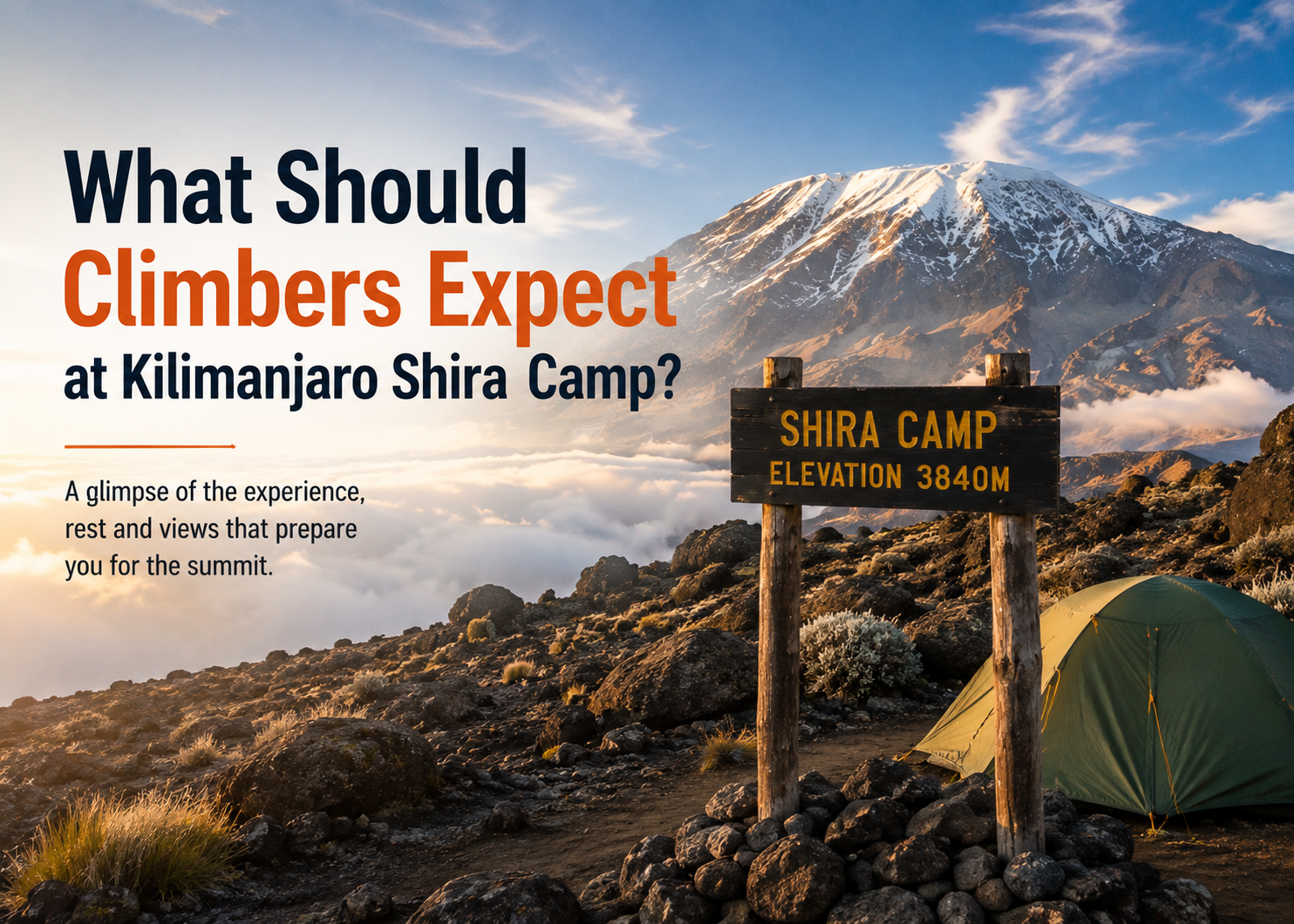
Reaching Shira Camp is one of the memorable stages of a Mount Kilimanjaro climb. After leaving the greener lower slopes behind, trekkers arrive in a high-altitude landscape shaped by open moorland, volcanic terrain, dramatic skies, and expansive mountain views. The camp also marks an important point where climbers begin feeling the effects of increasing elevation.
For anyone preparing for a Kilimanjaro trek, knowing what awaits at Shira Camp can make the experience more comfortable and help set realistic expectations. Ice Rock Trekking helps climbers approach this stage with suitable preparation, steady pacing, and respect for the mountain environment.
Where Is Shira Camp on Mount Kilimanjaro?
Shira Camp sits on the western side of Mount Kilimanjaro within the broad Shira Plateau area. The plateau forms part of an ancient volcanic caldera and provides one of the mountain’s most distinctive landscapes.
Depending on the trekking route and campsite being used, climbers may encounter locations commonly referred to as Shira Camp, Shira 1 Camp, or Shira 2 Camp. Elevations therefore vary, with camps generally situated at roughly 3,500 to 3,900 meters above sea level.
The Shira Plateau is especially important for climbers following western approaches such as the Machame, Lemosho, and Shira routes. Trekking schedules differ, so the exact point at which a group reaches the Shira area depends on the selected itinerary.
As elevation increases, vegetation becomes shorter and the landscape opens dramatically. The transition reminds climbers that they have entered a more demanding section of the mountain.
What Does Kilimanjaro Shira Camp Look Like?
The first thing many trekkers notice is space. Dense vegetation gives way to open terrain, allowing views to stretch across the plateau and surrounding highlands.
Kilimanjaro shira camp typically has a rugged mountain atmosphere rather than the comforts associated with permanent accommodation. Climbers stay in tents, while trekking crews organize cooking, meals, water arrangements, and other camp operations.
The surrounding landscape may feature low shrubs, grasses, volcanic rocks, giant groundsels, and other plants adapted to harsh high-altitude conditions. Weather can change the camp’s appearance quickly. Bright sunshine may produce sweeping views, while clouds and mist can transform the plateau into a much more dramatic setting.
When conditions are clear, climbers can often see Kilimanjaro’s higher slopes rising prominently above the plateau.
Why Is the Shira Plateau So Special?
Shira represents one of Kilimanjaro’s three major volcanic centers, alongside Mawenzi and Kibo. The original Shira volcano underwent extensive erosion and collapse, leaving behind the broad plateau that trekkers cross.
This geological history gives the area a character different from the rainforest below or the alpine desert higher up.
For trekking enthusiasts, Shira offers much more than an overnight stop. It provides an opportunity to observe how Kilimanjaro’s ecology and geology change with elevation. Open moorlands, volcanic formations, distant ridges, and changing vegetation create a landscape that feels increasingly remote.
Photographers may also appreciate the plateau because its openness creates strong compositions featuring Kibo, clouds, trekking trails, tents, and vast skies.
How Cold Is Shira Camp?
Temperature is one of the biggest changes climbers notice after reaching higher elevations.
Days can feel pleasantly warm when sunlight is strong, particularly while walking. Once the sun disappears, temperatures may fall quickly. Nights at Shira Camp can become cold, and conditions vary depending on season, wind, cloud cover, and elevation.
Climbers should avoid assuming that warm daytime conditions will continue after sunset.
Layering becomes essential. A moisture-managing base layer, insulating mid-layer, warm jacket, waterproof outer layer, gloves, hat, and suitable trekking trousers can help climbers adapt to changing conditions.
A warm sleeping bag designed for mountain temperatures is equally important. Climbers often feel colder while resting than while trekking because physical activity no longer generates as much body heat.
What Facilities Can Climbers Expect?
Shira Camp is a mountain campsite, so facilities remain basic.
Trekkers generally sleep in tents rather than permanent huts. Depending on the operator and trekking arrangement, groups may have separate dining tents and other organized camping equipment. Toilet arrangements vary by itinerary and operator.
Water is usually collected, treated, or prepared by trekking teams according to camp logistics and local requirements. Because water availability and treatment procedures can vary, climbers should follow their trekking team’s instructions.
There are no hotel-style conveniences, and that simplicity forms part of the Kilimanjaro experience. Good organization can still make camp surprisingly comfortable.
Ice Rock Trekking focuses on practical camp management so climbers can prioritize rest, nutrition, hydration, and preparation for the following trekking day.
How Does the Altitude Feel at Shira Camp?
For many climbers, the Shira area is where altitude becomes more noticeable.
At approximately 3,500 meters or higher, oxygen availability is lower than at sea level. The body needs time to adjust, even when a climber is physically fit.
Some trekkers may notice mild symptoms such as headache, reduced appetite, tiredness, disturbed sleep, or shortness of breath during physical activity. These symptoms should never simply be ignored.
Fitness does not provide immunity from altitude-related problems. Experienced runners, hikers, and athletes can still experience altitude sickness.
The most useful approach involves gradual ascent, sensible pacing, proper hydration, sufficient food, and open communication with the trekking team. Climbers should report unusual or worsening symptoms promptly rather than hiding discomfort to avoid slowing the group.
Why Is Acclimatization Important at Shira?
Acclimatization is one of the central factors influencing comfort and safety on Kilimanjaro.
The body requires time to respond to lower oxygen levels. Trekking itineraries that provide a gradual ascent can support this adjustment.
By the time climbers reach Shira Camp, they have usually gained considerable elevation. Walking slowly can help reduce unnecessary physical strain. Many trekking teams use the Swahili phrase “pole pole,” meaning “slowly, slowly,” to encourage a sustainable mountain pace.
Some itineraries may include additional walking after reaching camp or use elevation changes strategically to support acclimatization. The exact approach depends on the route, schedule, weather, group condition, and decisions made by the mountain team.
Climbers should avoid competing over speed. Kilimanjaro rewards consistency far more than fast hiking.
What Is the Trek to Shira Camp Like?
The experience depends significantly on the chosen route.
Climbers approaching from the Lemosho side typically move through rainforest before entering heath and moorland zones. Vegetation gradually becomes shorter as altitude increases, opening wider views across the mountain.
Those using the Machame Route generally reach the Shira area after ascending from Machame Camp. The trail can involve steeper terrain as trekkers move above the forest and toward the plateau.
The Shira Route starts at a relatively high elevation, making altitude management especially important.
Regardless of the approach, the transition toward Shira demonstrates Kilimanjaro’s ecological diversity. Within a relatively short distance, climbers can move from humid forest environments into exposed highland terrain.
What Views Can Climbers Expect?
Clear weather can make Shira Camp exceptionally scenic.
Kibo often dominates the skyline, giving trekkers a striking perspective on Kilimanjaro’s highest volcanic cone. Looking away from the summit, climbers may see the plateau stretching toward distant lowlands.
Cloud formations frequently add another dimension. At certain elevations, trekkers may find themselves looking across or above layers of cloud covering the lower slopes.
Sunrise and sunset can be particularly impressive because open terrain allows unobstructed views. Light changes rapidly at altitude, illuminating mountain ridges and volcanic formations in different ways.
Night skies may also appear remarkably clear when cloud cover is limited and atmospheric conditions cooperate.
What Should Climbers Wear at Camp?
Once trekking stops for the day, warm clothing should become a priority.
Sweaty hiking layers can quickly become uncomfortable as temperatures fall. Changing into dry clothing helps preserve warmth and makes resting easier.
Useful camp clothing includes:
- Thermal base layers
- Fleece or insulated mid-layers
- Down or synthetic insulated jackets
- Waterproof and wind-resistant outer shells
- Warm trekking trousers
- Thermal leggings
- Thick hiking socks
- Warm gloves
- A beanie or insulated hat
- Comfortable camp footwear where appropriate
Climbers should also keep rain protection accessible because mountain weather can change quickly.
Layering provides greater flexibility than relying on one heavy garment. Clothing can be added or removed as temperature, wind, and activity levels change.
What Should Be Inside a Shira Camp Daypack?
Porters usually transport the main trekking luggage on supported Kilimanjaro climbs, but trekkers carry essential items in their daypacks.
Important items can include drinking water, snacks, rain gear, sunscreen, sunglasses, spare warm layers, personal medication, a headlamp, and basic personal necessities.
A waterproof pack cover or dry bags can help protect valuable equipment.
Sun protection deserves particular attention. Higher elevations expose climbers to strong ultraviolet radiation, and cool air can disguise how intense sunlight actually is. Sunscreen, UV-protective sunglasses, and suitable headwear can reduce exposure.
Climbers should keep frequently needed equipment easy to reach rather than buried at the bottom of the pack.
What Is Mealtime Like at Shira Camp?
Nutrition becomes increasingly important as the trek progresses.
A well-organized trekking team generally provides meals designed to give climbers carbohydrates, protein, fluids, and enough energy for sustained walking. Menu details vary between operators and itineraries.
Appetite can decrease at altitude, which makes eating difficult for some trekkers. Even so, the body requires fuel.
Warm meals can be especially welcome after temperatures drop. Soups, rice, pasta, potatoes, vegetables, porridge, eggs, and similar trekking foods may feature depending on the operator’s menu.
Climbers with allergies, dietary restrictions, or specific requirements should communicate them before the trek begins so arrangements can be planned properly.
How Important Is Hydration?
Hydration is essential throughout a Kilimanjaro climb.
Physical exertion, dry mountain air, increased breathing, and altitude can contribute to fluid loss. Climbers may not always feel thirsty enough to recognize how much water they need.
Regular drinking throughout the trekking day is usually easier than attempting to consume large quantities at once.
Urine color can provide a simple indication of hydration, although it should not be treated as a medical diagnostic tool. Climbers should follow instructions from their trekking team regarding water consumption and treatment.
Electrolytes may also be useful for some trekkers, particularly after long periods of physical activity, but they should complement rather than replace suitable food and water intake.
How Well Do People Sleep at Shira Camp?
Sleeping at altitude can feel different from sleeping at lower elevations.
Some climbers fall asleep quickly after a demanding trekking day. Others experience lighter sleep, frequent waking, vivid dreams, or difficulty becoming comfortable.
Cold temperatures can also disturb rest.
Preparing sleeping equipment before darkness helps reduce inconvenience later. Climbers should organize warm clothing, headlamps, water, and overnight essentials before entering their sleeping bags.
A quality sleeping mat provides insulation from the cold ground as well as cushioning. Combined with an appropriate sleeping bag, it can significantly improve overnight comfort.
Climbers should not become overly concerned after one imperfect night. Sleep patterns can fluctuate as the body adjusts to altitude.
What Weather Conditions Can Occur?
Kilimanjaro weather is highly variable.
Shira Camp may experience sunshine, cloud, fog, wind, rain, and cold temperatures within relatively short periods. Conditions on the mountain do not always match weather patterns in nearby towns.
Wind can make temperatures feel considerably colder, especially during the evening.
Because weather changes rapidly, waterproof layers should remain accessible rather than packed with porter-carried luggage. Protecting sleeping clothes and electronics inside waterproof bags also adds valuable security.
Climbers should prepare for conditions rather than relying entirely on forecasts.
What Happens After Shira Camp?
The next stage depends on the selected route.
On common Machame and Lemosho itineraries, trekkers often continue toward Lava Tower before descending toward Barranco Camp. This section can play an important role in acclimatization because climbers reach a higher elevation during the day before sleeping lower.
The terrain becomes increasingly alpine as vegetation decreases.
For many climbers, leaving Shira marks a psychological transition. The mountain feels larger, the air becomes thinner, and summit preparation begins to feel more immediate.
Maintaining a steady pace remains important. Conserving energy during these middle stages can help climbers manage demanding trekking days later in the itinerary.
Common Mistakes Climbers Should Avoid at Shira Camp
One frequent mistake is treating camp as a place to stop thinking about hydration. Drinking should continue after trekking finishes.
Another mistake involves remaining in damp trekking clothes. Changing into dry layers can prevent unnecessary heat loss.
Climbers should also avoid pushing themselves unnecessarily around camp. Extra activity consumes energy and may make recovery harder.
Ignoring headaches, nausea, dizziness, or unusual fatigue is particularly risky. Mountain staff need accurate information to assess a climber’s condition.
Poor equipment organization can create additional problems. When darkness arrives and temperatures fall, searching through an unpacked duffel bag for gloves or a headlamp becomes frustrating.
Simple routines make camp life considerably easier.
How Can Climbers Prepare for the Shira Stage?
Physical preparation should begin well before arriving in Tanzania.
Regular hiking helps strengthen the legs and prepares the body for spending several hours on trails. Training on hills or stairs can improve climbing endurance, while cardiovascular conditioning supports sustained effort.
Strength exercises targeting the legs, core, and supporting muscles can improve stability under trekking conditions.
However, training cannot eliminate altitude risk. Even highly conditioned climbers need appropriate acclimatization.
Equipment preparation matters just as much. Trekking boots should be broken in before departure. Clothing should be tested in layered combinations, and climbers should know how to use their headlamps, hydration systems, trekking poles, and rain protection.
Why Does Route Selection Matter?
Not every Kilimanjaro itinerary reaches Shira in the same way.
Routes vary in starting elevation, distance, daily altitude gain, landscape, number of trekking days, and acclimatization opportunities.
Longer itineraries often allow more time for gradual adaptation than highly compressed schedules. However, no route can guarantee summit success.
Climbers should evaluate more than price or total trekking days. The daily elevation profile, rest opportunities, trekking distances, campsite sequence, and operator’s mountain procedures all deserve consideration.
Ice Rock Trekking can help climbers select an itinerary based on fitness, trekking background, available time, expectations, and preferred mountain experience.
Is Shira Camp Suitable for First-Time High-Altitude Trekkers?
Many first-time high-altitude trekkers successfully pass through the Shira area as part of a carefully planned Kilimanjaro itinerary.
Previous technical climbing experience is generally not required for standard trekking routes to Kilimanjaro’s summit. However, climbers need realistic expectations about altitude, cold, long trekking days, basic camps, and physical fatigue.
Preparation should focus on endurance, equipment familiarity, pacing, hydration, and mental resilience.
First-time climbers often benefit from approaching each day independently rather than constantly thinking about summit night. Reaching camp comfortably, eating well, staying hydrated, and resting properly are useful immediate goals.
How Does Ice Rock Trekking Support Climbers at Shira Camp?
A well-managed trekking operation can make a substantial difference at altitude.
Ice Rock Trekking emphasizes organized mountain logistics, appropriate pacing, campsite preparation, meals, hydration routines, and communication between climbers and the trekking team.
Mountain staff also observe how participants are responding to altitude and encourage climbers to communicate symptoms openly.
Porters, cooks, and mountain crew members perform demanding work behind the scenes. Their efforts allow trekkers to concentrate on walking, acclimatization, recovery, and enjoying the landscape.
Respectful cooperation between climbers and crew creates a stronger mountain experience for everyone involved.
Why Shira Camp Becomes a Memorable Part of Kilimanjaro
Shira Camp represents much more than another overnight stop. It is a place where Kilimanjaro begins to reveal its high-altitude character.
The forest feels distant, Kibo appears increasingly imposing, temperatures become colder, and the physical effects of elevation become more noticeable. At the same time, the open plateau offers scenery that many climbers remember long after leaving Tanzania.
The combination of volcanic history, expansive landscapes, changing weather, mountain teamwork, and anticipation of the higher slopes gives Shira its distinctive atmosphere.
Final Thoughts
Climbers arriving at Shira Camp can expect beautiful high-altitude scenery, basic camping conditions, colder temperatures, thinner air, and an increasingly serious mountain environment. Proper layering, hydration, nutrition, pacing, and honest communication about altitude symptoms all contribute to a safer and more comfortable experience.
With careful preparation and experienced trekking support, Shira becomes an exciting milestone rather than simply a campsite. Ice Rock Trekking helps climbers approach Kilimanjaro with practical preparation, responsible mountain practices, and the support needed to appreciate every stage of the ascent.