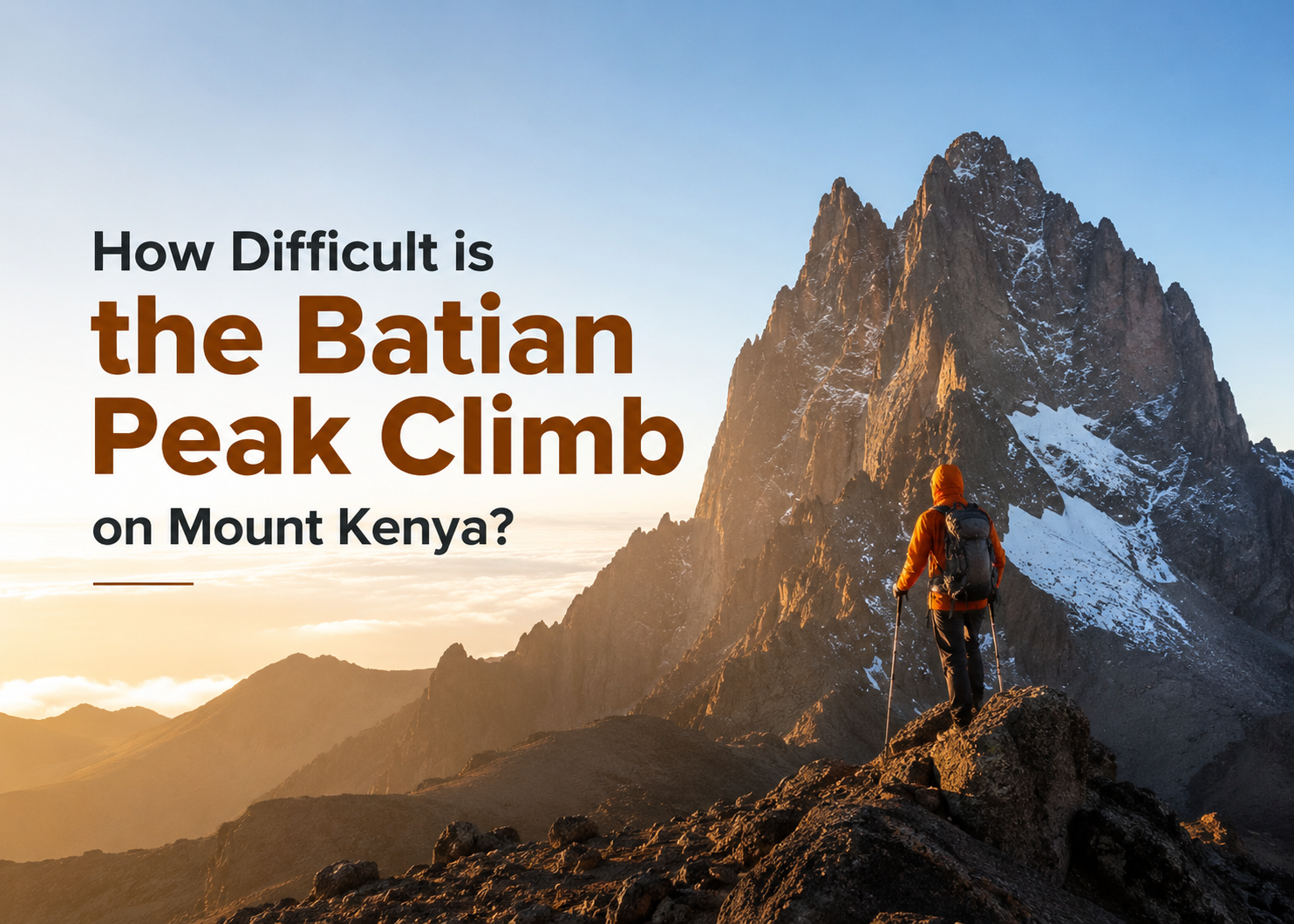
Mount Kenya stands as one of Africa’s most respected alpine climbing destinations. While thousands of trekkers visit Point Lenana every year, only a smaller number attempt the legendary Batian summit. Rising to 5,199 meters, Batian is the highest peak on Mount Kenya and demands far more than physical endurance. It requires technical climbing skills, mental strength, altitude adaptation, and proper planning.
For climbers searching for a serious alpine challenge in Africa, the Batian Climb Mount Kenya experience delivers steep rock faces, unpredictable weather, exposed routes, and breathtaking scenery. It is not a casual hiking trail. Batian rewards preparation, patience, and climbing competence.
Ice Rock Trekking has guided climbers through Mount Kenya’s rugged terrain for years, helping mountaineers understand what truly makes Batian one of Africa’s most respected technical climbs.
Why Batian Peak is Different from Point Lenana
Many travelers confuse Mount Kenya summits. Point Lenana is a trekking peak accessible without ropes or technical climbing. Batian, however, belongs in an entirely different category.
Batian involves:
- Multi-pitch rock climbing
- Technical rope work
- Route-finding challenges
- Exposure to steep granite walls
- High-altitude alpine conditions
- Long summit days
Climbers often underestimate the transition from trekking to technical alpine climbing. Reaching Batian is not simply “harder hiking.” It is a mountaineering objective requiring real climbing ability.
Nelion, the second-highest summit at 5,188 meters, is also technical and frequently climbed alongside Batian through a gate crossing between the peaks.
The Technical Difficulty of Batian Peak
The standard Batian route is the North Face Standard Route. Climbers generally rate it around UIAA IV+ to V or approximately 5.6 to 5.7 in the Yosemite Decimal System. While those numbers may not sound extreme to experienced rock climbers, altitude and exposure make the climb significantly harder.
The difficulty comes from several combined factors:
Sustained Climbing Sections
Batian is not a short technical pitch. Climbers face many hours of continuous movement on granite terrain. Fatigue builds gradually, especially above 4,500 meters.
High Altitude
Oxygen levels decrease dramatically near the summit. Even experienced climbers feel slower and weaker. Simple movements require more energy.
Cold Conditions
Mount Kenya’s alpine zone becomes extremely cold before sunrise and during weather changes. Fingers lose sensitivity quickly, making rope handling difficult.
Route-Finding
The mountain is not always straightforward. Climbers must identify the correct chimneys, cracks, and traverses. Mistakes can cost time and energy.
Exposure
Several sections involve steep drops and narrow ledges. Mental focus becomes just as important as technical skill.
For many climbers, Batian is harder psychologically than physically.
Is Batian Peak Suitable for Beginners?
The honest answer is no.
The Batian Climb Mount Kenya route is not recommended for first-time climbers with zero technical experience. A beginner trekker may successfully reach Point Lenana but struggle severely on Batian.
Before attempting Batian, climbers should ideally have:
- Basic rock climbing experience
- Knowledge of belaying and rappelling
- Confidence using climbing harnesses and helmets
- Experience with multi-pitch routes
- Good cardiovascular endurance
- Previous altitude exposure
However, climbers do not need to be elite athletes or professional mountaineers. Strong intermediate climbers with preparation can successfully summit.
Ice Rock Trekking often advises climbers to gain outdoor rock experience before booking a Batian expedition. Indoor gym climbing helps, but real outdoor exposure provides better preparation.
Weather Makes the Climb More Difficult
Mount Kenya weather changes rapidly. Clear mornings can become stormy afternoons within hours.
Rain transforms granite into slippery rock. Mist reduces visibility. Wind increases exposure and cold stress.
The best climbing seasons are generally:
- January to March
- July to October
Even during favorable seasons, conditions can shift unexpectedly.
Bad weather creates several risks:
- Wet climbing surfaces
- Delayed summit attempts
- Hypothermia
- Reduced visibility
- Falling rock hazards
Many failed summit attempts happen because of weather rather than lack of strength.
Altitude Challenges on Batian
Altitude affects every climber differently. Some strong athletes struggle heavily above 4,000 meters, while others adapt quickly.
Common altitude symptoms include:
- Headaches
- Nausea
- Fatigue
- Shortness of breath
- Poor sleep
- Dizziness
Without proper acclimatization, the Batian Climb Mount Kenya route becomes far more dangerous.
A rushed itinerary increases the risk of Acute Mountain Sickness (AMS). Climbers should spend extra days acclimatizing whenever possible.
Most successful Batian climbers spend several days trekking before summit day.
The Length of Summit Day
Batian summit day is long and exhausting.
Climbers often begin before dawn and remain on technical terrain for many hours. The duration depends on:
- Weather
- Team pace
- Route conditions
- Experience level
- Rope management efficiency
A typical summit push may take 10 to 15 hours round trip.
Physical exhaustion becomes a major factor during descent. Many accidents occur after summiting because climbers lose focus while tired.
Good pacing is essential.
Mental Strength Matters More Than Many Expect
Technical climbing ability alone does not guarantee success. Batian tests emotional control and decision-making under pressure.
Exposure, fatigue, altitude, and changing weather can overwhelm climbers mentally.
Strong climbers sometimes turn back because of fear or exhaustion.
Important mental qualities include:
- Patience
- Calmness
- Focus
- Adaptability
- Confidence
- Team communication
A climber who remains composed during difficult sections often performs better than someone relying only on physical strength.
Training for Batian Peak
Proper preparation dramatically improves summit chances.
Cardiovascular Training
Long hikes, stair climbing, cycling, and running help develop endurance for high-altitude movement.
Strength Training
Leg strength is essential for steep approaches and descents. Core strength improves climbing stability.
Rock Climbing Practice
Outdoor climbing experience helps climbers become comfortable on granite walls and exposed terrain.
Endurance Hiking
Long mountain hikes with a loaded backpack simulate summit-day fatigue.
Altitude Preparation
If possible, climbers should spend time at elevation before attempting Batian.
Consistency matters more than extreme workouts.
Equipment Required for Batian Climb Mount Kenya
Technical climbing requires specialized equipment.
Common gear includes:
- Climbing harness
- Helmet
- Climbing shoes
- Warm alpine clothing
- Waterproof shell
- Gloves
- Headlamp
- Carabiners
- Ropes
- Sleeping bag
- Mountaineering backpack
Professional operators like Ice Rock Trekking usually provide shared technical gear while climbers bring personal equipment.
Quality gear becomes critical in cold alpine conditions.
How Dangerous is Batian Peak?
Batian is challenging but manageable with proper guidance and preparation.
The primary dangers include:
- Altitude sickness
- Falls
- Weather exposure
- Loose rock
- Fatigue
- Navigation mistakes
Most incidents happen when climbers underestimate the mountain or attempt it without adequate experience.
Guided climbs significantly improve safety because local mountain guides understand:
- Weather patterns
- Route conditions
- Emergency procedures
- Technical sections
- Safe pacing
Mount Kenya deserves respect. Batian is not a mountain for shortcuts or rushed planning.
Comparing Batian to Kilimanjaro
Many climbers compare Mount Kenya and Kilimanjaro, but the climbs differ completely.
Kilimanjaro
- Trekking peak
- Non-technical
- Primarily endurance-based
- Walking only
- Higher altitude
Batian Peak
- Technical alpine climb
- Requires rope systems
- Steep rock climbing
- Greater exposure
- More technical risk
A climber who successfully summits Kilimanjaro may still struggle on Batian without technical experience.
Batian demands a broader mountaineering skill set.
The Most Common Reasons Climbers Fail
Several patterns appear repeatedly among unsuccessful summit attempts.
Poor Acclimatization
Rushing the climb causes altitude problems.
Lack of Technical Experience
Climbers unfamiliar with rock movement lose time and confidence.
Weather Changes
Rain and storms frequently force retreat.
Inadequate Fitness
Summit day becomes extremely difficult without endurance conditioning.
Fear of Exposure
Some climbers freeze on exposed sections.
Poor Gear Choices
Cold hands, wet clothing, or improper footwear create major problems.
Preparation reduces these risks significantly.
How Long Does the Full Expedition Take?
Most Batian expeditions require 4 to 6 days depending on the chosen route and acclimatization schedule.
Popular approach routes include:
- Sirimon Route
- Chogoria Route
- Naro Moru Route
Many climbers combine Sirimon ascent with Chogoria descent for scenic variation.
A slower itinerary usually improves summit success.
Why Climbers Love Batian Despite the Difficulty
The challenge itself attracts mountaineers from around the world.
Batian offers:
- True alpine climbing in Africa
- Incredible granite formations
- Dramatic scenery
- Less crowded routes
- Technical satisfaction
- Unique mountain culture
The summit experience feels deeply earned.
Unlike trekking peaks where large crowds gather, Batian remains selective. Every successful ascent reflects commitment and preparation.
For many climbers, Batian becomes one of the most memorable alpine experiences of their lives.
Choosing the Right Climbing Partner
A reliable expedition operator plays a major role in safety and success.
When selecting a climbing company, climbers should look for:
- Certified mountain guides
- Technical climbing experience
- Strong safety standards
- Local route knowledge
- Proper rescue planning
- Good acclimatization schedules
Ice Rock Trekking focuses on personalized Mount Kenya climbing experiences with experienced local teams who understand the demands of Batian.
Experienced guidance reduces unnecessary risks and improves climber confidence on technical sections.
Final Thoughts
So, how difficult is the Batian Peak climb on Mount Kenya?
It is demanding, technical, mentally intense, and physically exhausting. Batian is far more than a trekking adventure. The mountain challenges climbers through altitude, exposure, weather, and sustained granite climbing.
Yet for prepared climbers, the Batian Climb Mount Kenya experience becomes one of Africa’s most rewarding alpine achievements.
Success depends less on extreme athleticism and more on smart preparation, patience, technical ability, and proper acclimatization.
Batian is not the easiest summit in Africa, and that is exactly why mountaineers respect it so deeply.