Mount Kenya stands as one of Africa’s most respected alpine climbing destinations, attracting trekkers and technical climbers from across the globe. While many visitors hike to Point Lenana, serious mountaineers often set their sights on the mountain’s twin technical summits — Batian and Nelion. Both peaks offer thrilling ascents, rugged granite walls, dramatic scenery, and unforgettable high-altitude experiences.
Choosing between these two iconic summits is not always easy. Each peak has distinct challenges, climbing styles, weather considerations, and route characteristics. For climbers planning a serious expedition, the debate around “Batian vs Nelion Climb Mount Kenya” becomes an essential part of preparation.
At Ice Rock Trekking, we have guided climbers on Mount Kenya for years and understand the practical differences between these legendary peaks. Whether you are an experienced alpine climber or an ambitious mountaineer preparing for your first African technical summit, knowing what separates Batian from Nelion can help you make the right decision.
Introduction to Mount Kenya’s Twin Peaks
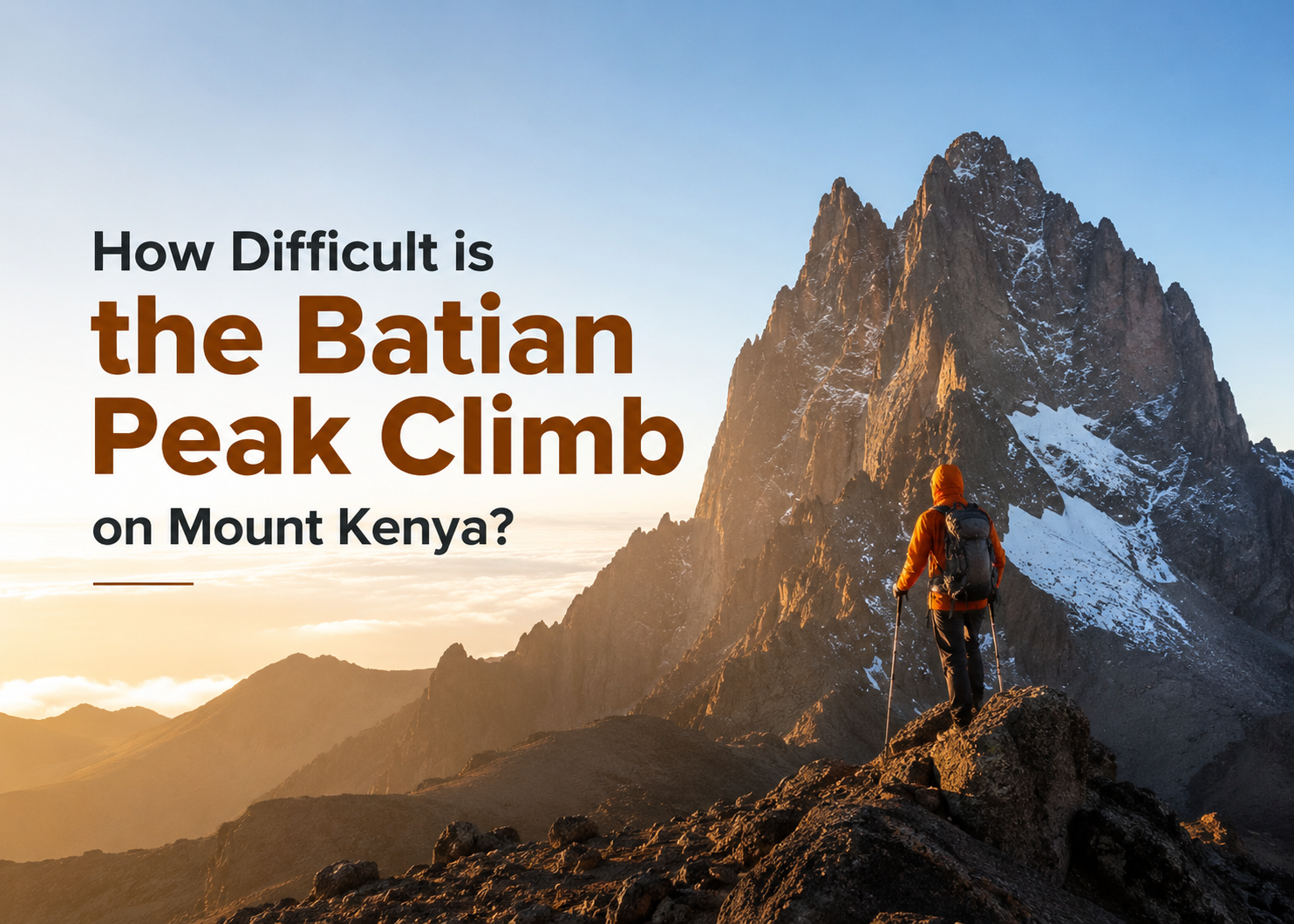
Mount Kenya, located in central Kenya, is Africa’s second-highest mountain after Kilimanjaro. The mountain features several peaks, but Batian and Nelion dominate the skyline with their dramatic rock towers and steep granite faces.
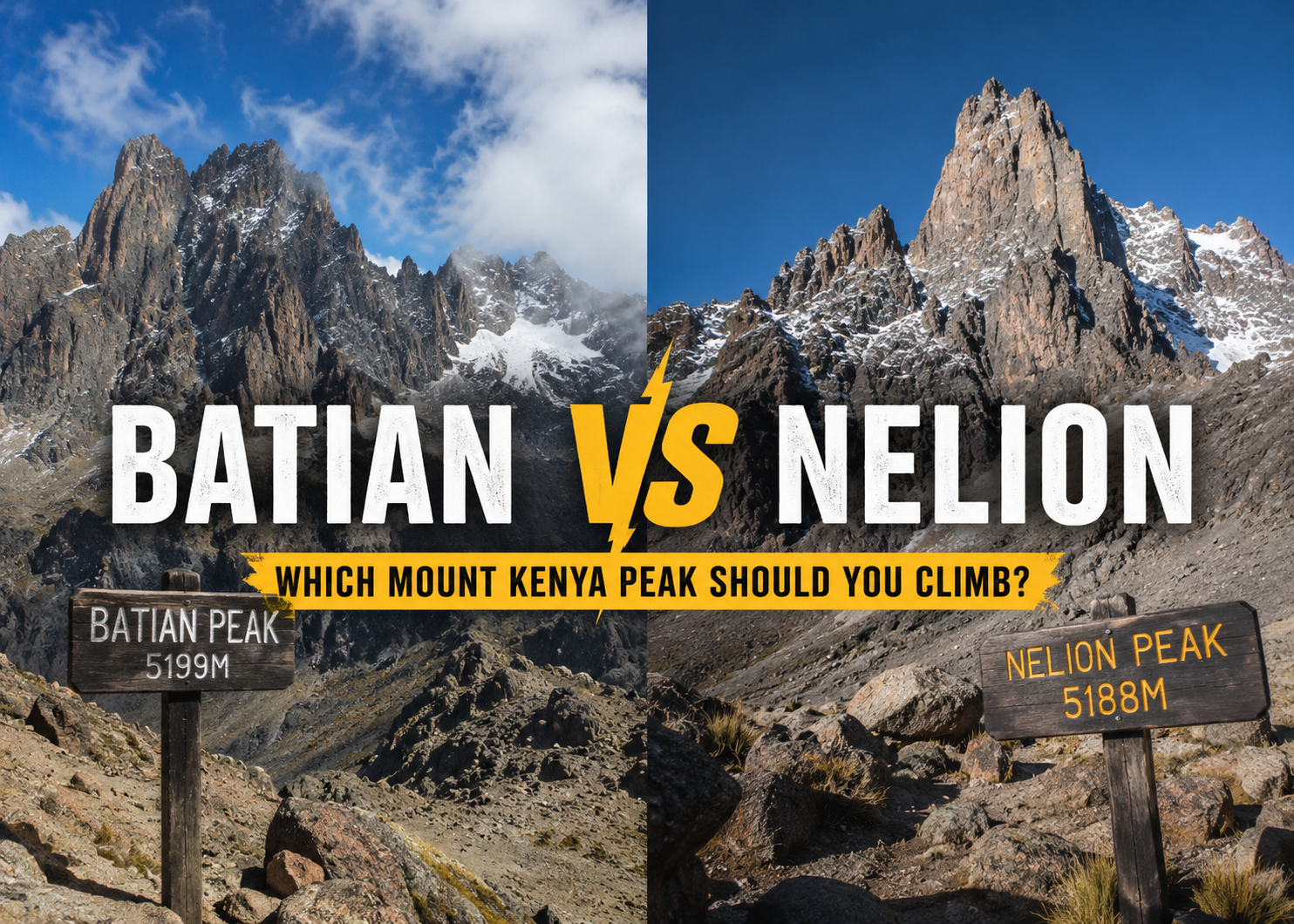
- Batian – 5,199 meters (17,057 feet)
- Nelion – 5,188 meters (17,021 feet)
The height difference between them is minimal, yet the climbing experience differs significantly. Both summits demand technical climbing ability, proper acclimatization, and strong physical fitness.
Batian is the highest point of Mount Kenya, making it the ultimate prize for many mountaineers. Nelion, meanwhile, offers a slightly more accessible but equally rewarding technical climb.
The Main Difference Between Batian and Nelion
The most important distinction lies in the climbing routes and technical requirements.
Batian
Batian is considered more difficult due to its exposed traverses, route-finding complexity, and challenging rock sections. Reaching Batian often involves crossing the famous Gate of the Mists from Nelion, adding another layer of technical difficulty.
Nelion
Nelion is climbed mainly via the Normal Route, which is more direct and slightly less demanding. It remains a serious alpine climb, but many climbers view it as a more achievable technical summit on Mount Kenya.
For climbers researching “Batian vs Nelion Climb Mount Kenya,” the key factor is often technical confidence and previous climbing experience.
Climbing Difficulty Comparison
Batian Difficulty
Batian is widely regarded as the harder summit. The ascent involves:
- Multi-pitch rock climbing
- Exposed ridges
- Technical traverses
- Advanced route finding
- Greater weather exposure
The climb requires confidence on Grade IV to V alpine rock terrain. Climbers should be comfortable with rope systems, belaying, scrambling, and climbing in rapidly changing weather conditions.
The crossing from Nelion to Batian through the Gate of the Mists can become especially difficult during poor weather.
Nelion Difficulty
Nelion is technical but more straightforward. The Normal Route follows the South-East Face and offers:
- More consistent route lines
- Better-known anchor points
- Reduced route-finding pressure
- Stable climbing rhythm
Nelion is ideal for climbers transitioning from trekking peaks into technical alpine climbing.
Although easier than Batian, Nelion still requires:
- Rope handling skills
- Multi-pitch climbing experience
- Strong endurance
- Acclimatization
Neither peak should be underestimated.
Which Peak Is Better for First-Time Technical Climbers?
For climbers attempting their first technical summit in Africa, Nelion is usually the preferred option.
Reasons include:
- Simpler navigation
- Lower psychological exposure
- Easier retreat options
- More established climbing route
Batian is generally recommended for climbers with stronger alpine backgrounds and previous technical ascents.
At Ice Rock Trekking, we often advise first-time Mount Kenya climbers to start with Nelion before attempting Batian on a future expedition.
Route Comparison
Nelion Normal Route
The Normal Route on Nelion follows the South-East Face and features approximately 18 to 20 pitches of climbing.
Key highlights:
- Solid granite rock
- Classic alpine climbing
- Spectacular sunrise views
- Consistent climbing movement
The route begins from Austrian Hut and usually takes 6 to 8 hours to reach the summit depending on pace and weather.
Batian Standard Approach
Batian is commonly climbed by:
- Ascending Nelion first
- Crossing the Gate of the Mists
- Climbing additional technical sections to Batian
The return journey often requires reversing the same route.
This makes Batian physically longer and mentally more demanding.
Weather Conditions and Their Impact
Weather plays a massive role on Mount Kenya.
Conditions can change rapidly:
- Morning sunshine can turn into afternoon storms
- Rock surfaces become slippery during rain
- Fog reduces visibility
- Cold winds increase fatigue
Best Seasons for Climbing
The most reliable climbing conditions are:
- January to March
- July to October
These months typically offer drier rock and clearer skies.
Batian is more weather-sensitive because the traverses and exposed sections become dangerous in wet conditions.
Nelion remains challenging in bad weather, but climbers often find it slightly more manageable.
Technical Skills Required
Skills Needed for Batian
- Advanced scrambling
- Multi-pitch climbing
- Rope management
- Alpine route navigation
- Abseiling
- Exposure tolerance
Skills Needed for Nelion
- Basic to intermediate rock climbing
- Belaying
- Climbing movement on granite
- Endurance at altitude
Climbers without technical experience should hire certified mountain guides.
Ice Rock Trekking provides experienced local guides trained in Mount Kenya alpine ascents and rescue procedures.
Acclimatization Matters
Altitude affects every climber differently.
Even technically skilled mountaineers may struggle if poorly acclimatized.
Symptoms of altitude sickness include:
- Headaches
- Nausea
- Fatigue
- Dizziness
- Poor sleep
To improve summit success:
- Spend extra acclimatization days on the mountain
- Hydrate properly
- Climb slowly
- Avoid rushing the ascent
Most successful technical climbers spend at least 4 to 5 days on Mount Kenya before attempting Batian or Nelion.
Batian vs Nelion Climb Mount Kenya: Safety Considerations
Safety should always outweigh summit ambitions.
Batian Safety Factors
- More exposed climbing
- Greater fall consequences
- Complex navigation
- Longer summit day
Nelion Safety Factors
- Technical but more structured
- Easier descent planning
- Better known route sections
Hiring professional guides significantly improves safety and efficiency.
At Ice Rock Trekking, our guides monitor weather patterns, rope systems, acclimatization, and emergency procedures throughout the climb.
Physical Fitness Requirements
Both climbs require strong physical conditioning.
Recommended preparation includes:
- Hiking with elevation gain
- Rock climbing practice
- Cardio endurance training
- Leg strength workouts
- Core stability exercises
Climbers should be capable of carrying a light alpine pack while moving efficiently at high altitude.
Fitness alone does not guarantee success, but poor conditioning can dramatically increase fatigue and risk.
Equipment Needed
Essential Climbing Gear
- Climbing helmet
- Harness
- Mountaineering boots
- Warm layered clothing
- Waterproof jacket
- Gloves
- Headlamp
- Technical climbing shoes
- Carabiners and belay devices
Guides often provide ropes and technical hardware.
Weather protection is critical because temperatures can drop below freezing overnight.
Which Peak Has Better Views?
Both peaks provide breathtaking panoramas.
From the summits, climbers can see:
- The Kenyan highlands
- Glacier remnants
- Jagged volcanic formations
- Sunrise above the clouds
Batian Views
Batian offers slightly wider summit perspectives because it is the highest point.
Nelion Views
Nelion delivers equally dramatic scenery with fewer climbers and a classic alpine atmosphere.
Most climbers consider both experiences unforgettable.
Time Required for Each Climb
Nelion Expedition Timeline
- 4 to 5 days total
- Includes acclimatization
- Summit push from Austrian Hut
Batian Expedition Timeline
- 5 to 6 days recommended
- Extra time for weather windows
- Longer summit day
Rushing technical climbs on Mount Kenya is never advisable.
Cost Comparison
Batian ascents are usually more expensive due to:
- Longer climbing duration
- Additional guide support
- Increased technical logistics
- Higher complexity
Nelion climbs remain more budget-friendly while still offering a premium technical alpine experience.
Factors affecting overall cost:
- Number of guides
- Park fees
- Equipment rental
- Route duration
- Accommodation choices
Ice Rock Trekking offers customized Mount Kenya climbing packages based on climber experience and expedition goals.
Success Rates
Nelion generally has a higher summit success rate because:
- The route is more direct
- Climbers experience less exposure
- Weather impacts are slightly reduced
Batian has lower success rates due to:
- Technical complexity
- Weather sensitivity
- Longer climbing duration
However, experienced climbers who prepare properly can successfully reach either summit.
Mental Challenge Comparison
Mountaineering is as much mental as physical.
Batian Mental Demands
- Higher exposure
- Longer technical sections
- More sustained focus
- Challenging traverses
Nelion Mental Demands
- Technical climbing concentration
- High-altitude fatigue
- Multi-pitch endurance
Climbers who stay calm under pressure usually perform better on both peaks.
Photography Opportunities
Mount Kenya offers extraordinary photography conditions.
Highlights include:
- Alpine sunrise light
- Glacier remnants
- Vertical granite towers
- Cloud inversions
- Wildlife along lower routes
Batian and Nelion both provide incredible alpine imagery rarely found elsewhere in Africa.
Environmental Responsibility
Mount Kenya is a protected UNESCO World Heritage Site.
Responsible climbing practices include:
- Carrying out waste
- Respecting wildlife
- Staying on established trails
- Supporting local guides and communities
Ice Rock Trekking strongly supports sustainable mountain tourism and eco-conscious expeditions.
Which Peak Should You Choose?
Choose Batian If:
- You are an experienced alpine climber
- You enjoy technical traverses
- You want Mount Kenya’s highest summit
- You have strong route-finding abilities
- You are comfortable with exposure
Choose Nelion If:
- You are newer to technical mountaineering
- You want a classic alpine climb
- You prefer a more direct route
- You want a slightly safer option
- You are building high-altitude climbing experience
For many climbers, Nelion becomes the perfect introduction to Mount Kenya technical climbing.
Batian, meanwhile, remains the ultimate challenge for advanced mountaineers seeking a serious African alpine ascent.
Why Climb with Ice Rock Trekking?
Choosing the right expedition partner can shape your entire Mount Kenya experience.
Ice Rock Trekking provides:
- Professional local climbing guides
- Customized itineraries
- Safety-focused expeditions
- Quality mountain logistics
- Acclimatization planning
- Technical climbing support
Our team understands every section of Mount Kenya’s climbing routes and works closely with climbers to maximize safety, comfort, and summit success.
Whether you choose Batian or Nelion, proper planning and experienced leadership make a major difference.
Final Thoughts
The debate around “Batian vs Nelion Climb Mount Kenya” ultimately depends on your climbing background, technical skills, confidence, and personal goals.
Batian offers the prestige of Mount Kenya’s highest summit along with greater technical difficulty and exposure. Nelion provides a rewarding alpine experience with slightly more accessible climbing conditions.
Both peaks deliver exceptional adventure, stunning scenery, and unforgettable mountaineering memories.
With proper acclimatization, strong preparation, and expert support from Ice Rock Trekking, climbers can safely experience one of Africa’s most iconic alpine challenges.