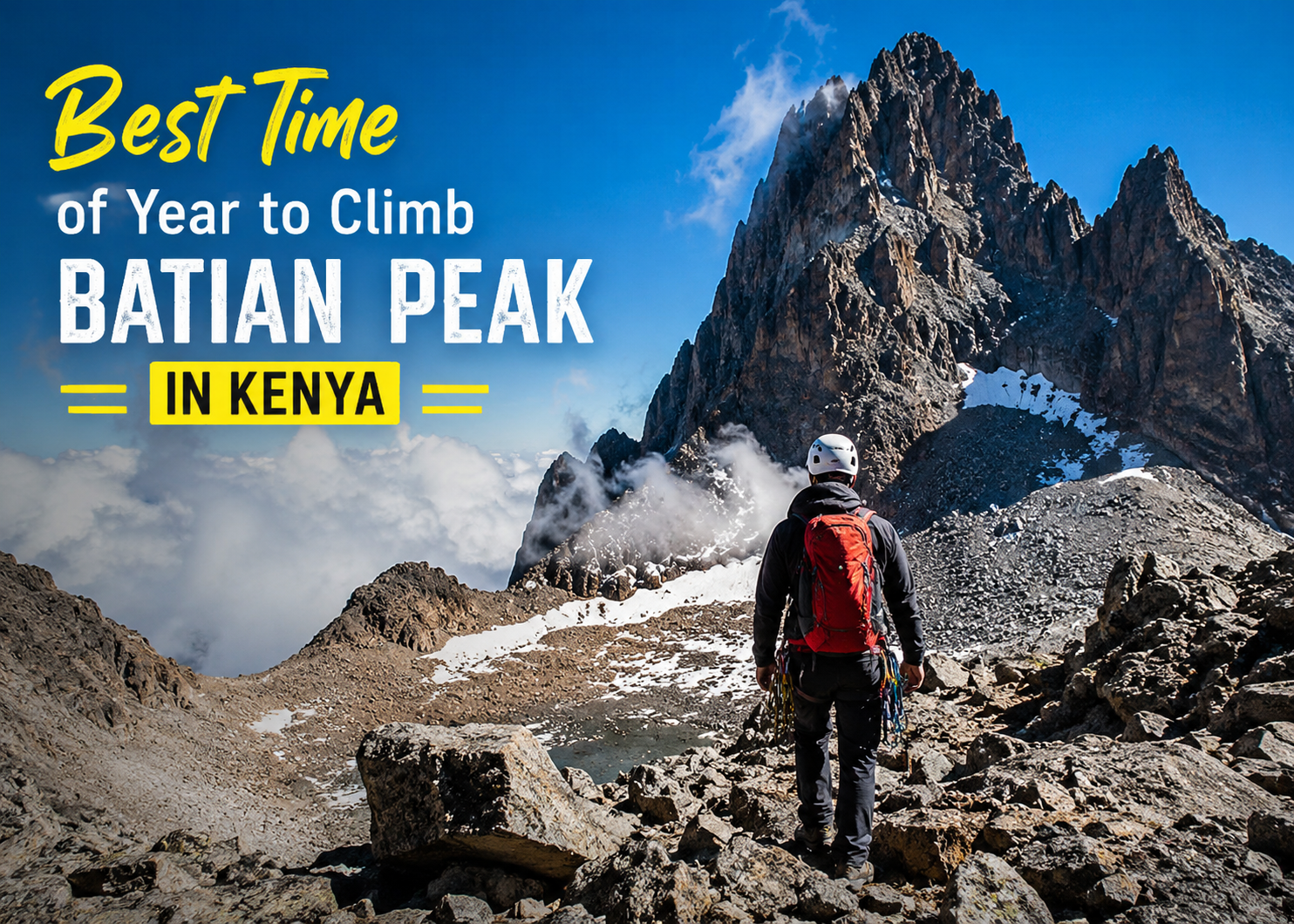
Batian Peak stands as the highest summit of Mount Kenya, reaching an impressive elevation of 5,199 meters above sea level. For experienced climbers seeking a technical alpine challenge in Africa, Batian represents one of the continent’s most rewarding ascents. Unlike trekking peaks that can be reached through hiking routes, Batian requires rock climbing skills, proper equipment, and favorable weather conditions to ensure a safe and successful climb.
Choosing the right season can significantly influence your experience. Weather, visibility, rock conditions, and overall safety are directly connected to the time of year you decide to climb. Whether you are a seasoned mountaineer or an ambitious climber planning your next expedition, knowing the ideal season to Climb Batian Peak in Kenya can make all the difference.
At Ice Rock Trekking, we have helped climbers from across the globe experience the remarkable beauty and challenge of Mount Kenya. Based on years of experience on the mountain, we understand how seasonal changes affect climbing conditions and success rates.
Why Timing Matters for Batian Peak
Batian is not a standard trekking summit. The climb involves technical rock sections, exposure, route-finding, and changing alpine weather. Rainfall can make rock surfaces slippery, while heavy cloud cover can reduce visibility and increase navigation challenges.
The right season provides:
- Stable weather conditions
- Better visibility
- Drier rock faces
- Reduced risk of storms
- More comfortable climbing temperatures
- Improved summit success rates
Since Batian Peak requires technical climbing, even minor weather changes can impact safety and performance.
Understanding Mount Kenya’s Climate
Mount Kenya lies almost directly on the equator, yet its high altitude creates a unique alpine environment. Climbers often experience multiple weather conditions within a single day.
The mountain generally experiences two dry seasons and two rainy seasons.
Dry Seasons
- January to March
- July to October
Rainy Seasons
- April to June
- November to December
The dry periods are generally considered the most favorable times for technical climbing on Batian.
January to March: Prime Climbing Season
Many experienced mountaineers consider January through March the best time to Climb Batian Peak in Kenya.
During these months, the mountain typically experiences:
- Clear skies
- Lower rainfall
- Dry rock conditions
- Excellent visibility
- Stable temperatures
These conditions create an ideal environment for technical climbing. The famous Nelion-Batian traverse and the Normal Route become significantly safer when the rock remains dry.
Advantages of Climbing During January to March
Excellent Rock Quality
Batian’s climbing routes rely heavily on friction and solid foot placement. Dry rock enhances grip and increases climber confidence throughout the ascent.
Better Photography Opportunities
Clear mornings often reveal spectacular views of glaciers, valleys, and surrounding landscapes. Wildlife sightings are also more common during these months.
Increased Summit Success Rates
Stable weather allows climbing teams to move efficiently and safely, leading to a higher probability of reaching the summit.
Reduced Weather Delays
Storm interruptions are less frequent, helping climbers stay on schedule.
July to October: Another Excellent Window
The second major climbing season occurs from July through October. This period also attracts many climbers seeking favorable conditions on Mount Kenya.
Weather during these months is generally dry, though mornings can be colder compared to the January-March season.
Benefits of Climbing Between July and October
Stable Conditions
Climbers often enjoy long stretches of predictable weather, making route planning easier.
Clear Summit Views
The mountain frequently offers panoramic views extending across central Kenya.
Comfortable Climbing Days
Cool temperatures reduce fatigue during long climbing sessions.
Strong Alpine Conditions
Many climbers appreciate the crisp mountain atmosphere and excellent visibility associated with this season.
Comparing the Two Dry Seasons
Both climbing windows offer favorable conditions, but each has distinct characteristics.
January to March
- Slightly warmer temperatures
- Drier rock surfaces
- Less chance of frost
- Excellent climbing conditions
July to October
- Cooler temperatures
- Crisp mornings
- Stable weather patterns
- Exceptional visibility
Many professional climbing teams slightly favor January to March because warmer temperatures help maintain dry rock conditions throughout the day.
Why the Rainy Seasons Are Less Suitable
While Mount Kenya remains accessible throughout the year, technical ascents of Batian become more challenging during rainy months.
April to June
This period typically receives the heaviest rainfall.
Challenges include:
- Wet rock faces
- Reduced visibility
- Increased risk of slips
- Frequent afternoon storms
- Longer climbing times
November to December
Short rains can create unpredictable conditions.
Potential issues include:
- Sudden showers
- Cloud-covered routes
- Wet climbing sections
- More difficult route finding
For technical climbers, these conditions often reduce both comfort and safety.
Temperature Conditions on Batian Peak
One of the most common misconceptions is that Kenya’s equatorial location guarantees warm temperatures.
At over 5,000 meters, Batian Peak experiences alpine conditions year-round.
Typical summit temperatures range from:
- Daytime: -2°C to 10°C
- Nighttime: -10°C to 0°C
Wind chill can make temperatures feel significantly colder.
Proper layering remains essential regardless of the season.
Technical Challenges of Batian Peak
Before attempting to Climb Batian Peak in Kenya, climbers should understand the technical nature of the mountain.
Key challenges include:
- Multi-pitch climbing
- High-altitude exposure
- Route finding
- Long summit days
- Rapid weather changes
Batian is often compared to classic alpine rock climbs rather than trekking peaks.
A successful ascent requires both physical fitness and technical competence.
The Importance of Acclimatization
Regardless of when you climb, altitude acclimatization plays a major role in summit success.
Rapid ascents can increase the likelihood of altitude-related issues.
Many climbers spend several days on Mount Kenya before attempting Batian.
Popular acclimatization strategies include:
- Gradual elevation gain
- Rest days
- Hydration
- Short training climbs
- Proper nutrition
At Ice Rock Trekking, acclimatization schedules are carefully designed to maximize comfort and performance.
Wildlife and Scenic Highlights
One of the unique aspects of Mount Kenya is its incredible biodiversity.
During your approach to Batian, you may encounter:
- Giant lobelias
- Giant groundsels
- Rock hyraxes
- Mountain antelope
- Diverse bird species
The mountain’s ecosystems change dramatically with altitude, creating a visually fascinating journey from forest to alpine terrain.
Dry-season climbs often provide the best opportunities for photography and wildlife observation.
Equipment Needed for Batian Peak
Proper gear selection is critical.
Essential equipment typically includes:
Climbing Gear
- Helmet
- Harness
- Climbing shoes
- Carabiners
- Belay device
- Slings
Clothing
- Waterproof jacket
- Insulated layer
- Base layers
- Climbing pants
- Gloves
- Warm hat
Additional Essentials
- Headlamp
- Sunglasses
- Water bottles
- Energy snacks
- Personal first-aid supplies
Climbers should always ensure equipment is suitable for alpine conditions.
Physical Preparation
The best season alone does not guarantee success.
Batian demands excellent physical conditioning.
Recommended preparation includes:
Endurance Training
Long hikes, running, cycling, and stair climbing help build cardiovascular fitness.
Strength Training
Focus on:
- Core stability
- Leg strength
- Upper body endurance
Technical Practice
Regular rock climbing improves efficiency and confidence on exposed terrain.
Mental Preparation
Patience, focus, and adaptability are valuable assets during alpine climbs.
Choosing an Experienced Climbing Partner
A knowledgeable mountain team can significantly improve safety and success rates.
Professional support helps with:
- Route planning
- Logistics
- Equipment recommendations
- Safety management
- Acclimatization strategies
Ice Rock Trekking specializes in Mount Kenya expeditions and provides experienced local support for climbers seeking to reach Batian Peak.
Our team understands the mountain’s seasonal patterns, route conditions, and technical requirements.
Photography Opportunities During the Best Season
Climbers often underestimate the visual rewards awaiting them on Batian.
Highlights include:
- Sunrise above the clouds
- Glacial formations
- Jagged volcanic rock formations
- Panoramic summit views
- Dramatic alpine landscapes
The dry seasons offer the clearest conditions for capturing these unforgettable moments.
Planning Your Expedition
A successful Batian expedition starts months before arriving in Kenya.
Important planning considerations include:
- Selecting the right season
- Building physical fitness
- Arranging travel logistics
- Securing climbing equipment
- Allowing sufficient acclimatization time
Many climbers combine their Mount Kenya experience with wildlife safaris or visits to other destinations across Kenya.
Final Thoughts
For climbers seeking the highest summit of Mount Kenya, timing is one of the most important factors influencing success. The most favorable periods to Climb Batian Peak in Kenya are January to March and July to October, when dry conditions provide safer rock surfaces, clearer visibility, and more predictable weather.
Among these options, January through March is often regarded as the premier climbing window due to warmer temperatures and consistently dry conditions. However, July through October also delivers outstanding opportunities for experienced mountaineers.
With proper preparation, technical skills, and the support of an experienced team such as Ice Rock Trekking, Batian Peak offers an unforgettable alpine adventure that combines challenging climbing, breathtaking scenery, and the satisfaction of standing atop Kenya’s highest point.