Mt Kilimanjaro Marangu Route

Climbing Africa’s highest peak is a dream shared by many adventure travelers, and the mt kilimanjaro marangu route remains one of the most popular paths leading to the summit of Mount Kilimanjaro. Known for its structured trail, comfortable mountain huts, and gradual terrain, this route attracts first-time climbers, trekking enthusiasts, and organized expedition groups seeking a reliable and scenic ascent. For those planning their first high-altitude trek in East Africa, the Marangu Route offers a memorable balance of accessibility, natural beauty, and structured trekking conditions.

At Ice Rock Trekking, climbers regularly choose this route because of its unique hut accommodation system and clearly defined path. While other Kilimanjaro trails involve camping in tents, the Marangu Route provides dormitory-style shelters that add a level of comfort rarely found on high mountain expeditions.

Overview of the Marangu Route

The Marangu Route is often referred to as the “Coca-Cola Route,” a nickname that reflects its historic popularity and relatively established infrastructure. Located on the southeastern side of Mount Kilimanjaro, the trail begins at Marangu Gate and ascends through lush rainforest, moorland landscapes, alpine desert terrain, and finally the glacier-covered summit zone.

The route normally takes 5 to 6 days to complete, depending on the acclimatization schedule. Many experienced operators recommend a six-day itinerary to increase summit success rates.

Key highlights include:

  • Comfortable mountain huts instead of camping
  • Well-marked trails suitable for beginners
  • Diverse ecological zones across the mountain
  • Steady elevation gain with gradual sections
  • A direct summit approach to Uhuru Peak

Although considered one of the easier Kilimanjaro routes in terms of trail difficulty, altitude remains a serious factor. Proper acclimatization, experienced mountain staff, and careful pacing are essential for a safe climb.

Why First-Time Climbers Choose the Marangu Route

Many climbers tackling Kilimanjaro for the first time select this route because of its accessibility and structured environment.

Hut Accommodation

Unlike other Kilimanjaro routes where trekkers sleep in tents, Marangu offers permanent wooden huts equipped with bunk beds and communal dining areas. This feature appeals to climbers who prefer a sheltered overnight environment.

Straightforward Trail Navigation

The trail follows a clear path with gradual inclines in the early days. This makes the route manageable for hikers with moderate trekking experience.

Reliable Infrastructure

Because Marangu has been used for decades, ranger stations, medical checkpoints, and rescue support are well organized.

Shorter Expedition Duration

For travelers with limited time in Tanzania, the five-day option offers a quicker summit attempt, although an additional acclimatization day significantly improves summit chances.

Route Profile and Trekking Stages

Climbing Mount Kilimanjaro via the Marangu Route follows a structured sequence of camps and ecological zones. Each stage introduces different landscapes and altitude conditions.

Marangu Gate to Mandara Hut

  • Elevation:1,870 m to 2,720 m
  • Distance:~8 km
  • Time:4–5 hours

The journey begins at Marangu Gate within Kilimanjaro National Park. After registration with park authorities, trekkers enter a dense rainforest filled with towering trees, moss-covered branches, and the sounds of tropical wildlife.

Black-and-white colobus monkeys often swing through the canopy above the trail. The humid forest environment gradually cools as altitude increases.

Mandara Hut sits in a forest clearing and serves as the first overnight stop. Many climbers take a short afternoon walk to Maundi Crater for views across northern Tanzania and the Kenyan border.

Mandara Hut to Horombo Hut

  • Elevation:2,720 m to 3,720 m
  • Distance:~12 km
  • Time:6–7 hours

The trail leaves the rainforest behind and enters the moorland zone, where giant lobelia plants and senecio trees dominate the landscape. The air becomes noticeably thinner and temperatures begin to drop.

Expansive views open across the mountain slopes, and the twin peaks of Kibo and Mawenzi become visible on clear days.

Horombo Hut is one of the largest hut complexes on Kilimanjaro and serves as a central acclimatization location.

Many climbers spend an additional night here to adapt to altitude.

Acclimatization Day at Horombo Hut

Altitude adaptation plays a major role in successful summits. Spending an extra day at Horombo allows climbers to explore higher elevations before returning to rest.

A popular acclimatization hike leads toward Mawenzi Ridge, offering spectacular views of Mawenzi’s jagged volcanic towers.

This strategy follows the “climb high, sleep low” principle, helping the body adjust to reduced oxygen levels.

Horombo Hut to Kibo Hut

  • Elevation:3,720 m to 4,703 m
  • Distance:~10 km
  • Time:6–7 hours

The trail crosses the alpine desert zone, a barren environment shaped by volcanic rock, wind, and extreme temperature changes.

Vegetation becomes scarce, and the terrain resembles a lunar landscape.

Kibo Hut sits at the base of the summit cone and acts as the final staging point before the midnight summit attempt.

Climbers usually rest in the afternoon, hydrate well, and prepare equipment for the early morning ascent.

Summit Attempt: Kibo Hut to Uhuru Peak

  • Elevation:4,703 m to 5,895 m
  • Time:6–8 hours ascent

The summit push begins around midnight. Headlamps illuminate a slow procession of climbers zigzagging up the steep volcanic scree.

The first major milestone is Gilman’s Point on the crater rim. From there, the trail continues along the rim toward Uhuru Peak, the highest point in Africa.

As the sun rises over the glaciers and plains of Tanzania, climbers witness one of the most unforgettable mountain views on the continent.

Reaching Uhuru Peak marks a significant achievement, both physically and mentally.

Descent to Horombo Hut

After summit celebrations and photographs, climbers descend back to Kibo Hut for a short rest before continuing to Horombo Hut.

The descent is much faster than the ascent but requires caution due to loose volcanic gravel.

Most climbers spend the night at Horombo before leaving the mountain the following day.

Final Descent to Marangu Gate

The final stage returns through the moorland and rainforest zones back to Marangu Gate.

At the park headquarters, successful climbers receive official Kilimanjaro summit certificates.

The journey concludes with celebrations and well-earned rest.

Difficulty Level and Fitness Requirements

Despite its reputation as an accessible Kilimanjaro route, the Marangu trail still requires strong physical preparation.

Climbers should be capable of:

  • Walking 6–8 hours per day
  • Handling steep uphill sections
  • Managing high-altitude conditions
  • Carrying personal gear in a daypack

Cardiovascular endurance plays a key role in summit success. Activities such as hiking, running, cycling, and stair training help prepare the body for prolonged effort.

At Ice Rock Trekking, climbers receive preparation recommendations months before their expedition.

Altitude and Acclimatization

Altitude sickness remains the most significant challenge on Mount Kilimanjaro.

Symptoms may include:

  • Headaches
  • Fatigue
  • Nausea
  • Dizziness
  • Loss of appetite

Proper acclimatization practices include:

  • Slow walking pace
  • Adequate hydration
  • Extra acclimatization day at Horombo
  • Balanced nutrition
  • Regular health monitoring by mountain staff

Experienced trekking teams conduct daily health checks using pulse oximeters to track oxygen saturation levels.

Best Time to Climb the Marangu Route

Mount Kilimanjaro can be climbed throughout the year, but certain months provide more favorable conditions.

Dry Seasons

January to March

  • Cooler temperatures
  • Clear skies
  • Fewer climbers

June to October

  • Stable weather
  • Excellent summit visibility
  • Peak trekking season

Rainy Periods

April and May bring heavy rainfall, especially in the rainforest zone.

November typically sees short rains but can still be manageable for experienced trekkers.

Choosing the right season significantly affects comfort and summit success.

Essential Gear for the Marangu Route

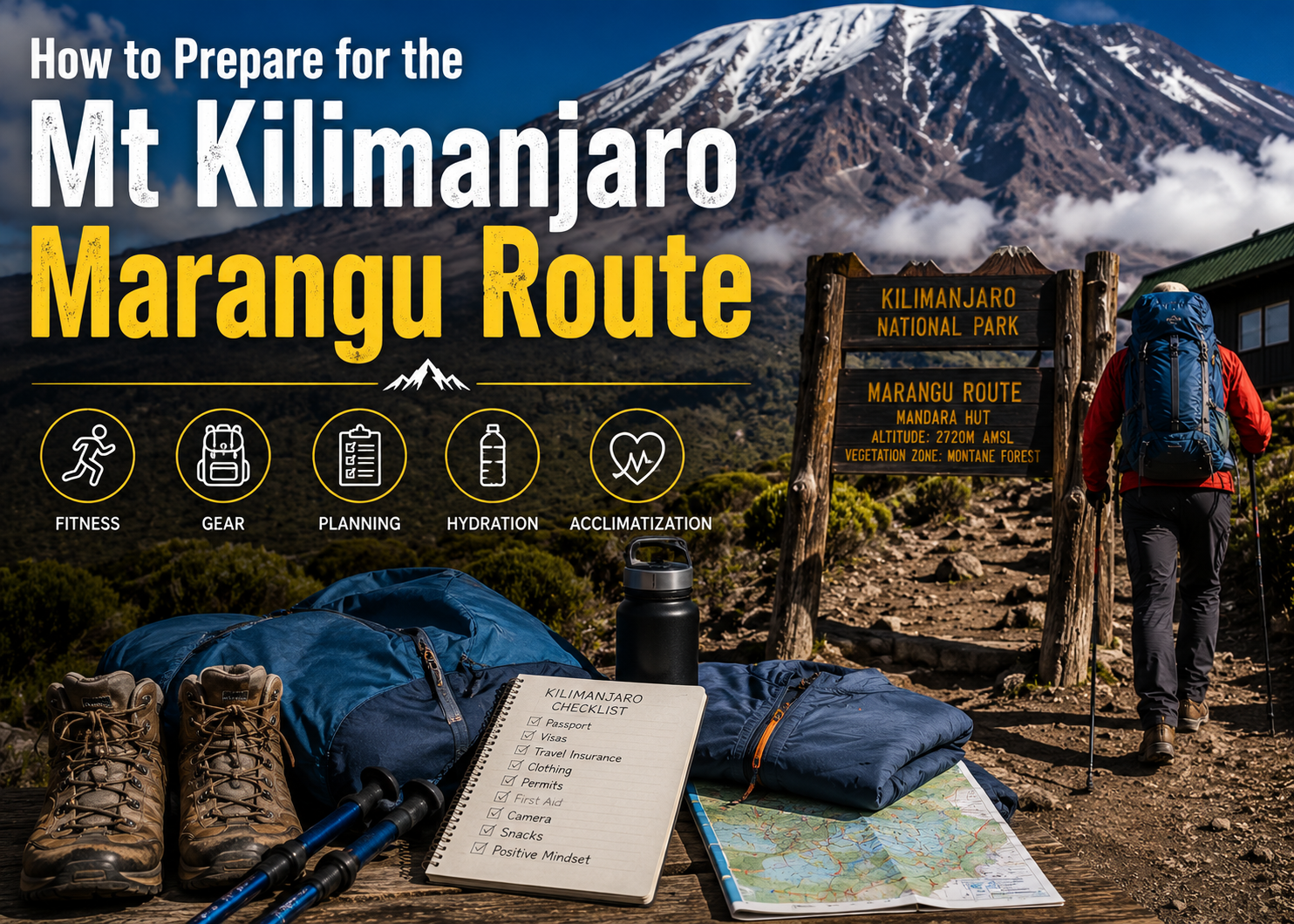
Even though the Marangu Route provides hut accommodation, climbers still require proper mountain gear.

Important equipment includes:

Clothing Layers

  • Thermal base layers
  • Insulated jacket
  • Waterproof shell
  • Trekking pants
  • Warm gloves and hat

Footwear

  • Waterproof hiking boots
  • Comfortable trekking socks
  • Camp shoes or sandals

Summit Equipment

  • Headlamp with spare batteries
  • Warm down jacket
  • Insulated gloves
  • Neck gaiter or balaclava

Personal Items

  • Daypack
  • Water bottles or hydration system
  • Sunscreen and sunglasses
  • Trekking poles

Professional trekking operators provide additional equipment lists tailored to Kilimanjaro conditions.

Role of Guides and Mountain Crew

Climbing Kilimanjaro requires a licensed mountain team. The crew normally includes:

  • Lead mountain guide
  • Assistant guides
  • Porters
  • Camp staff
  • Cook

Each member plays a vital role in expedition safety and logistics.

Guides monitor health conditions, set a safe pace, and manage emergency procedures if altitude sickness occurs.

Porters carry equipment, food supplies, and hut provisions, allowing climbers to focus on the ascent.

Ice Rock Trekking works with highly experienced local mountain teams trained in wilderness first aid and high-altitude safety.

Environmental Responsibility on Kilimanjaro

Mount Kilimanjaro remains one of Africa’s most treasured natural landmarks. Responsible trekking practices help preserve its fragile ecosystems.

Key principles include:

  • Carrying out all waste
  • Respecting wildlife and vegetation
  • Using designated trails
  • Minimizing plastic usage
  • Supporting ethical porter treatment

Sustainable tourism ensures that future generations can continue experiencing the mountain’s remarkable landscapes.

Comparing Marangu with Other Kilimanjaro Routes

While the Marangu Route is popular for its hut accommodation and direct path, other Kilimanjaro routes offer different experiences.

Machame Route

Known for scenic ridges and higher summit success rates due to longer acclimatization profiles.

Lemosho Route

One of the most scenic options with remote wilderness sections.

Rongai Route

Approaches the mountain from the northern side near Kenya.

Despite these alternatives, Marangu remains attractive for trekkers seeking structured facilities and shorter itineraries.

Preparing for a Successful Summit

Reaching the top of Kilimanjaro requires preparation long before arrival in Tanzania.

Climbers benefit from:

  • Structured fitness training
  • High-altitude education
  • Proper gear selection
  • Hydration strategies
  • Mental resilience

Many experienced climbers emphasize pacing as the most important factor. Moving slowly allows the body to adapt to changing altitude levels.

Why Choose Ice Rock Trekking

Choosing the right expedition team significantly influences the Kilimanjaro experience.

Ice Rock Trekking focuses on:

  • Experienced mountain leaders
  • High safety standards
  • Ethical porter support
  • Quality food and logistics
  • Personalized expedition planning

Each climb is carefully organized to ensure comfort, safety, and a rewarding mountain journey.

The company works with trained local teams who know the Marangu trail intimately, from rainforest paths to summit slopes.

Final Thoughts

The Marangu Route offers an accessible path to the summit of Mount Kilimanjaro while delivering dramatic landscapes and unforgettable high-altitude experiences. From rainforest trails to glacier-lined summit views, the journey showcases the remarkable diversity of Africa’s highest mountain.

For first-time climbers, the combination of structured huts, clear trails, and experienced mountain crews creates an environment where preparation and determination can lead to a successful ascent.

With the right training, reliable expedition support, and respect for the mountain environment, reaching Uhuru Peak becomes more than a trekking goal—it becomes a life-changing adventure high above the plains of Tanzania.

mt kilimanjaro marangu route

The mt kilimanjaro marangu route stands out as one of the most popular paths for adventurers aiming to summit Africa’s highest peak. Often called the “Coca-Cola Route,” it offers a perfect balance of accessibility, comfort, and breathtaking landscapes. Unlike other routes, it is well-established and equipped with hut accommodations, making it ideal for trekkers who prefer sleeping in a bed rather than a tent. This route is perfect for first-time climbers and seasoned enthusiasts alike who want a structured yet exhilarating ascent.

Starting from the Marangu gate, trekkers are immediately immersed in the lush rainforest that skirts the lower slopes of Kilimanjaro. The trail winds through dense vegetation, moss-covered trees, and cascading streams, providing an enchanting introduction to the mountain. Wildlife sightings are common, with colobus monkeys and colorful birds adding life to the verdant surroundings. The gradual incline allows trekkers to acclimatize slowly, reducing the risk of altitude-related issues while giving ample time to enjoy the scenery.

The trek is typically completed over five to six days, allowing climbers to adjust to changing altitudes. The first stage from Marangu Gate to Mandara Hut is approximately 8 kilometers and crosses through rich forested terrain. Mandara Hut, perched at around 2,700 meters, is the first stop where trekkers can rest, enjoy a warm meal, and prepare for the higher altitudes ahead. The huts along the Marangu route provide basic amenities, including communal dining areas and sleeping quarters, creating a social and supportive trekking environment.

Leaving the rainforest behind, the path gradually transitions into moorland, offering expansive views of Kilimanjaro’s rugged slopes. The journey to Horombo Hut, situated at 3,720 meters, spans roughly 12 kilometers and is a moderate ascent that showcases the mountain’s unique ecological zones. Trekkers witness giant groundsels and lobelias—plants found only at high altitudes—adding an extraordinary element to the trek. Horombo Hut serves as a crucial acclimatization point before attempting the summit. Spending two nights here allows the body to adjust to thinner air and prepares climbers for the challenging push to Uhuru Peak.

The final ascent is famously known as the summit push. Climbers typically depart Horombo Hut late at night to reach Uhuru Peak, the highest point on Mount Kilimanjaro, by sunrise. This section is the most physically demanding, covering an elevation gain of nearly 1,200 meters in one stretch. The trail cuts through the lunar-like landscapes of the alpine desert zone, with jagged rocks and sparse vegetation dominating the scenery. Reaching the summit at 5,895 meters is a triumphant moment, offering panoramic views of Tanzania and, on clear days, neighboring Kenya. The sunrise from Uhuru Peak is a spectacle that many describe as life-changing, as the soft golden light illuminates the glaciers and crater rim.

Descent along the Marangu route is relatively straightforward and less strenuous. Trekkers often return to Horombo Hut for a brief rest before continuing down to Mandara Hut and finally Marangu Gate. The return journey allows climbers to reflect on their accomplishment while enjoying the contrasting landscapes of the descent. Unlike other routes, the Marangu path’s well-marked trails reduce navigational challenges, giving trekkers confidence and peace of mind throughout the trek.

An essential aspect of the mt kilimanjaro marangu route is proper preparation. Trekkers are advised to train for endurance, focus on cardiovascular fitness, and practice hiking with a weighted backpack. Layered clothing is crucial to adapt to fluctuating temperatures, especially during the summit night when conditions can be freezing. Adequate hydration and a balanced diet support energy levels and aid in altitude adjustment. Experienced guides from Ice Rock Trekking provide valuable advice, pacing strategies, and continuous monitoring, ensuring that every climber receives support from start to finish.

The route’s popularity means that climbers can expect a social experience, sharing trails, meals, and stories with fellow adventurers from around the globe. While some may prefer solitude, the communal huts create a sense of camaraderie, making the journey as much about connections as it is about conquering the peak. For those seeking a more isolated experience, early morning departures or trekking during off-peak seasons can offer quieter moments amid the stunning scenery.

Beyond the physical journey, the Marangu route offers cultural insights. Trekkers often pass through small Chagga villages where they can witness traditional farming practices and interact with locals. The Chagga people, native to Kilimanjaro’s southern slopes, are known for their hospitality and knowledge of the mountain. Sampling locally grown bananas, coffee, and honey adds a flavorful dimension to the adventure and deepens the connection to the region.

Safety on the Marangu route is enhanced by its structured nature. The huts provide shelter in unpredictable weather, and the trail’s gradual incline reduces the risk of altitude sickness compared to steeper paths. Ice Rock Trekking ensures that climbers are well-informed about potential risks, equipped with necessary gear, and guided by trained staff. This combination of support, planning, and natural beauty makes the Marangu route an excellent choice for anyone seeking a memorable and scenic ascent of Mount Kilimanjaro.

In conclusion, the mt kilimanjaro marangu route offers an unforgettable trekking adventure, blending natural splendor, cultural encounters, and achievable challenge. Its scenic forest trails, high-altitude moorlands, and striking summit vistas create a layered experience that appeals to both first-time climbers and seasoned mountaineers. The hut system, gradual ascent, and expert guidance from Ice Rock Trekking ensure comfort and safety, while the social and cultural aspects enhance the overall journey. For anyone aspiring to reach Uhuru Peak, this route promises not only a successful summit but memories that last a lifetime.

MT Kilimanjaro Marangu Route

For adventurers seeking a classic Kilimanjaro experience, the MT Kilimanjaro Marangu Route stands out as a premier choice. Known as the “Coca-Cola Route,” it is one of the oldest and most established trails up Africa’s highest peak. Offering gradual inclines, scenic landscapes, and well-structured accommodations, it’s perfect for first-time climbers and those seeking a manageable yet rewarding journey. Ice Rock Trekking ensures that explorers enjoy every step with expert support, safety, and local knowledge.

Why Choose the Marangu Route

The Marangu Route is unique for its accessibility and structured approach. Unlike other paths that require tent camping, this route provides hut accommodations, allowing trekkers to rest comfortably at night. This feature makes it ideal for climbers who prefer a more relaxed ascent without sacrificing the thrill of conquering the mountain. Despite its popularity, the route remains breathtakingly beautiful, passing through lush rain forests, moorlands, and alpine deserts before reaching the iconic summit.

Starting Point and Logistics

The journey typically begins at the Marangu Gate, located at approximately 1,860 meters above sea level. Trekkers register and meet their guides and porters, who play a crucial role in managing supplies, setting up meals, and ensuring climbers are acclimatized properly. From here, the path winds through thick forests filled with unique flora and fauna. Monkeys, exotic birds, and endemic plants create an immersive natural experience, giving adventurers the feeling of stepping into a living ecosystem.

Trail Highlights and Acclimatization

The MT Kilimanjaro Marangu Route spans roughly 64 kilometers round-trip, usually completed in 5 to 6 days. The trail is divided into several camps: Mandara Hut, Horombo Hut, and Kibo Hut.

  • Mandara Hut:Located at 2,720 meters, Mandara Hut is the first stop and an excellent acclimatization point. The trek from the gate to this hut passes through dense rainforest, with vibrant greenery and occasional waterfalls. Here, trekkers adjust to higher altitudes while enjoying meals prepared by skilled local porters.
  • Horombo Hut:Situated at 3,720 meters, this camp introduces a more open moorland environment. Vegetation becomes sparser, replaced by striking giant heathers and lobelias unique to Kilimanjaro. The ascent to Horombo Hut is moderate, allowing climbers to build stamina for the final leg. Many trekkers take extra time here to rest and acclimatize, as altitude sickness can start affecting unprepared climbers.
  • Kibo Hut:At 4,703 meters, Kibo Hut is the final stop before summit night. The terrain shifts to rocky paths and alpine desert, presenting a stark contrast to the lush forests below. Here, climbers prepare for the challenging night ascent, ensuring gear, headlamps, and warm clothing are ready for temperatures that can drop well below freezing.

Summit Experience

The summit attempt usually begins around midnight to ensure climbers reach Uhuru Peak by sunrise. The trail becomes steep and demanding, requiring determination and pacing. The final stretch, known as the “crater rim,” is both mentally and physically taxing, but the sense of achievement is unparalleled. Standing atop Uhuru Peak, at 5,895 meters, offers panoramic views of glaciers, valleys, and distant landscapes that make every step worthwhile.

Safety and Physical Preparation

Climbing Kilimanjaro requires a good level of fitness, even on the more gradual Marangu Route. Trekkers benefit from cardiovascular training, hiking practice with elevation changes, and core strength exercises. Hydration, proper nutrition, and gradual acclimatization are vital to prevent altitude sickness. Ice Rock Trekking provides professional guides trained in first aid, acclimatization techniques, and emergency response, ensuring climbers have both support and confidence throughout the journey.

Flora, Fauna, and Scenic Beauty

One of the most captivating aspects of the Marangu Route is its biodiversity. The lower sections of the trail feature dense tropical rainforest with orchids, ferns, and towering trees. Mid-altitude regions transition to heath and moorland, with giant lobelias and senecios that appear almost prehistoric. Wildlife sightings can include colobus monkeys, bushbucks, and a variety of bird species. The dramatic shifts in vegetation and terrain create a visual journey that complements the physical challenge.

Cultural Interactions

Climbers also have the opportunity to engage with the local Chagga communities that inhabit Kilimanjaro’s foothills. Many treks incorporate visits to villages where visitors can learn about traditional farming techniques, taste local cuisine, and experience cultural ceremonies. These interactions enrich the journey, providing insight into the lives of those who live in the shadow of Africa’s tallest peak.

Timing and Weather Considerations

The Marangu Route can be attempted year-round, but the best months are generally from June to October and December to February. These periods offer drier conditions and clearer skies, enhancing both safety and scenic visibility. Rain can make trails slippery and increase the risk of hypothermia, especially at higher altitudes, so careful planning is essential. Trekking with experienced guides ensures that weather-related risks are managed effectively.

Packing Essentials

Proper preparation can make or break the experience. Essential items include layered clothing for temperature variations, sturdy hiking boots, a headlamp, gloves, hats, and trekking poles. Warm sleeping bags, hydration systems, and high-energy snacks are also crucial. While huts provide basic amenities, personal gear ensures comfort and safety, especially during the cold summit night.

Environmental Responsibility

Sustainability is a core focus for ethical trekking operations. Climbers are encouraged to minimize waste, respect wildlife, and stick to designated trails. Ice Rock Trekking actively promotes eco-friendly practices, working with local communities to preserve the mountain’s natural beauty and cultural heritage.

Why Ice Rock Trekking Makes the Difference

Choosing the right operator can significantly impact the Kilimanjaro experience. Ice Rock Trekking provides tailored itineraries, expert guidance, and personalized support. From pre-trek fitness advice to on-trail assistance, climbers benefit from decades of experience. Knowledgeable guides ensure a safe ascent, manage altitude risks, and share insights about the mountain’s ecology, history, and cultural significance. The combination of professionalism, local expertise, and attention to individual needs ensures a fulfilling adventure for all participants.

Conclusion

The MT Kilimanjaro Marangu Route offers adventurers an unparalleled opportunity to conquer Africa’s highest peak while experiencing diverse ecosystems, cultural richness, and personal achievement. Its unique hut accommodations, scenic variety, and well-established trail make it an ideal choice for both first-time climbers and seasoned trekkers. With careful preparation, the right guidance, and a spirit of adventure, reaching Uhuru Peak becomes not just a physical triumph but a transformative journey. Ice Rock Trekking stands ready to facilitate this extraordinary experience, ensuring every climber enjoys a safe, memorable, and inspiring adventure on Kilimanjaro.

Marangu Route Kilimanjaro

For trekkers seeking a classic, time-tested ascent of Africa’s highest peak, the Marangu Route Kilimanjaro offers an unmatched adventure. Often called the “Coca Cola Route” due to its popularity and relative comfort compared to other paths, this route blends accessibility, scenic diversity, and cultural encounters. Ice Rock Trekking has guided thousands through this iconic journey, ensuring climbers experience both the natural beauty and the rich heritage that surround Kilimanjaro.

The Marangu Route begins at the park gate near Marangu village, a region rich with Chagga culture. From the outset, hikers are greeted by the lush foothills of Kilimanjaro, where banana plantations, maize fields, and tropical forests create a stunning green backdrop. This area is not only visually striking but also culturally immersive. Local guides provide insights into Chagga farming practices, forest conservation efforts, and traditional stories, allowing trekkers to connect deeply with the environment they traverse.

One of the defining features of the Marangu Route is its hut-based accommodation. Unlike tented paths such as Machame or Lemosho, the Marangu Route offers simple dormitory-style huts at strategic points along the trail. This unique aspect makes it ideal for climbers who prefer not to camp and enjoy a slightly less rugged experience. The huts provide basic shelter, meals, and an opportunity to rest and socialize with fellow trekkers. While not luxurious, they foster a communal atmosphere where stories of the day’s trek are shared over hearty meals, creating lasting memories and connections.

The ascent itself unfolds in distinct ecological zones, each presenting unique challenges and visual rewards. The first stage passes through dense montane forest, home to exotic birds, colobus monkeys, and giant lobelias. The forest floor is carpeted with moss, and towering hardwoods create a sense of walking through an ancient, mystical environment. Trekkers often pause to observe wildlife or capture photographs of the striking flora. Moving upward, the trail gradually transitions into the heath and moorland zone, characterized by giant heathers, endemic plants, and open landscapes that reveal sweeping views of the lower slopes.

The Marangu Route Kilimanjaro is particularly advantageous for those conscious of altitude sickness. The itinerary typically spans five to six days, allowing sufficient time for acclimatization. The key to successful high-altitude trekking is a steady pace, ample hydration, and gradual elevation gain, all of which are incorporated into Ice Rock Trekking’s approach. The “climb high, sleep low” principle is often employed on higher days, enhancing acclimatization and minimizing the risk of altitude-related issues. Trekkers are encouraged to listen to their bodies and communicate any symptoms to the guides, who are trained to respond swiftly to ensure safety.

A highlight of this route is the scenic traverse of the Saddle, the high-altitude pass between Kibo and Mawenzi peaks. The landscape shifts dramatically, revealing lunar-like terrain, volcanic rocks, and glaciers in the distance. This section is challenging but immensely rewarding, offering climbers a preview of the final summit push and panoramic views that linger in memory long after the trek concludes. As trekkers move closer to the summit, the air becomes thinner and the temperatures drop significantly, demanding mental resilience and physical determination.

Summit day on the Marangu Route is typically an overnight hike starting around midnight. Trekkers ascend through the crater rim and approach Uhuru Peak at sunrise, experiencing one of the most awe-inspiring moments on Earth. The combination of fatigue, anticipation, and the ethereal glow of dawn creates an emotional experience that resonates deeply with all who reach the top. Ice Rock Trekking ensures that every climber receives guidance, encouragement, and support during this critical phase, fostering both safety and a sense of accomplishment.

Descending the Marangu Route provides a different kind of satisfaction. The trail back to Marangu village is shorter and faster but still offers stunning scenery, including alpine deserts and open moorlands. Many trekkers reflect on the diverse ecosystems traversed—from rainforests to glaciers—and the sense of achievement that comes from completing Kilimanjaro via this classic path. The descent also allows time to enjoy conversations with fellow climbers and guides, sharing experiences and celebrating successes.

The cultural and logistical aspects of the Marangu Route Kilimanjaro enhance the trekking experience. Local porters carry gear, prepare meals, and provide essential support throughout the journey. Engaging respectfully with porters and guides not only enriches the experience but also contributes to the local economy. Many trekkers find that their interactions with these dedicated professionals create lasting friendships and a deeper appreciation for the human element of mountaineering.

Preparation for the Marangu Route requires attention to both equipment and fitness. Hikers are advised to bring layered clothing suitable for varying temperatures, sturdy trekking boots, gloves, and a headlamp for summit day. Essential items also include sunscreen, water bottles, snacks, and a first-aid kit. Physically, moderate cardio conditioning and strength training can significantly enhance endurance and comfort during the climb. Ice Rock Trekking provides pre-trek consultations to ensure climbers are well-prepared and confident in their abilities.

Safety is paramount on Kilimanjaro, and the Marangu Route benefits from well-established trails, regular patrols, and proximity to the park gate. However, the mountain environment is unpredictable, and climbers must be vigilant regarding weather changes, altitude effects, and personal health. Ice Rock Trekking equips every trekker with expert guidance, emergency protocols, and support systems to navigate any challenges that arise.

For those seeking a classic, manageable, and culturally rich ascent, the Marangu Route Kilimanjaro is an ideal choice. It balances accessibility with adventure, offering unforgettable views, diverse ecosystems, and a profound sense of achievement upon reaching Uhuru Peak. This path has welcomed thousands of climbers over the decades, earning its reputation as the Coca Cola Route not only for its popularity but also for the shared camaraderie experienced along the trail.

The Marangu Route is more than a trek; it is an immersion into the beauty and heritage of Kilimanjaro. From lush forests to alpine deserts, from Chagga villages to the summit of Africa, every step offers an opportunity to connect with nature, culture, and the spirit of adventure. With careful preparation, dedicated guides, and a willingness to embrace the challenges, climbers leave the mountain transformed, carrying memories and experiences that last a lifetime.

Ice Rock Trekking continues to lead adventurers on this iconic route, ensuring each journey reflects the perfect blend of safety, enjoyment, and discovery. Whether it is a first-time climber or an experienced mountaineer, the Marangu Route offers a path that respects tradition, celebrates nature, and rewards determination with one of the most spectacular summits on Earth.

The journey on Marangu Route Kilimanjaro is both an external adventure and an internal journey of resilience and accomplishment. From the first step in the Chagga foothills to the final triumph at Uhuru Peak, every moment is an opportunity to challenge oneself, admire extraordinary landscapes, and create lifelong memories. It remains a timeless classic, celebrated for its unique combination of comfort, culture, and challenge, embodying the essence of Kilimanjaro trekking at its finest.