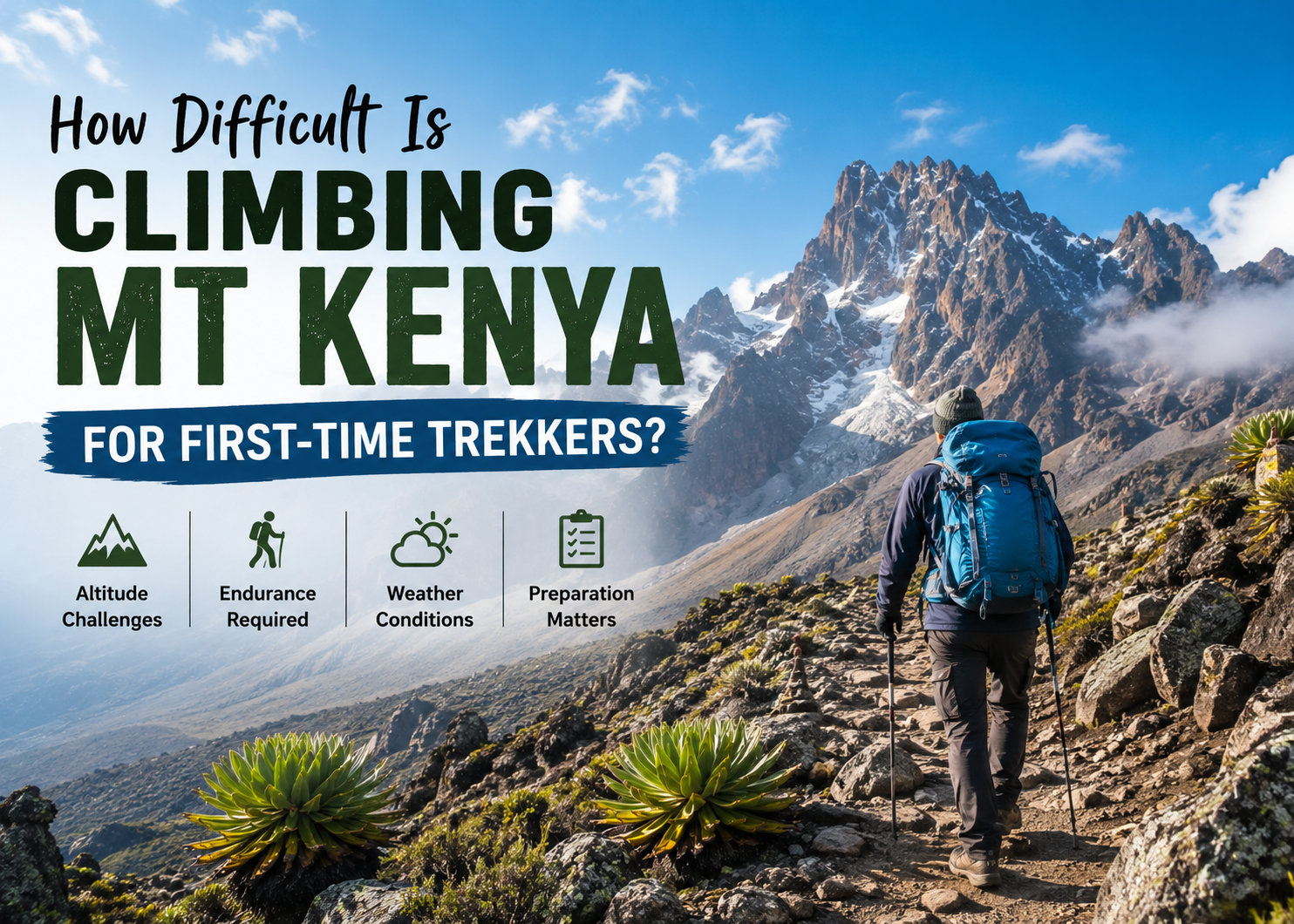
Mount Kenya attracts trekkers with rugged peaks, high-altitude valleys, glacial scenery, alpine lakes, and dramatic changes in vegetation. For someone planning a first major mountain adventure, one question naturally comes first: How difficult is climbing Mt Kenya?
The answer depends on the route, summit objective, fitness level, acclimatization schedule, weather, and number of trekking days. Reaching Point Lenana is achievable for many fit beginners, but the mountain still demands preparation, patience, and respect for altitude. Ice Rock Trekking helps climbers approach the experience with realistic expectations and sensible preparation.
Is Mt Kenya Suitable for First-Time Trekkers?
Yes, Mt Kenya can suit first-time trekkers, particularly when the objective is Point Lenana rather than the technical summits of Batian or Nelion.
Point Lenana stands at approximately 4,985 meters and is the highest trekking summit on the mountain. Reaching it does not normally require technical rock-climbing skills. Trekkers primarily need good cardiovascular fitness, determination, appropriate equipment, and enough time to adjust to increasing elevation.
However, calling the trek non-technical does not mean it is easy. Beginners must walk for several hours across uneven trails while coping with cold conditions and thinner air.
The experience becomes far more manageable when climbers choose an appropriate route and avoid rushing their ascent.
How Physically Difficult Is Climbing Mt Kenya?
Physical difficulty varies throughout the trek. Lower sections may feel comfortable, especially for people who regularly walk, hike, cycle, run, or participate in other endurance activities.
The challenge gradually increases as elevation rises.
Trekkers may experience steep slopes, rocky tracks, long walking days, cold mornings, and demanding summit sections. Carrying a daypack adds another physical element.
A typical trekking day can involve several hours of steady movement. Summit day often begins before sunrise and can feel significantly harder because climbers are moving at high altitude after limited sleep.
Strong legs certainly help, but cardiovascular endurance often matters more. A trekker who can maintain a steady pace for several hours generally has a stronger foundation than someone focused exclusively on strength training.
Altitude Is Often the Biggest Challenge
For many beginners, altitude creates more difficulty than the trail itself.
As trekkers move higher, the amount of available oxygen decreases. The body needs time to adapt. A person can be extremely fit at sea level and still experience altitude-related symptoms.
Common mild effects can include headaches, reduced appetite, fatigue, disturbed sleep, and shortness of breath during physical activity.
This is why rushing is rarely beneficial.
A well-paced itinerary gives the body more opportunity to acclimatize. Slow walking, proper hydration, sufficient food intake, and adequate rest all support the adjustment process.
Trekkers should also communicate openly about symptoms rather than trying to hide discomfort. Mountain safety must take priority over reaching a summit.
Choosing the Right Mt Kenya Route Matters
Route selection can significantly influence how difficult the mountain feels.
Several trekking routes lead toward Point Lenana, with Sirimon, Chogoria, and Naro Moru among the best-known choices. Each offers different scenery, terrain, gradients, and trekking characteristics.
Sirimon Route
The Sirimon Route is popular because of its relatively gradual approach. It passes through forest, moorland, and high-altitude landscapes before reaching the upper mountain.
Its progressive elevation gain can make it appealing to beginners when paired with an appropriate itinerary.
Trekkers still face demanding sections, but the route provides an opportunity to settle into mountain conditions before reaching higher elevations.
Chogoria Route
Chogoria is renowned for dramatic scenery, including valleys, cliffs, lakes, and striking alpine terrain.
It can involve longer sections and varied ground, which may require greater stamina. Many climbers combine Chogoria with Sirimon, ascending one side and descending another.
This combination provides scenic variety while allowing the itinerary to support sensible altitude adjustment.
Naro Moru Route
Naro Moru is known as a relatively direct approach. Certain sections can become challenging, particularly when conditions are wet.
Its famous Vertical Bog can be muddy and physically tiring after rainfall. The more direct elevation profile may also make careful pacing especially important.
Choosing a route should therefore involve more than comparing distances. Trek duration, altitude gain, terrain, personal fitness, and previous hiking experience should all influence the decision.
Point Lenana vs Batian and Nelion
One of the most important distinctions first-time visitors should recognize is the difference between trekking to Point Lenana and climbing Mt Kenya’s technical peaks.
Point Lenana is primarily a trekking objective.
Batian, at approximately 5,199 meters, is Mt Kenya’s highest summit. Nelion, at approximately 5,188 meters, is the second-highest. Both involve technical mountaineering rather than ordinary trekking.
Climbing Batian or Nelion requires rock-climbing ability, specialist equipment, route knowledge, and technical mountain experience.
First-time trekkers without climbing experience should normally focus on Point Lenana. It provides a genuine high-altitude mountain challenge without requiring the technical skills associated with Mt Kenya’s highest peaks.
What Fitness Level Do Beginners Need?
You do not need to be an elite athlete to trek to Point Lenana. You should, however, arrive with a reasonable level of endurance.
Preparation should ideally begin several weeks or months before departure, depending on your starting fitness.
Regular walking provides an excellent foundation. Gradually increase distance and include hills or stairs whenever possible.
Useful preparation activities include:
- Long-distance walking
- Hill hiking
- Stair climbing
- Cycling
- Jogging
- Swimming
- Squats and lunges
- Core exercises
- Walking while carrying a daypack
Consistency matters more than occasional intense workouts.
A person who trains steadily for several weeks will usually be better prepared than someone who attempts a few extremely difficult sessions shortly before departure.
Training should also include back-to-back walking days. Mountain treks require repeated effort, so the body needs experience performing after previous-day activity.
How Difficult Is Summit Day?
Summit day is commonly the hardest part of the trek.
Trekkers often start very early, sometimes during the night, so they can approach Point Lenana around sunrise. Temperatures can be extremely cold, visibility may be limited before daylight, and the terrain becomes steeper and rockier.
Altitude makes every step feel more demanding.
The final climb requires mental patience because progress may seem slow. Walking slowly is not a weakness at high elevation. A controlled pace reduces unnecessary exhaustion and supports better altitude management.
Once trekkers reach Point Lenana, the experience can be extraordinary. On clear mornings, the surrounding peaks, valleys, glaciers, and distant landscapes create memorable views.
The descent still requires concentration. Tired legs and loose terrain can increase the risk of slips, so climbers should continue moving carefully after reaching their summit objective.
Does Trekking Experience Make a Difference?
Previous hiking experience helps, but it is not mandatory for every Point Lenana itinerary.
Someone who has completed multi-day hikes will already know how their body reacts to repeated walking, changing weather, basic mountain accommodation, early starts, and limited comforts.
A complete beginner must adapt to all of these factors at once.
Before attempting Mt Kenya, beginners can benefit from completing several local hikes. Walking on hills, uneven ground, and rocky paths builds confidence while allowing trekkers to test footwear, backpacks, clothing layers, and personal pacing.
The mountain becomes easier when equipment and physical routines already feel familiar.
How Weather Affects Trek Difficulty
Mt Kenya’s weather can change quickly.
Trekkers may experience sunshine, wind, mist, rain, and freezing temperatures during the same journey. Conditions become colder as elevation increases, particularly overnight and during early summit attempts.
Rain can turn sections of trail muddy and slippery. Strong winds can make exposed areas feel considerably colder.
Proper clothing therefore plays a major role in comfort and performance.
A layering system allows trekkers to adjust clothing as temperatures change. Moisture-managing base layers, insulating mid-layers, waterproof outer layers, gloves, warm headwear, and suitable trekking trousers are valuable components of a mountain clothing system.
Being cold or wet consumes energy quickly. Staying dry and appropriately insulated can make a demanding day significantly more manageable.
What Equipment Makes the Trek Easier?
Good equipment cannot replace fitness or acclimatization, but it can prevent avoidable discomfort.
Well-fitted trekking boots are particularly important. New boots should be worn during training rather than used for the first time on Mt Kenya.
A comfortable daypack should provide enough room for water, snacks, spare clothing, rain protection, and personal essentials.
Trekking poles can provide additional stability on steep or uneven terrain. They may also reduce pressure on the knees during long descents.
A warm sleeping bag suitable for mountain temperatures is another important consideration. Rest becomes harder when a trekker remains cold throughout the night.
Headlamps are essential for early summit starts, while sunglasses and sunscreen help protect against strong ultraviolet exposure at elevation.
Mental Difficulty Should Not Be Overlooked
Climbing Mt Kenya trekking is not purely a physical test. Mental resilience becomes increasingly important when climbers feel tired, cold, or uncomfortable.
Beginners sometimes expect continuous excitement because mountain photographs usually highlight dramatic viewpoints and summit celebrations. The actual experience includes repetitive walking, cold mornings, steep sections, changing weather, fatigue, and moments when motivation drops.
Breaking the journey into smaller objectives can help.
Instead of thinking constantly about the summit, focus on reaching the next rest point, maintaining a comfortable breathing rhythm, drinking regularly, and keeping a steady pace.
Patience becomes one of the most valuable mountain skills.
How Many Days Should First-Time Trekkers Choose?
A longer itinerary can make Mt Kenya considerably more approachable.
Attempting to gain elevation too quickly places unnecessary pressure on the body. Extra time allows trekkers to ascend gradually and gives more opportunities for acclimatization.
For beginners, selecting an itinerary should not simply be about reaching Point Lenana as quickly as possible.
A well-designed schedule considers elevation gain, sleeping altitude, walking distance, rest, and individual ability.
An additional day can sometimes make a major difference in how comfortable a climber feels at higher elevations.
Ice Rock Trekking structures Mt Kenya experiences around sensible pacing while helping trekkers select routes and schedules suited to their objectives.
What Should You Eat and Drink on the Mountain?
High-altitude trekking requires consistent energy.
Trekkers should eat regularly even when altitude reduces appetite. Carbohydrate-rich meals and snacks can provide accessible energy for long walking days.
Hydration is equally important.
Cold conditions sometimes reduce the sensation of thirst, causing people to drink less than they normally would. Regular fluid intake should remain part of the daily routine.
Carrying accessible snacks can also help maintain energy between meals. Nuts, dried fruit, energy bars, biscuits, and similar trekking foods are convenient options.
Trekkers should avoid relying solely on appetite signals because high elevation may suppress hunger.
Can Beginners Handle the Cold?
Many first-time trekkers underestimate how cold Mt Kenya can become.
Lower elevations may feel pleasant, while upper camps can become extremely chilly. Summit morning can bring freezing temperatures, especially before sunrise.
Beginners can manage these conditions with suitable clothing and equipment.
Layering is particularly effective because body temperature changes throughout the day. A trekker may feel cold while resting but become warm quickly after walking uphill.
Keeping gloves, a warm hat, and an insulating layer easily accessible prevents unnecessary stops and discomfort.
Dry socks and spare clothing can also improve overnight comfort.
Common Mistakes First-Time Trekkers Make
Many difficulties on Mt Kenya result from preventable decisions rather than the mountain’s terrain alone.
Walking too quickly is a common mistake. Beginners sometimes try to maintain their normal hiking speed even as elevation increases. Slowing down conserves energy and supports acclimatization.
Other mistakes include inadequate training, poor footwear, insufficient warm clothing, ignoring hydration, skipping meals, carrying unnecessary items, and failing to communicate altitude symptoms.
Another major error is treating the summit as the only measure of success.
Mountain conditions, physical responses, and weather can change. Turning around when safety requires it represents responsible decision-making, not failure.
Is Mt Kenya Harder Than Kilimanjaro?
The answer depends on the route and objective.
For trekking objectives such as Point Lenana, Mt Kenya reaches a lower elevation than Kilimanjaro’s Uhuru Peak at 5,895 meters. This difference can influence altitude exposure.
However, route conditions, itinerary length, weather, personal fitness, and acclimatization can make individual experiences very different.
Mt Kenya also has technical summits, Batian and Nelion, that require mountaineering and rock-climbing skills. Comparing those peaks with an ordinary Kilimanjaro trekking route would therefore be inappropriate.
Trekkers should compare specific routes and summit objectives rather than treating both mountains as single standardized climbs.
How Can First-Time Trekkers Make Mt Kenya Easier?
Preparation begins long before arriving at the trailhead.
Build endurance gradually and spend time walking on hills. Test your boots, backpack, clothing, and trekking poles during training. Arrive rested rather than exhausting yourself with last-minute workouts.
On the mountain, maintain a slow and consistent pace. Drink regularly, eat enough, keep warm, and communicate openly about how you feel.
Perhaps most importantly, respect altitude.
Fitness cannot guarantee immunity from altitude-related problems. Sensible ascent rates and responsible decision-making remain essential for everyone.
Who Should Consider Trekking Mt Kenya?
Mt Kenya can appeal to hikers looking for their first high-altitude trek, experienced trekkers seeking varied African mountain scenery, outdoor enthusiasts interested in alpine ecosystems, and climbers preparing for future mountain objectives.
The trek particularly suits people who enjoy a challenge without necessarily wanting technical mountaineering.
However, anyone with concerns about their ability to participate in strenuous high-altitude activity should seek appropriate medical advice before planning the climb.
Why Trek Mt Kenya With Ice Rock Trekking?
A successful mountain experience depends on far more than reaching a destination.
Route planning, pacing, equipment preparation, meals, camp arrangements, local mountain knowledge, and safety awareness all influence the quality of the journey.
Ice Rock Trekking supports climbers from preparation through the mountain experience, helping them select suitable Mt Kenya routes and realistic itineraries based on their goals.
For first-time trekkers, having an organized climbing structure can reduce uncertainty and allow greater focus on pacing, scenery, personal wellbeing, and the experience itself.
Final Thoughts
So, how difficult is climbing Mt Kenya for a beginner? Reaching Point Lenana presents a moderate-to-challenging high-altitude trek, but many well-prepared first-time trekkers can complete it successfully.
The mountain demands endurance, suitable equipment, patience, proper acclimatization, and respect for changing conditions. Choosing the right route and allowing enough trekking days can significantly improve the experience.
With sensible preparation and support from Ice Rock Trekking, Mt Kenya can become an achievable first high-altitude objective and a rewarding introduction to African mountain trekking.